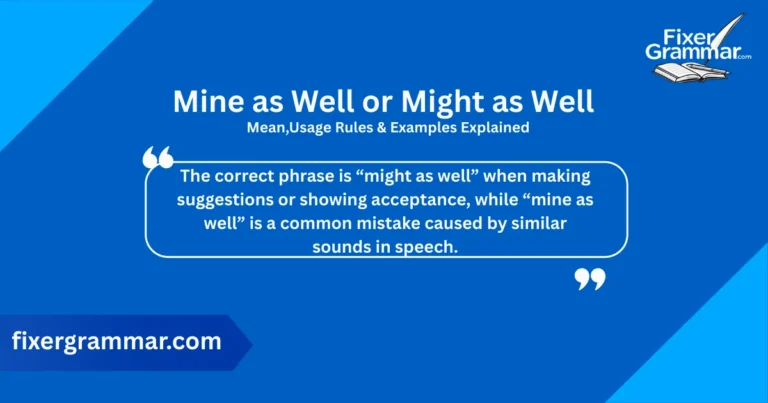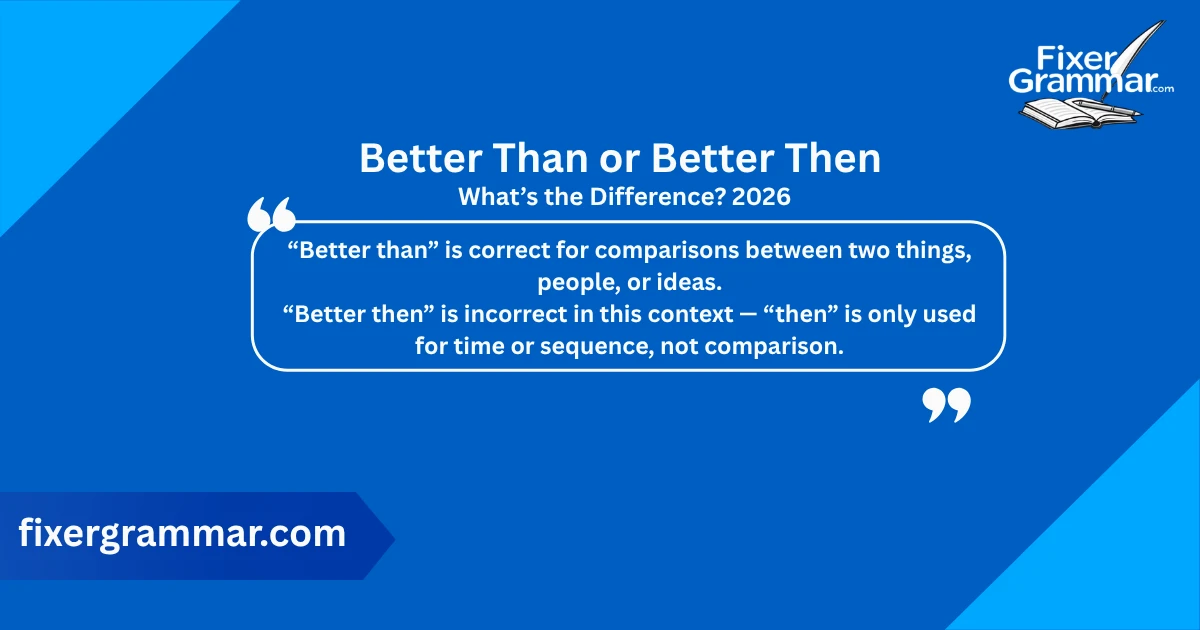
On the other hand, “better then” is almost always incorrect and should be avoided in proper writing.
One small word. One big difference in meaning.
What Does “Than” Mean and When Do You Use It?
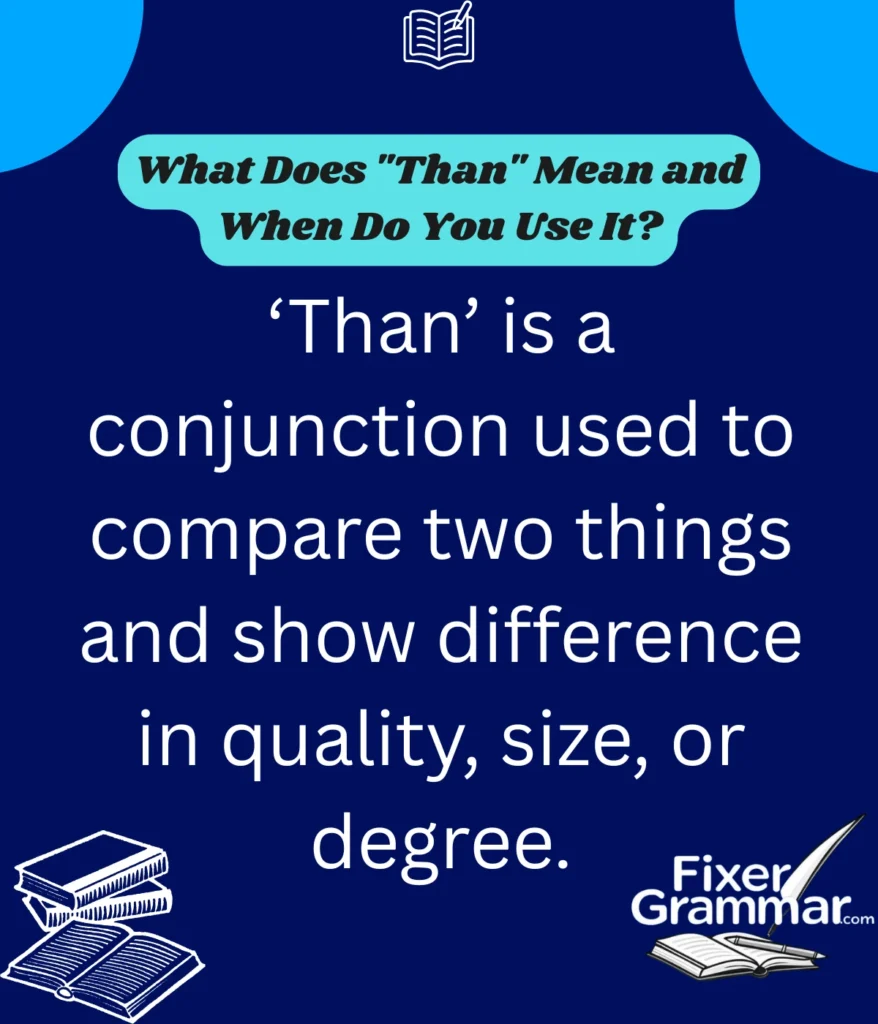
Than is a conjunction used for comparison. Whenever you are putting two things side by side to show a difference, “than” is your word.
| Example | Correct? |
|---|---|
| This coffee is better than yesterday’s | ✅ |
| She is smarter than her classmate | ✅ |
| He runs faster than anyone on the team | ✅ |
“Than” never refers to time. It only shows that one thing is different from another in quality, size, or degree.
What Does “Then” Mean and When Do You Use It?
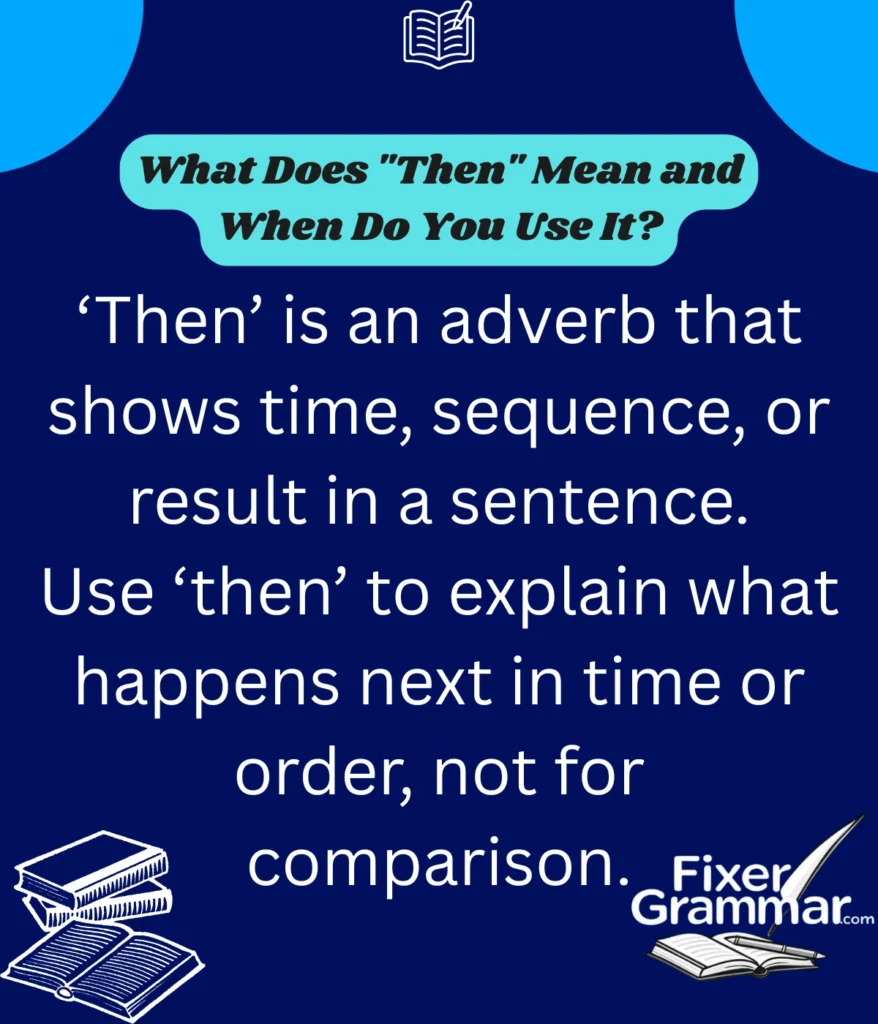
Then is an adverb. It talks about time, sequence, or result. It answers the question when or what happened next.
- “First finish your work, then take a break.”
- “Back then, people wrote letters instead of emails.”
- “If it rains, then the game gets canceled.”
“Then” has nothing to do with comparing. It moves things forward in time or order.
Better Than vs. Better Then — The Core Difference Explained
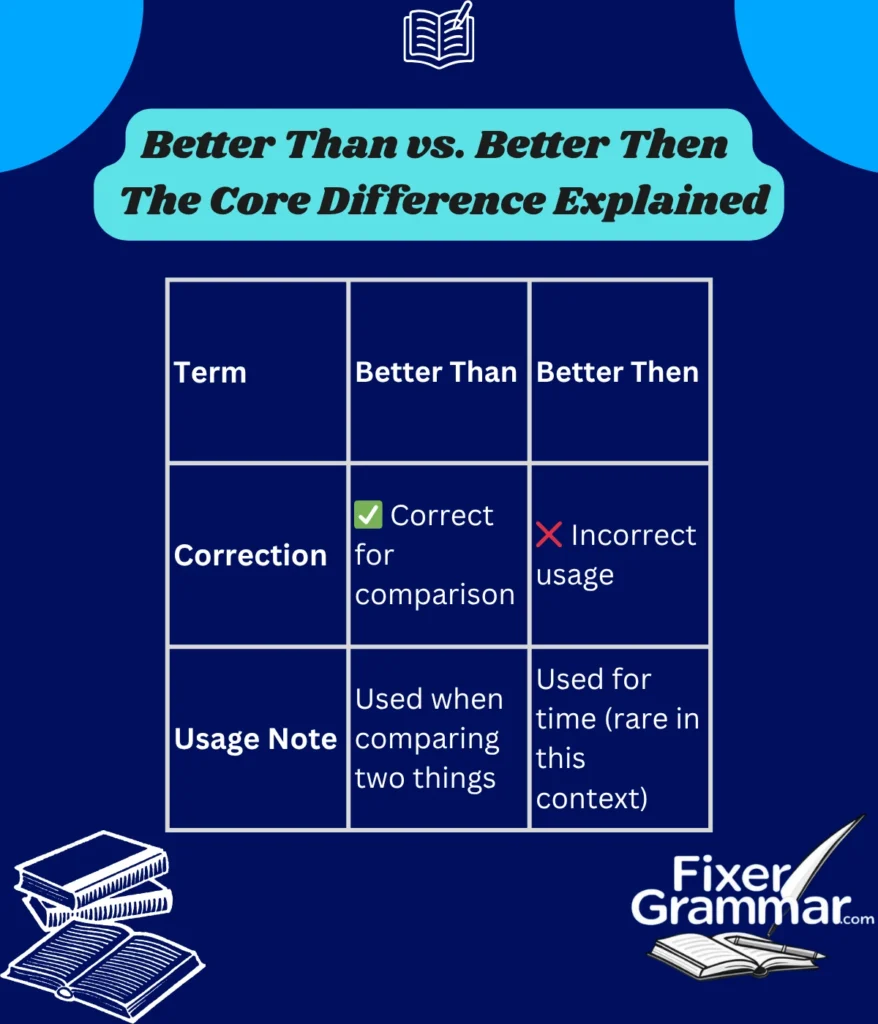
Both words look almost identical, which makes the mix-up incredibly common.
“Better than” = comparing two things “Better then” = almost always incorrect
| Wrong | Correct |
|---|---|
| This phone is better then that one | This phone is better than that one |
| She writes better then he does | She writes better than he does |
| The old plan was better then the new one | The old plan was better than the new one |
Quick rule: If you can replace the word with “in comparison with,” use than. If you can replace it with “at that time,” use then.
More Posts:Full Proof or Foolproof — What’s the Difference ? 2026
Real-Life Examples of “Better Than” in Everyday English
You will find “better than” used naturally across all kinds of writing and speech.
In casual talk:
- “Your homemade tacos are way better than the restaurant’s.”
- “That movie was so much better than I expected.”
In professional writing:
- “This quarter’s results are better than last year’s figures.”
- “The updated software performs better than the previous version.”
“Better than expected,” “better than ever,” and “better than most” are among the most common fixed phrases used in everyday English.
Easy Memory Tricks So You Never Mix Them Up Again
Two tricks that actually work:
- “Than” has the letter A → A is for Apples-to-oranges → comparison
- “Then” has the letter E → E is for Events in time → sequence
Fast self-test: Before you use either word, ask yourself one question — “Am I comparing two things?” If yes, use than. If you’re talking about time or order, use then.
That single question eliminates the mistake almost every time.
More Posts:Thus Far vs So Far — What’s the Difference ? 2026
FAQs — Better Than or Better Then
Do you say better than or better then?
You say better than. It is the grammatically correct form when comparing two things. “Better then” is a common typo but is almost never correct.
Is it better than I or better than me?
Both are used, but they mean slightly different things. “Better than me” is natural in everyday speech. “Better than I” is more formal and technically complete (it implies “better than I am”). In casual writing, “better than me” is perfectly acceptable.
Why does Gen Z say “no because”?
“No because” is a Gen Z slang phrase used to emphasize a point or defend an opinion. It means “let me explain why” rather than a flat denial. It comes from internet culture and social media where short, punchy openers grab attention fast.
Why do people say albeit?
Albeit means “even though” or “although.” People use it to add a concession or contrast in a sentence without breaking the flow. It comes from Middle English (al be it — “even though it be”) and still shows up in formal and semi-formal writing today.
Conclusion
The difference between better than and better then is small but matters. Use “better than” every time you compare. Save “then” for time and sequence.
One quick check before you hit send — “Am I comparing?” — and you’ll never mix them up again.

At FixerGrammar.com, Johnson Isaacs shares easy grammar tips, clear examples, and helpful guidance to make writing simple, smooth, and mistake-free.
Related Posts