Keep reading to find out why — and when each one actually matters.
Imbed vs. Embed — The Quick Answer
Embed is the standard, modern spelling accepted by every major dictionary and style guide
today.
Imbed is an older variant that still technically exists but is rarely used in current writing.
| Word | Status | Dictionary Listing | Best For |
|---|---|---|---|
| Embed | Standard | Primary entry | All modern writing |
| Imbed | Outdated variant | Rare/historical note | Historical quotes only |
What Does Embed Mean?
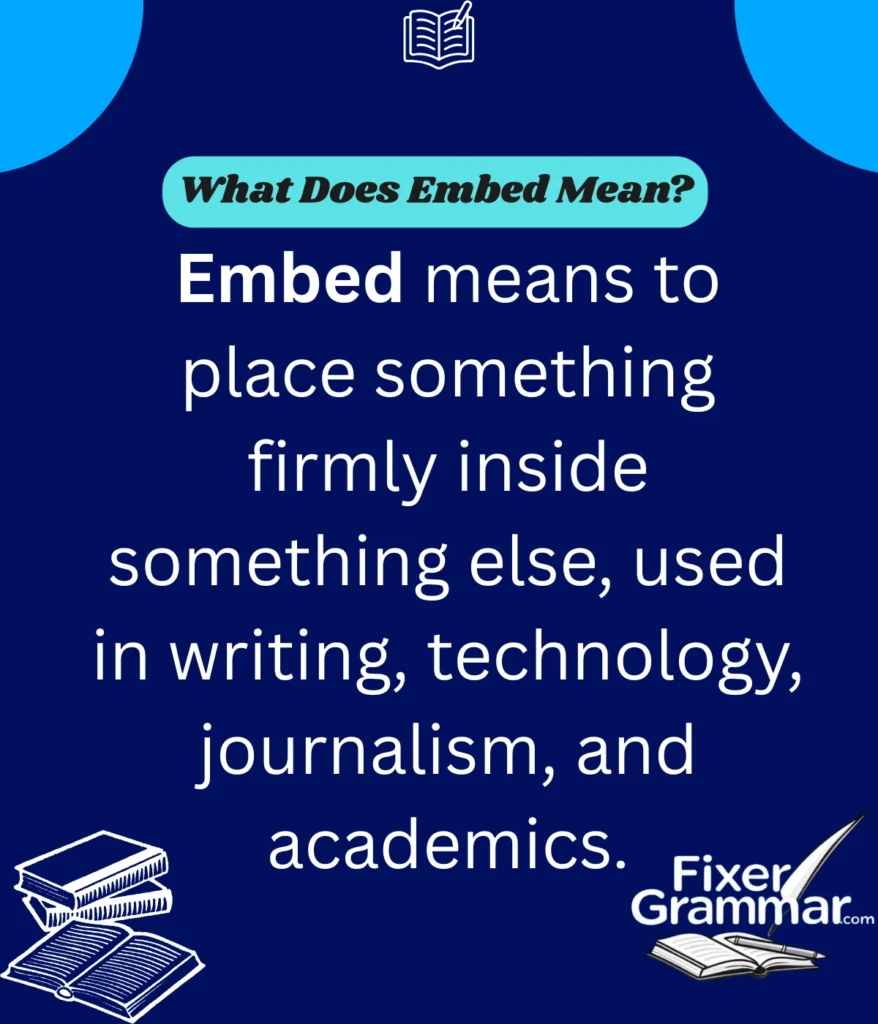
Embed means to fix or place something firmly inside something else. It’s used in everyday writing, technology, journalism, and academics.
Common embed examples:
- “She decided to embed the video directly into the blog post.”
- “The journalist was embedded with the military unit for three months.”
- “Cultural values become deeply embedded over generations.”
The word covers everything from embedding code in a webpage to embedding ideas in a conversation. It’s the go-to term in digital media, technical writing, and formal communication.
What Does Imbed Mean?
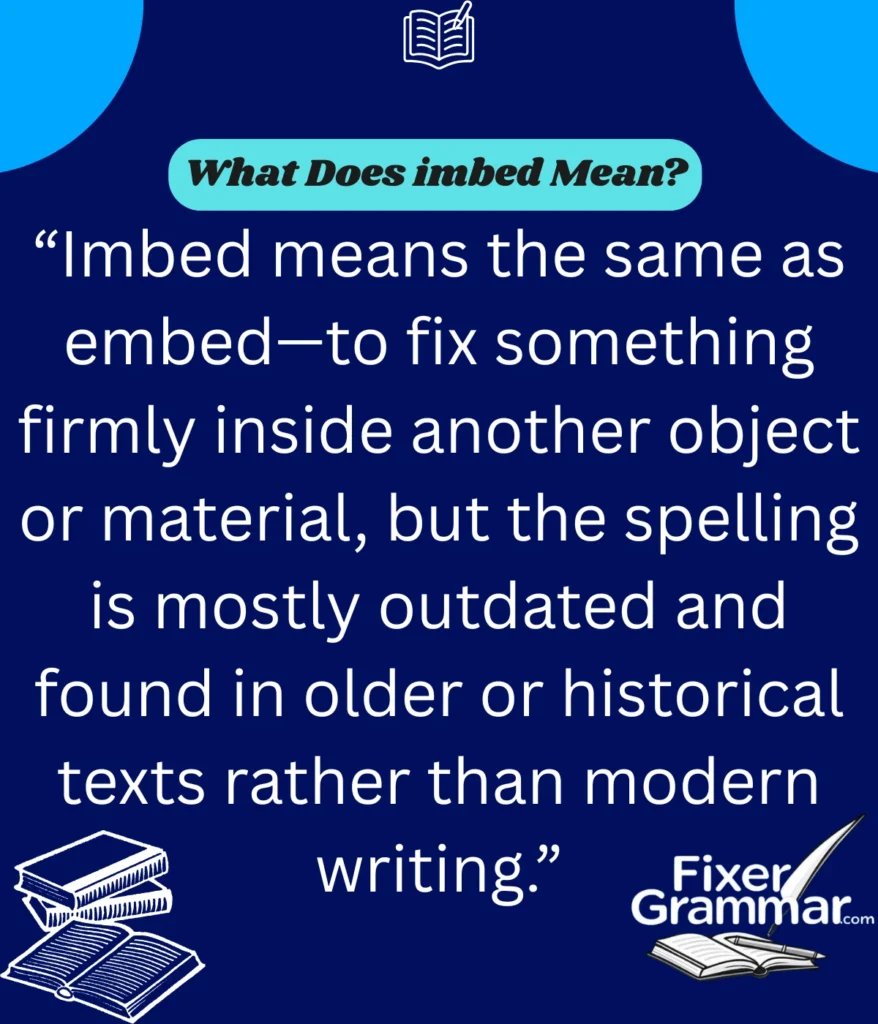
Imbed carries the exact same meaning as embed — to fix something firmly inside something else. The only real difference is the spelling.
You’ll mostly find it in older books, 19th-century texts, or archival material.
For example: “The roots were imbedded deep in the rocky soil.”
In modern writing, replace it with embed every time.
More Posts:Loot vs. Lute — What’s the Difference ? 2026
Imbed vs. Embed — Origins, History and Why Embed Won
Both words trace back to the same root — the Old English concept of placing something into a “bed” or fixed position.
Embed uses the prefix em-, which naturally pairs with the letter “b.” Think of embrace, embody, empower — the pattern is consistent across English. Imbed emerged in the 1700s–1800s when writers borrowed the Latin-style prefix im-, thinking it sounded more classical or formal.
For a while, both spellings coexisted. But by the mid-20th century, embed had clearly taken over.
Here’s what today’s top dictionaries say:
| Dictionary | Preferred Spelling | Status of Imbed |
|---|---|---|
| Merriam-Webster | Embed | Variant, less common |
| Oxford English Dictionary | Embed | Historical/rare |
| Cambridge Dictionary | Embed | Nonstandard |
| AP Stylebook | Embed | Not recognized |
| Chicago Manual of Style | Embed | Embed only |
The rise of embedded systems, embedded media, and embedded journalists during the Iraq War in 2003 permanently locked embed into everyday language.
Imbed vs. Embed — How to Use Each Correctly
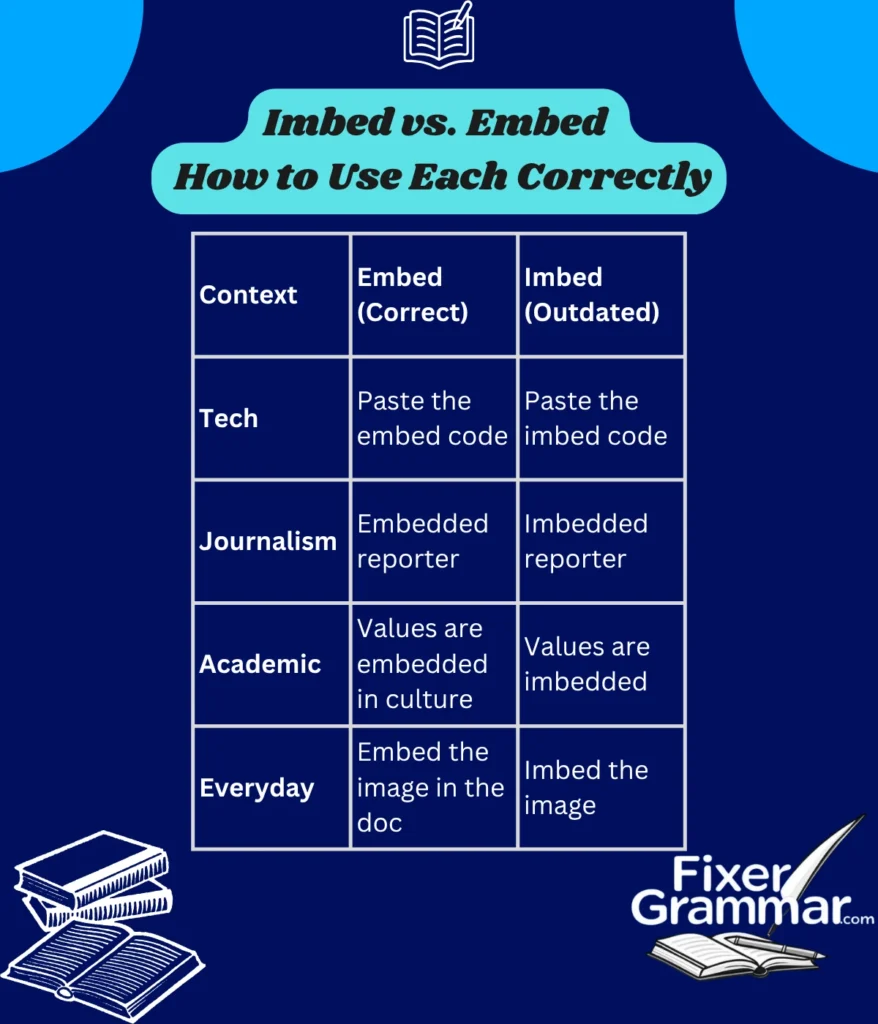
The rule is simple. Use embed in everything you write today.
Side-by-side examples:
| Context | Modern (Correct) | Outdated |
|---|---|---|
| Tech | Paste the embed code | Paste the imbed code |
| Journalism | Embedded reporter | Imbedded reporter |
| Academic | Values are embedded in culture | Values are imbedded |
| Everyday | Embed the image in the doc | Imbed the image |
Quick rules by audience:
- Students — Always write embed in essays and reports
- Professionals — Use embed in every business or legal document
- Digital writers — Embed is the only option in tech and content writing
Common Misconceptions — Busted:
Myth: Imbed is more formal than embed. Fact: Both are equal in formality — embed is simply the current standard.
Myth: Imbed and embed have different meanings. Fact: They share the exact same definition.
Myth: Either spelling is accepted in academic writing. Fact: Most professors and style guides expect embed — imbed may get flagged as an error.
More Posts:Tear vs. Tare – What’s the Difference? 2026
Simple Memory Trick to Never Confuse Them Again
Think of words like embrace, embody, and empower. The prefix em- always comes before “b” — and embed follows the same natural pattern.
One rule to remember: If the HTML tag is <embed>, the word is embed. Tech doesn’t lie.
FAQs — Imbed vs. Embed
Are Imbed and Embed interchangeable?
Not really. They share the same meaning, but embed is the accepted modern spelling. Using imbed may look like a typo to most readers today.
Which one should I use in professional writing?
Always use embed. It’s recognized by every major style guide and expected in academic, business, and digital writing.
Why does “Imbed” exist if “Embed” is standard?
Imbed was a common variant in the 18th and 19th centuries. Over time, natural language shifts and digital standardization made embed the dominant form.
Does pronunciation differ between the two?
No. Both are pronounced exactly the same: /ɪmˈbɛd/. Your ears won’t help you here — spelling is what matters.
How can I remember which one to use?
Think of the HTML <embed> tag or words like embrace and empower. The em- prefix always wins. When in doubt, write embed.
Conclusion
The imbed vs. embed debate really comes down to one thing — time.
Imbed had its moment, but embed is the clear winner in modern English. Whether you’re writing a blog post, a business report, or a tech document, embed is always the right call. Keep it simple. Keep it current. Use embed.

At FixerGrammar.com, Johnson Isaacs shares easy grammar tips, clear examples, and helpful guidance to make writing simple, smooth, and mistake-free.
Related Posts