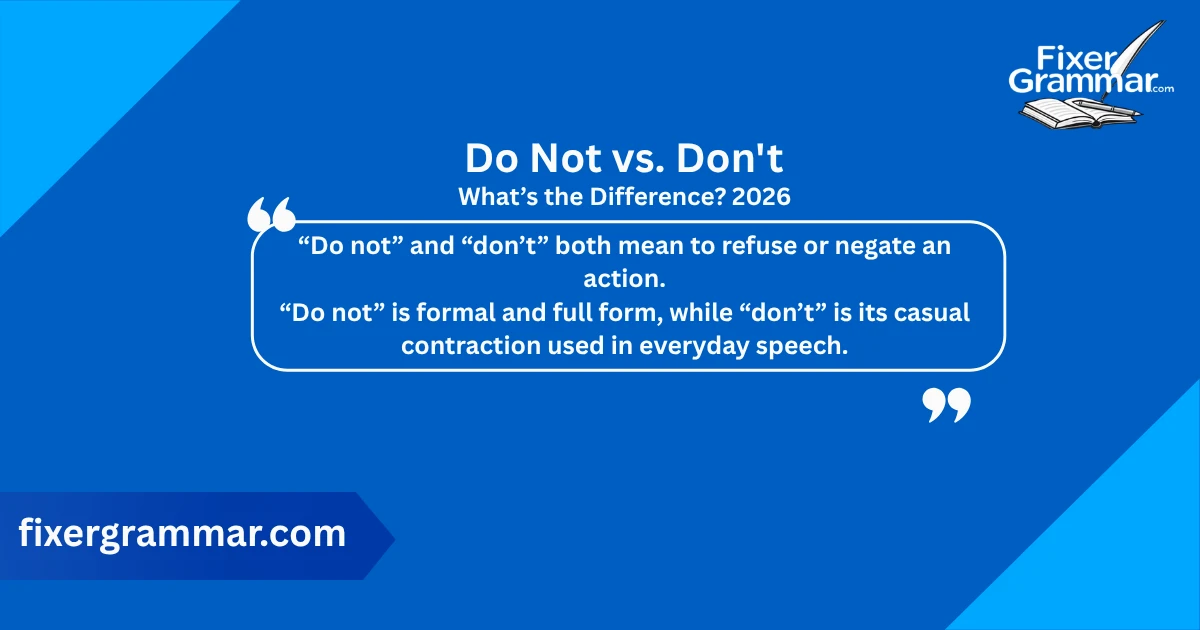
Use do not for formal, serious, or emphatic writing. Use don’t for everyday speech and casual communication.
What Do “Do Not” and “Don’t” Actually Mean?
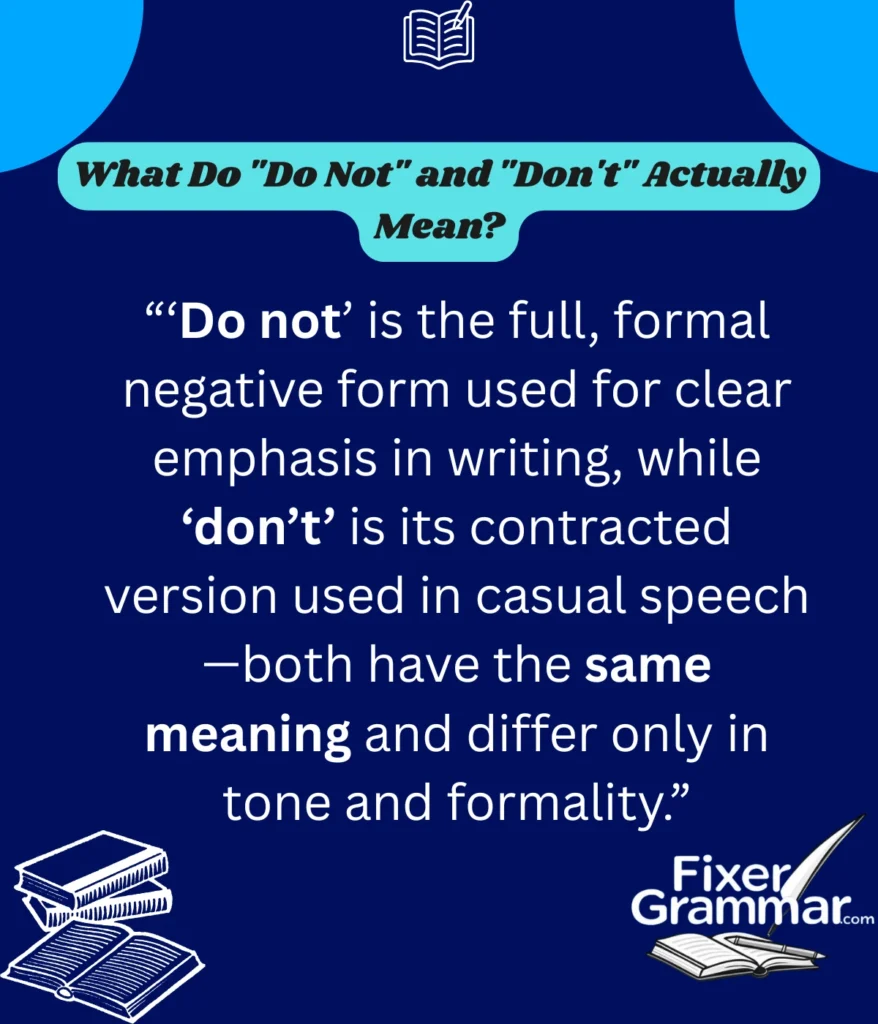
Do not is the full negative form. It carries weight. It sounds deliberate and clear.
Don’t is simply the contraction — “do” and “not” joined together. It’s the version most people use in daily conversation without even thinking about it.
| Feature | Do Not | Don’t |
|---|---|---|
| Form | Full (uncontracted) | Contracted |
| Tone | Formal, emphatic | Casual, conversational |
| Best Used In | Academic writing, official notices | Everyday speech, informal writing |
| Emphasis Level | Strong | Moderate |
Both forms negate a verb in the present simple tense. The meaning is identical — only the tone shifts.
More Posts:Loot vs. Lute — What’s the Difference ? 2026
When to Use “Do Not” vs. “Don’t” — Formality, Tone & Context
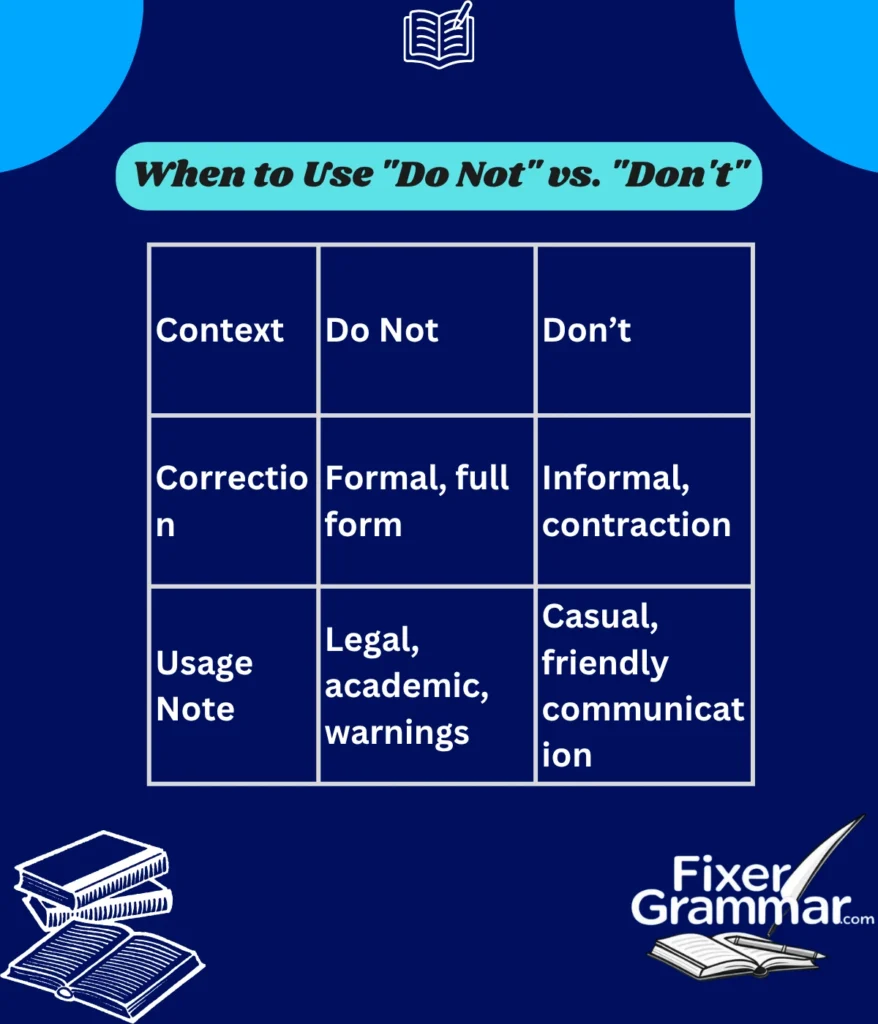
Context is everything when choosing between these two forms.
Use do not when your writing needs to sound authoritative — think legal warnings, academic papers, official emails, or safety instructions. Signs that say “Do not enter” use the full form for a reason. It commands attention.
Use don’t when you want to sound natural and approachable. Texting a friend, writing a blog, or giving a quick reminder? Don’t keeps the tone warm and conversational.
Examples by context:
- Formal: “Employees do not share confidential information.”
- Informal: “Don’t forget your keys.”
- Warning sign: “Do not touch the equipment.”
- Casual email: “Don’t hesitate to reach out.”
Quick rule: If you’d wear a suit saying it — use do not. If you’d say it over coffee — use don’t.
Grammar Rules — Subject-Verb Agreement & Pronoun Usage
This is where most people make mistakes. The form you use depends on the subject of the sentence.
For I, you, we, they — use do not or don’t. For he, she, it — you must use does not or doesn’t. Never don’t.
| Pronoun | Formal (Full Form) | Informal (Contraction) |
|---|---|---|
| I | I do not | I don’t |
| You | You do not | You don’t |
| He / She / It | He does not | He doesn’t |
| We | We do not | We don’t |
| They | They do not | They don’t |
In imperative sentences (commands), the subject “you” is implied and dropped entirely. Both forms work:
- “Do not open that door.” (stronger, more formal)
- “Don’t open that door.” (natural, everyday command)
Critical rule: After does not or doesn’t, always use the base form of the verb — never add -s.
- ✅ “She doesn’t like it.”
- ❌ “She doesn’t likes it.”
More Posts:Continuous vs Continous — What’s the Difference ? 2026
Do Not vs. Don’t — Quick-Reference Examples in Real Contexts
Seeing both forms side by side makes the rule click instantly.
Academic Writing:
- ❌ “Students don’t submit work after the deadline.” (too casual for formal papers)
- ✅ “Students do not submit work after the deadline.”
Professional Email:
- Formal: “Please do not share this document externally.”
- Internal/friendly: “Don’t forget to reply before Friday.”
Casual Speech:
- “Don’t worry about it.”
- “I don’t think that’s right.”
Warning Signs & Public Notices:
- “Do not feed the animals.”
- “Do not block the exit.”
Public notices almost always use do not — it reads with authority and leaves zero ambiguity.
FAQs About Do Not vs. Don’t
Can I use “don’t” in formal writing?
It’s grammatically correct, but avoid it in academic papers, official documents, or professional reports. Use do not instead to maintain the right tone.
When should I use “doesn’t” instead of “don’t”?
Use doesn’t with third-person singular subjects — he, she, and it. For all other subjects, use don’t or do not.
Can “do not” start a sentence for a warning?
Absolutely. It’s actually preferred. “Do not enter” reads with full authority — it’s direct, clear, and leaves no room for misinterpretation.
Does using “do not” make me sound formal or strict?
Yes — and that’s often the point. In formal contexts, that seriousness signals professionalism. In casual settings, it can feel stiff, so don’t works better there.
What’s wrong with “She doesn’t likes it”?
After doesn’t, the main verb must stay in base form. The correct sentence is “She doesn’t like it.” Adding -s duplicates the third-person marking, which is a grammar error.
Are “do not” and “don’t” interchangeable?
They share the same meaning, but not the same tone. In casual conversation, yes — swap freely. In formal writing, stick with do not to keep the register consistent.
Is there a difference between British and American English here?
The grammar rules are identical in both. British English tends to preserve the full form do not slightly more often in formal speech, but both varieties use contractions freely in everyday conversation.
Conclusion
The difference between do not and don’t comes down to one word: context.
Same meaning. Different weight. Use do not when your writing needs authority, clarity, or formality. Use don’t when you want to sound natural and direct. Nail the subject-verb agreement — especially with he, she, and it — and you’ll have this rule locked in for good.

At FixerGrammar.com, Johnson Isaacs shares easy grammar tips, clear examples, and helpful guidance to make writing simple, smooth, and mistake-free.
Related Posts