This guide breaks down each word clearly — with examples, a comparison table, and memory tricks — so you never confuse them again.
What Is Accent? (Definition, Meaning & Usage)
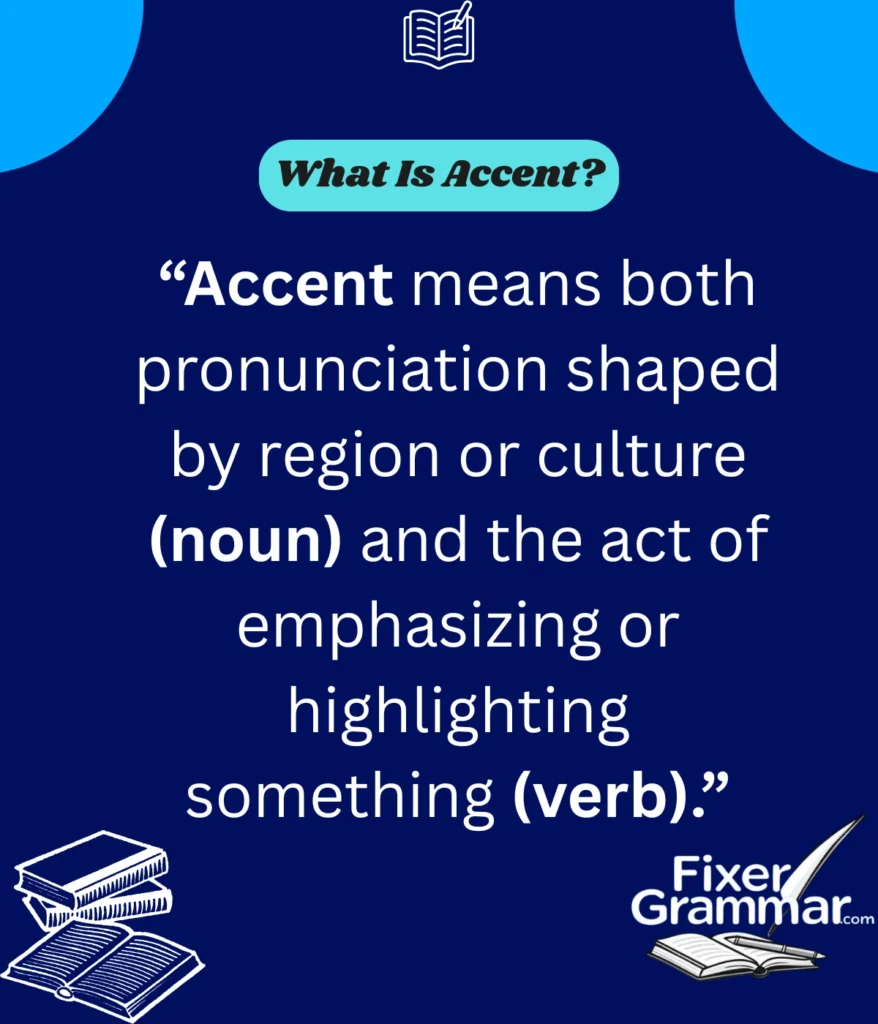
Accent as a Noun — Regional & Cultural Pronunciation
An accent is the distinctive way a person pronounces words, shaped by their region, culture, or native language. It’s one of the most recognizable features of human speech.
Examples:
- She spoke with a deep Southern accent.
- His New York accent was impossible to miss.
Accent as a Verb — To Emphasize or Stress Something
As a verb, accent means to stress or highlight something — a syllable, a word, or even a design feature.
Examples:
- The poet accented the final word for dramatic effect.
- She accented her outfit with a bold red scarf.
Quick tip: If it’s about sound, speech, or emphasis — the word you want is accent.
What Is Ascent? (Definition, Meaning & Usage)
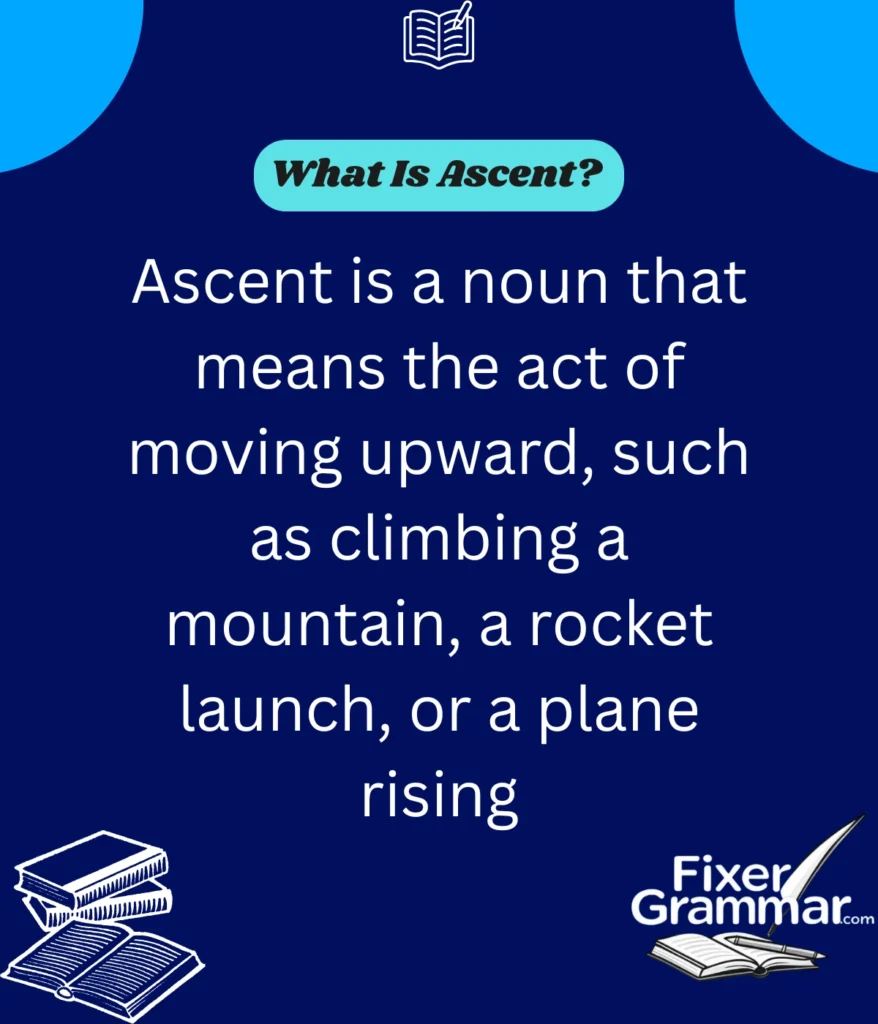
Literal Ascent — Physical Climbing or Rising
Ascent is always a noun. It means the act of moving upward — climbing a mountain, a rocket launching, or a plane gaining altitude.
Examples:
- The team began their ascent of Mount Everest before sunrise.
- The balloon’s ascent into the sky was slow and steady.
Figurative Ascent — Career Growth & Progress
Ascent also works in a metaphorical sense, describing progress, growth, or a rise in status.
Examples:
- Her ascent to CEO happened in under five years.
- The brand’s ascent in the market was remarkable.
Root connection: Ascent comes from the verb ascend — to go up. Think of ascent as the noun version of that upward journey.
More Posts:Full Proof or Foolproof — What’s the Difference ? 2026
What Is Assent? (Definition, Meaning & Usage)
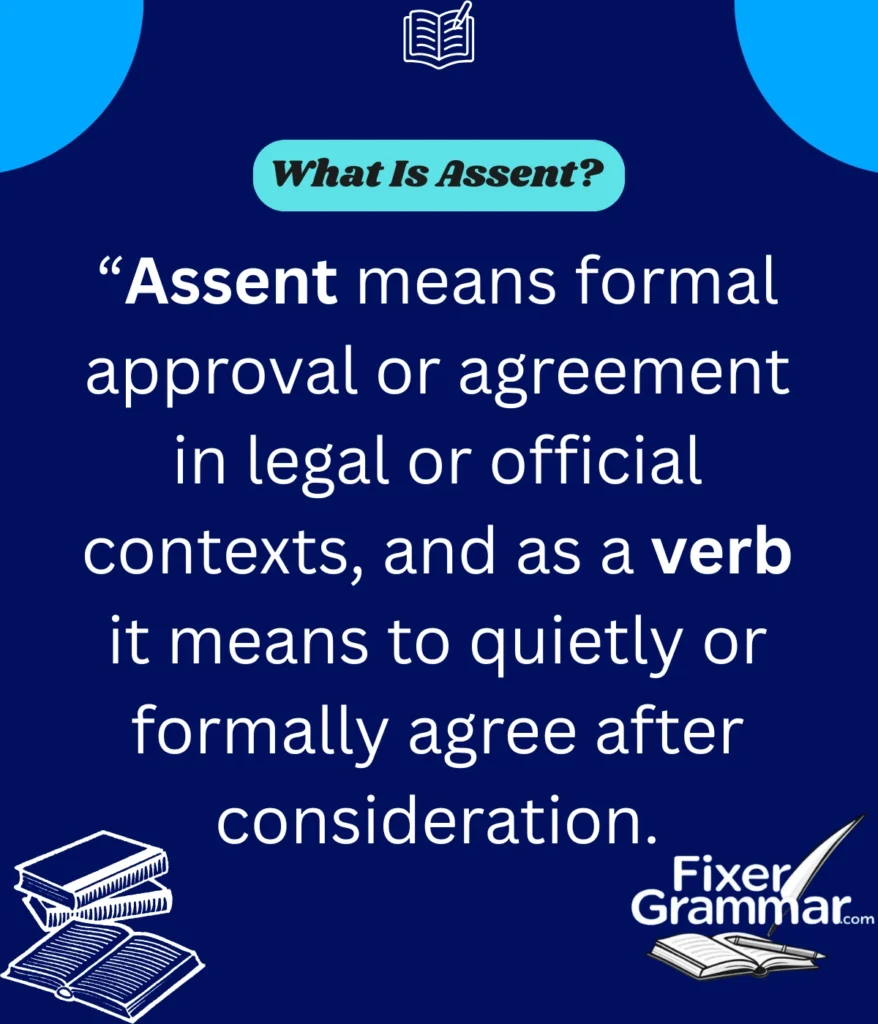
Assent as Agreement — Formal and Legal Contexts
Assent means approval or agreement — especially in formal, legal, or official settings. It carries more weight than a casual “yes.”
Examples:
- The board gave its assent to the new budget plan.
- Parliament granted royal assent to the legislation.
Assent as a Verb — Expressing Approval in Action
As a verb, assent means to agree or give approval to something.
Examples:
- She nodded and assented to the terms quietly.
- He assented to the proposal after careful review.
Assent vs. Consent: Both involve agreement, but assent is typically mental or formal agreement. Consent implies giving permission — often with legal or ethical weight attached.
| Word | Assent | Consent | Focus | Context | Example |
|---|---|---|---|---|---|
| Assent | Formal agreement | — | Approval (often limited or official) | Meetings, law, decisions | Board gave assent |
| Consent | Permission granted | — | Full approval or agreement | Legal, medical, ethical | Patient gave consent |
Accent vs. Ascent vs. Assent — Side-by-Side Comparison
| Word | Part of Speech | Core Meaning | Example Sentence | Memory Tip |
|---|---|---|---|---|
| Accent | Noun / Verb | Pronunciation or emphasis | Her French accent was charming. | Think: speech, sound |
| Ascent | Noun | Climbing or rising upward | The ascent of the hill was tiring. | Think: mountain, up |
| Assent | Noun / Verb | Formal approval or agreement | The board gave its assent. | Think: nodding yes |
Etymology at a glance:
- Accent — from Latin accentus, meaning tone or melody
- Ascent — from Latin ascensus, meaning a climbing
- Assent — from Latin assentare, meaning to agree or approve
Common mistakes — corrected:
- ❌ “She gave her accent to the plan.”
✅ “She gave her assent to the plan.” - ❌ “The accent up the hill was steep.”
✅ “The ascent up the hill was steep.” - ❌ “His assent was noticeable when he spoke.”
✅ “His accent was noticeable when he spoke.”
Mnemonic to remember all three: “Speak with Accent, Climb by Ascent, Agree through Assent.”
FAQs — Accent vs. Ascent vs. Assent
What is the difference between accent, ascent, and assent?
Accent relates to pronunciation or emphasis, ascent means a physical or figurative rise, and assent means formal agreement or approval.
Can ascent and assent be used interchangeably?
No. Ascent is about upward movement, while assent is about giving agreement. They are unrelated in meaning despite sounding alike.
What does assent mean in legal writing?
In legal contexts, assent signals formal approval — such as royal assent to a bill or a party’s agreement to contract terms.
How can I remember the difference easily?
Use this: Accent = sound, Ascent = up, Assent = yes. A simple mental image for each locks them in fast.
What is an accent in linguistics?
In linguistics, an accent is the phonological pattern of a speaker — shaped by geography, culture, or native language background.
Is assent the same as consent?
Not exactly. Assent is formal agreement, while consent involves granting permission — often in legal or medical situations. British English uses “royal assent” specifically for legislation approval, which differs from general consent usage.
Conclusion
Accent, ascent, and assent sound identical but mean entirely different things. Accent is about how you speak. Ascent is about moving upward.
Assent is about saying yes — formally. Get these right and your writing instantly becomes clearer and more credible. When in doubt, come back to the comparison table or the mnemonic — and you’ll never mix them up again.

At FixerGrammar.com, Johnson Isaacs shares easy grammar tips, clear examples, and helpful guidance to make writing simple, smooth, and mistake-free.
Related Posts