Company-Wide or Companywide– Which Is Correct? 2026

Both spellings can be correct, but the hyphenated version “company-wide” is preferred when it appears before a noun, while “companywide” ...
Read moreWhen I Can or When Can I – Which Is Correct? 2026
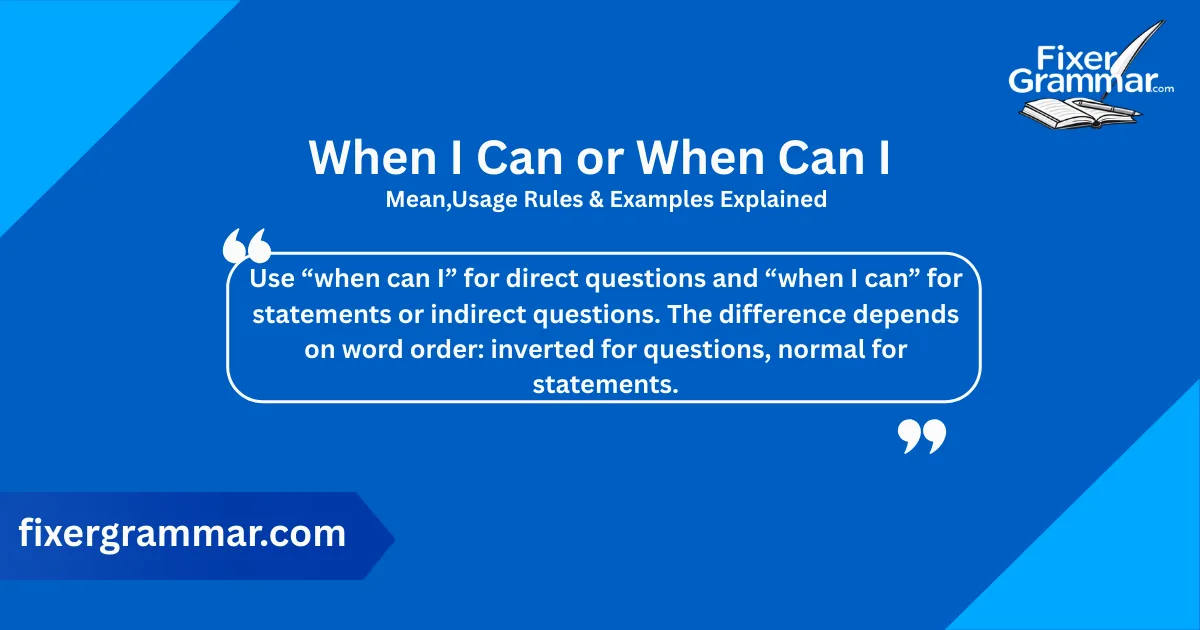
Is it “when I can” or “when can I”? The answer depends on whether you’re asking a question or making ...
Read moreSoo vs. So – What’s the Difference? 2026

“So” is the only grammatically correct form in standard English, functioning as an adverb, conjunction, and intensifier. “Soo” isn’t recognized ...
Read moreIt’s Called vs It Called– What’s the Difference? 2026

“It’s called” is the correct form when naming or identifying something in the present tense, while “it called” is grammatically ...
Read moreA Hilarious or An Hilarious – Which Is Correct? 2026

Wondering whether to say “an hilarious” or “a hilarious”? The correct answer is “a hilarious.” You’ll learn why “a” is ...
Read moreInput or Imput – Which Is Correct? 2026

“Input” is the only correct spelling. “Imput” is a common misspelling that doesn’t exist in English dictionaries. If you’ve been ...
Read moreInvision or Envision– Which Is Correct? 2026

The correct word is envision. The word “invision” is a common spelling mistake that doesn’t exist in English dictionaries. Always ...
Read moreWho to Contact or Whom to Contact– Which Is Correct? 2026

Whom to contact is grammatically correct. The word “whom” acts as an object pronoun receiving the action of contacting. However, ...
Read moreAny Problem or Any Problems– Which Is Correct? 2026

Any problem or any problems are both grammatically correct, but they work differently depending on context. Understanding when to use ...
Read moreLeapt or Leaped– Which Is Correct? 2026

Both “leaped” and “leapt” are correct past tense forms of the verb “leap”. The difference lies mainly in pronunciation and ...
Read more