Continuous vs Continous — What’s the Difference ? 2026
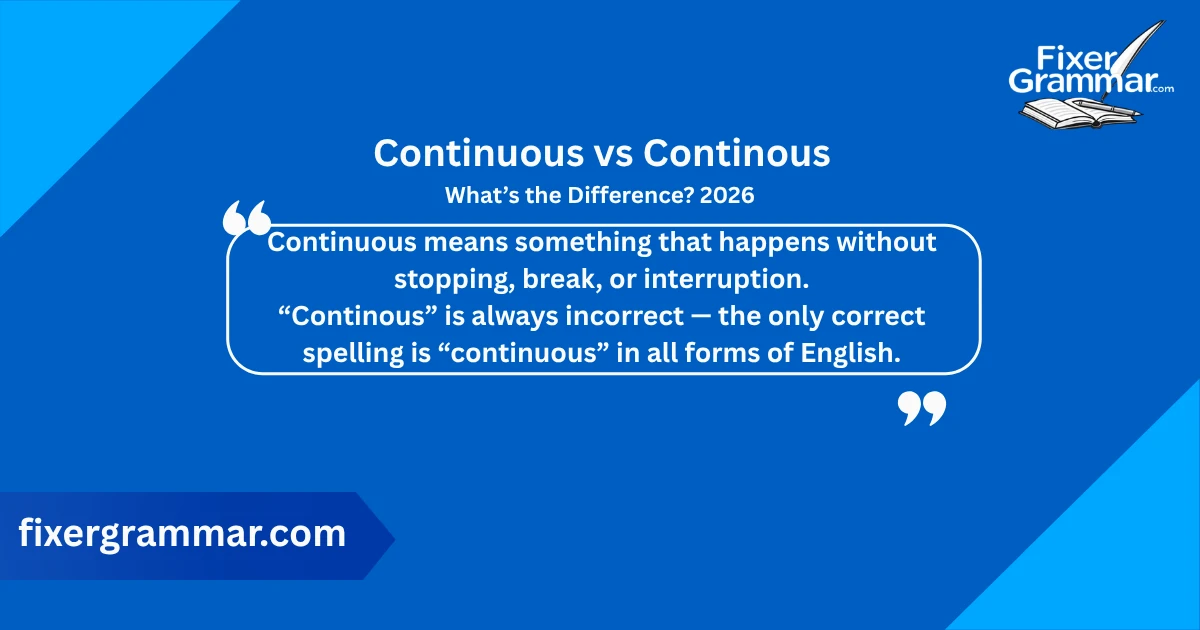
“Continous” is not a real word. The correct spelling is always continuous. No major dictionary — not Merriam-Webster, Oxford, or ...
Read moreThus Far vs So Far — What’s the Difference ? 2026
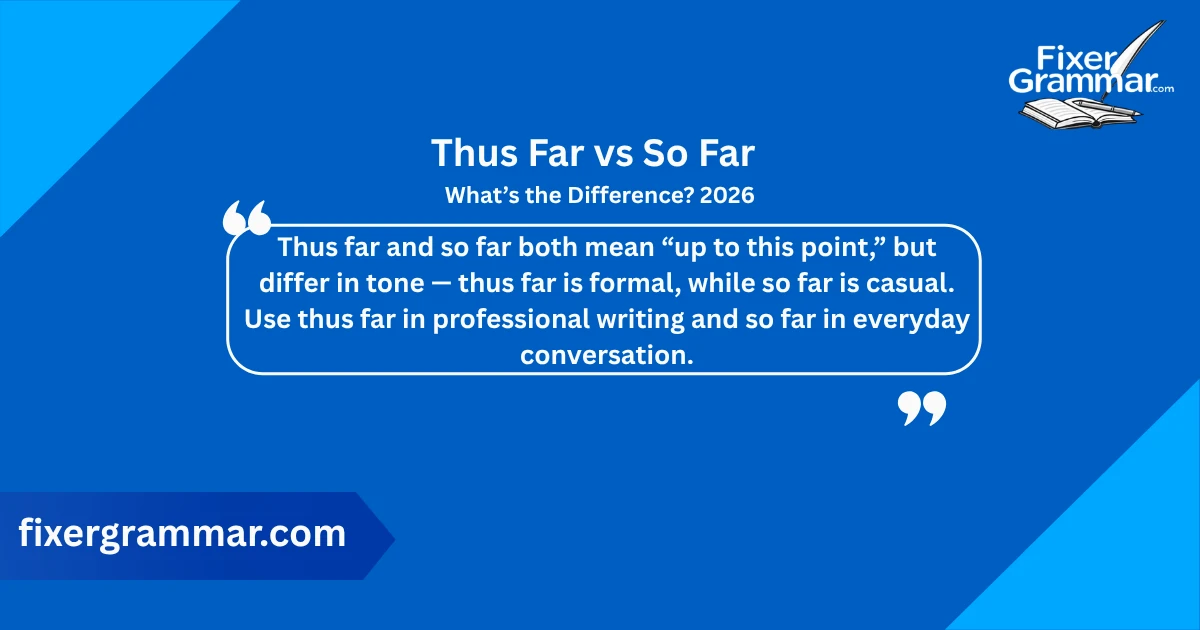
Both “thus far” and “so far” mean “up to this point” or “until now” — but they are NOT interchangeable ...
Read moreFull Proof or Foolproof — What’s the Difference ? 2026
The correct word is foolproof, not “full proof”. It’s a simple mix-up, but it can quietly damage your credibility in ...
Read morePatron vs. Benefactor — What’s the Difference ? 2026
A patron supports someone consistently over time. A benefactor gives — often once — in a big, life-changing way. Both ...
Read moreDay Off vs. Off Day — What’s the Difference? 2026
A day off is a planned break. An off day is a bad day. Most people use day off and ...
Read moreIngrained or Engrained – Which Is Correct? 2026
Ingrained is the correct and modern spelling. Engrained? It’s an outdated version that’s quietly slipped out of everyday use. Both ...
Read moreAlright vs All Right – What’s the Difference? 2026
Both words carry the exact same meaning “All right” is the standard, accepted spelling. “Alright” is widely used but still ...
Read moreSome of Whom or Some of Who — Which One Is Correct? 2026
The correct phrase is always “some of whom” — and the reason is simple: after a preposition like of, you ...
Read moreIn the Street or On the Street – Which Is Correct? 2026

Both are correct, but their usage depends on meaning and context. “On the street” is the correct choice when talking ...
Read moreThats vs That’s – Which Is Correct? 2026
“thats” is incorrect. The only proper spelling is “that’s” with an apostrophe. This simple punctuation mark makes all the difference ...
Read more