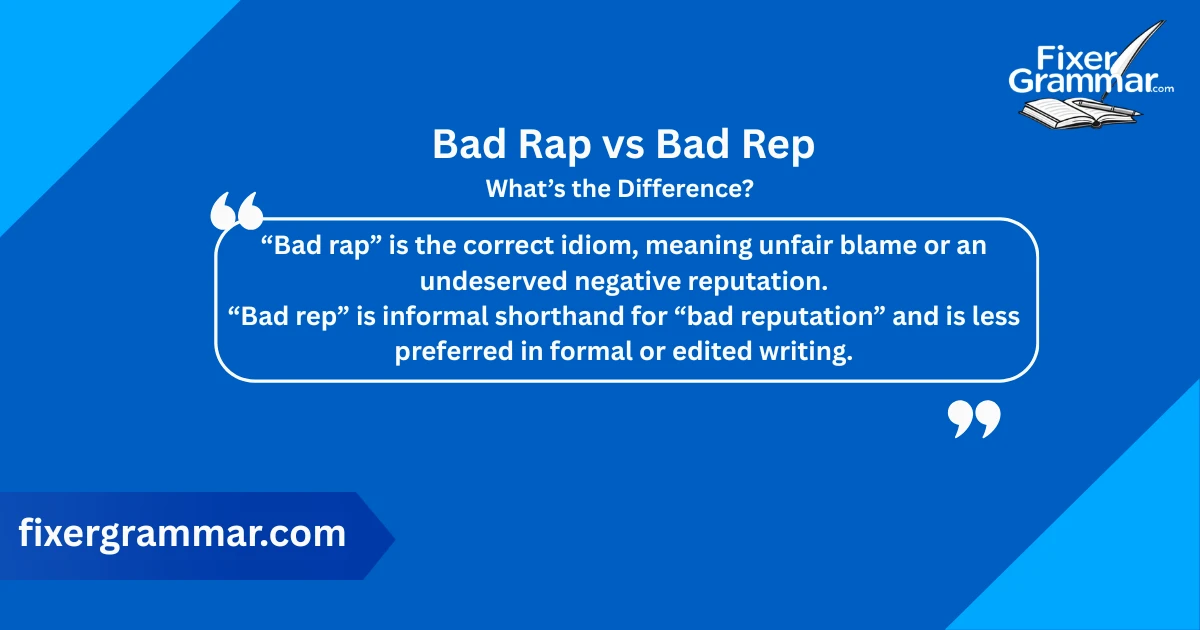
Most people mix these up because they sound almost identical when spoken. But in writing, the difference matters — especially in professional or formal content.
What “Bad Rap” Means
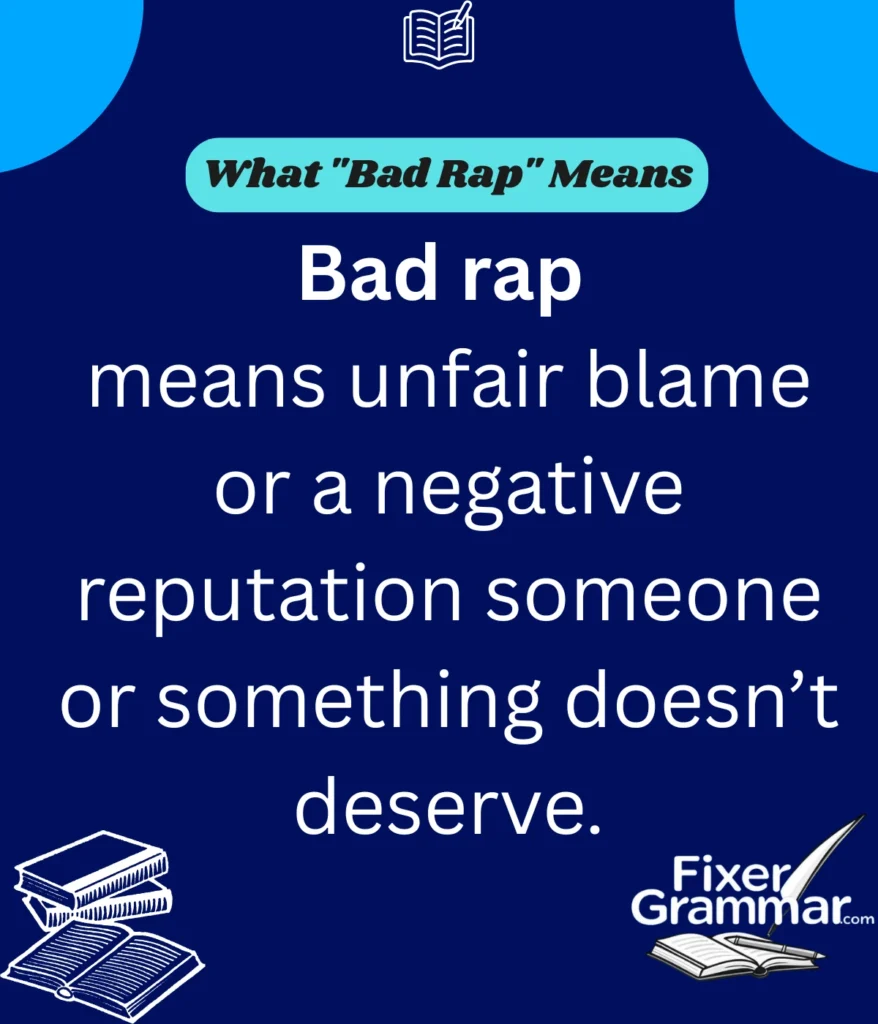
Bad rap comes from the word “rap” meaning blame or accusation. It has roots in early 20th-century American slang, closely tied to “rap sheets” — official criminal records. Getting a bad rap means being blamed or judged unfairly, even when you didn’t deserve it.
Example: “The neighborhood gets a bad rap, but it’s actually quite safe.”
What “Bad Rep” Means
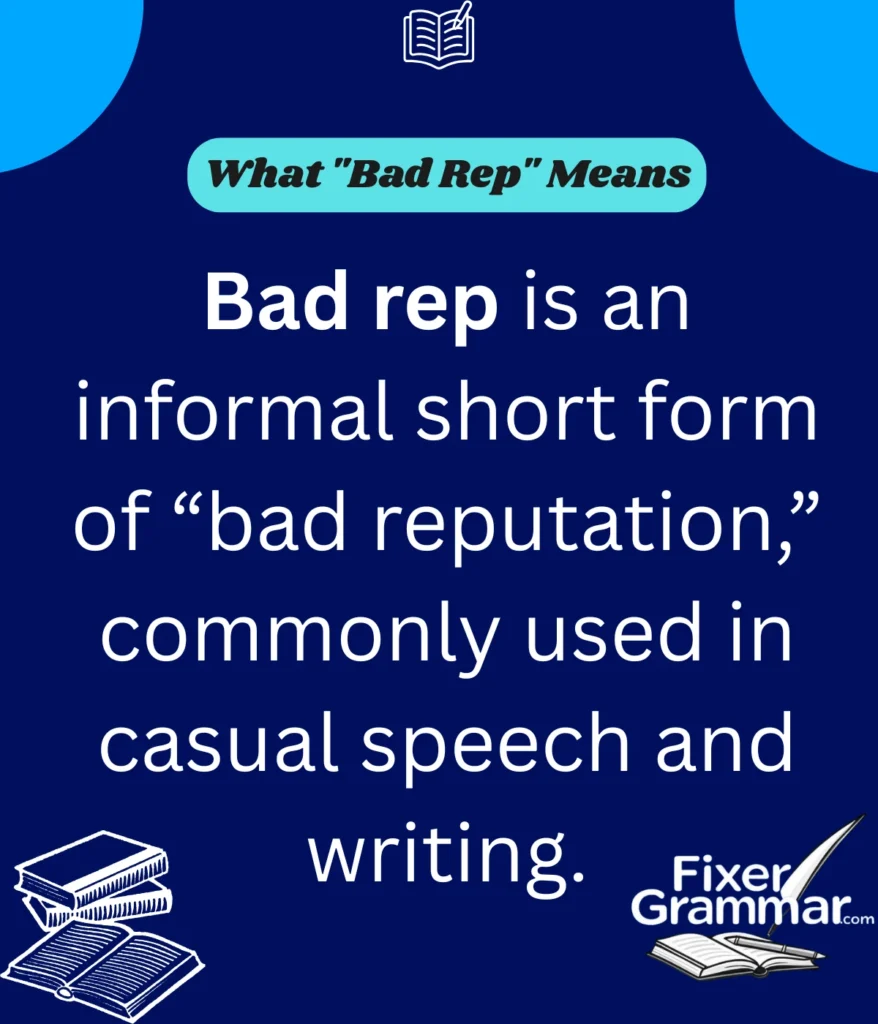
Bad rep is short for bad reputation. It’s widely used in everyday speech and casual writing. While the meaning overlaps with bad rap, it’s considered an informal shortcut — not the standard idiomatic form.
Example: “That brand has a bad rep online.” — acceptable in conversation, but bad rap is the stronger written choice.
| Phrase | Type | Best Used In |
|---|---|---|
| Bad Rap | Standard idiom | Writing, formal, editorial |
| Bad Rep | Informal shortcut | Casual speech, social media |
| Bad Wrap | Incorrect form | Never — changes meaning entirely |
Bad Rap vs Bad Rep — Which One Is Correct?
Bad rap is the correct and more widely accepted form. Major dictionaries including Merriam-Webster recognize bad rap as the established English idiom. Bad rep is not listed as a standard phrase.
The phrase bad rap has appeared consistently in journalism, literature, and media for decades. Bad rep, by contrast, is mostly found in informal digital writing and speech.
Bad Rap vs Bad Rep — Real Sentence Examples
Seeing both in context makes the difference easy to spot.
Correct — Bad Rap:
- “Carbs get a bad rap, but many are essential for energy.”
- “The film got a bad rap from early critics, but audiences loved it.”
- “She has a bad rap for being difficult, which simply isn’t true.”
Incorrect — Bad Rep:
- ~~“Carbs get a bad rep.”~~ → Replace with bad rap
- ~~“The film got a bad rep.”~~ → Replace with bad rap
In edited, polished writing — articles, essays, business copy — bad rap always wins.
More Posts:Die vs Dice – What’s the Difference? 2026
Good Rap vs Good Rep — Does the Same Rule Apply?
Yes, and this one trips people up even more. Good rap would be the logical opposite of bad rap, but it’s almost never used that way in natural English.
Good rep is actually the more common and accepted phrase here — short for good reputation. This is one area where the two phrases split:
| Phrase | Natural Usage | Meaning |
|---|---|---|
| Bad rap | ✅ Standard | Unfair negative blame |
| Good rap | ❌ Rarely used | Not a common idiom |
| Bad rep | ⚠️ Informal | Informal for bad reputation |
| Good rep | ✅ Common | Short for good reputation |
So the rule isn’t perfectly symmetrical. Bad rap is the correct idiom for unfair blame. Good rep is natural shorthand for a positive reputation.
FAQ’s
Is it a good rap or a good rep?
Good rep is the natural, commonly used phrase when describing a positive reputation. Good rap exists but rarely appears in standard English and can sound unnatural to most readers.
Is it a bad rep or a bad rap?
Bad rap is correct. It’s the established idiom meaning unfair blame or an undeserved negative reputation. Bad rep is informal and less standard — use bad rap in any serious writing.

At FixerGrammar.com, Johnson Isaacs shares easy grammar tips, clear examples, and helpful guidance to make writing simple, smooth, and mistake-free.
Related Posts