When someone says “stay in touch” or “keep in touch,” both phrases sound almost identical. But they carry different weight depending on the situation.
Choosing the right one shapes how genuine, warm, or professional you sound.
What Do “Stay in Touch” and “Keep in Touch” Actually Mean?
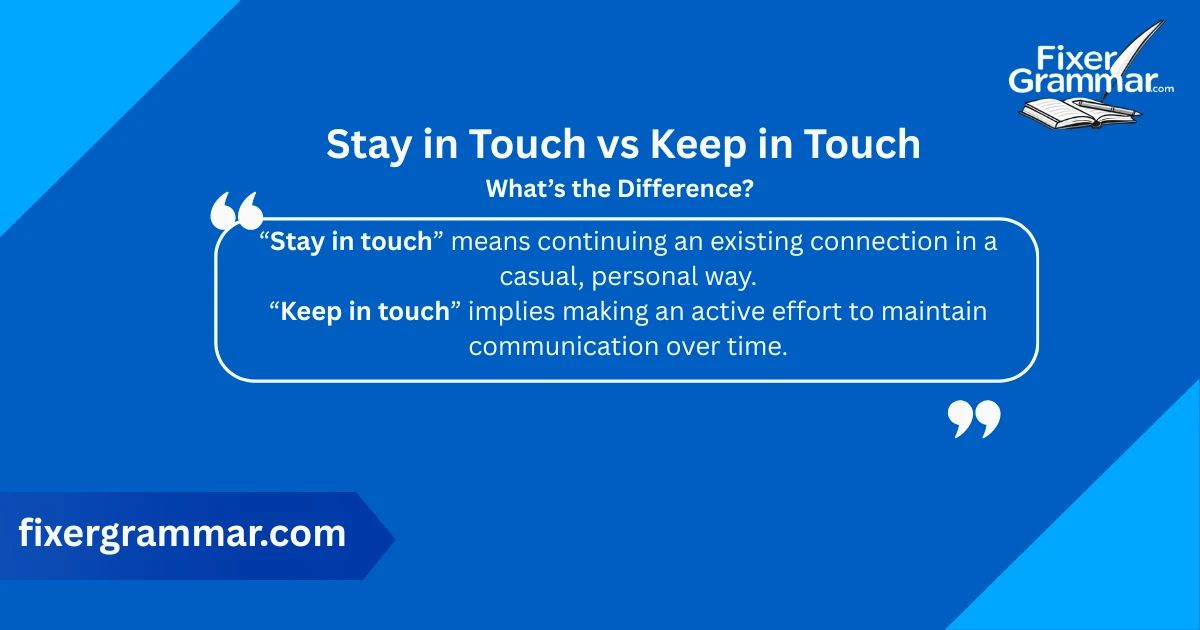
These two phrases share the same goal — maintaining communication. But the verbs stay and keep tell two different stories.
Meaning of “Stay in Touch”
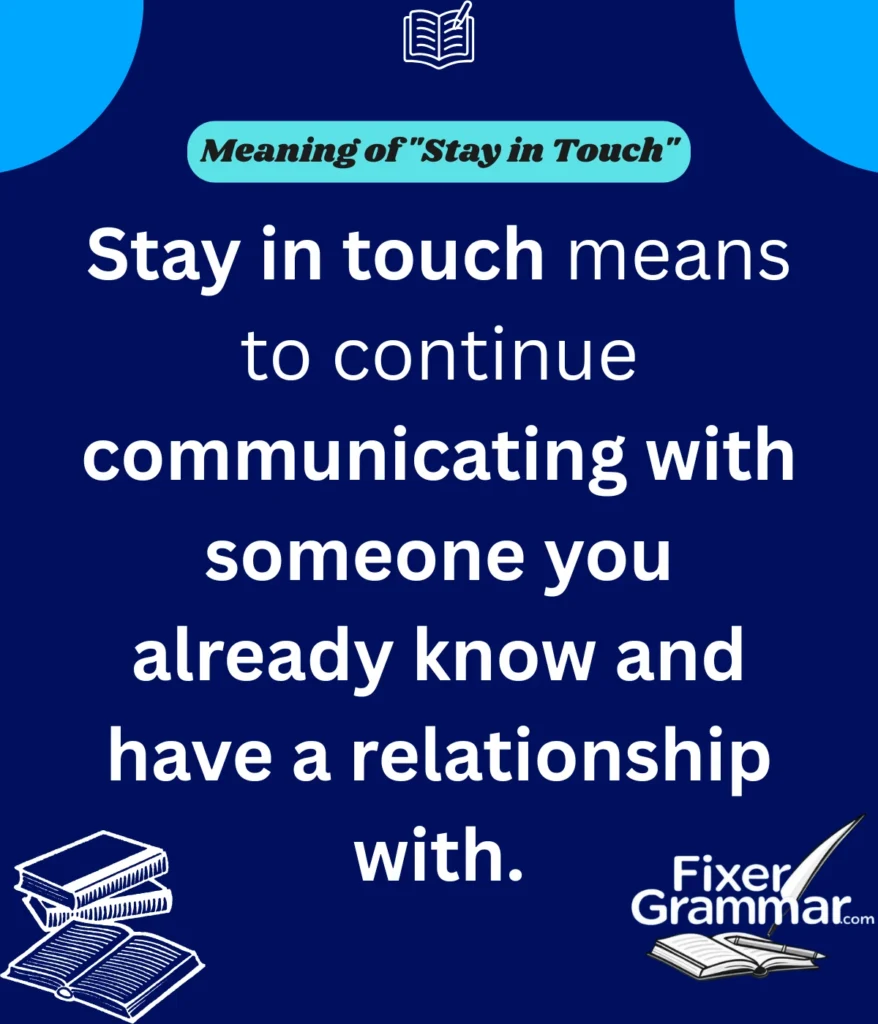
“Stay in touch” implies that a connection already exists. You’re simply asking it to continue.
It feels natural, warm, and low-pressure. No commitment required — just an open door.
Best used with: close friends, longtime coworkers, mentors, or anyone you already have a real bond with.
“I’ve really enjoyed working with you this year. Please stay in touch!”
More Posts:So Do I vs So Am I — What’s the Real Difference? 2026
Meaning of “Keep in Touch”
“Keep in touch” implies effort. It’s more intentional and forward-looking.
The word keep signals that someone needs to take action to maintain the connection — it doesn’t happen on its own.
Best used with: new contacts, networking connections, clients, or professional acquaintances.
“It was great meeting you at the conference. Let’s keep in touch!”
Key Differences: Stay in Touch vs Keep in Touch
At the core, the difference comes down to effort and emotional weight.
- “Stay in touch” leans on what already exists.
- “Keep in touch” asks for something to be built or maintained going forward.
| Aspect | Stay in Touch | Keep in Touch |
|---|---|---|
| Tone | Warm, casual | Polite, intentional |
| Effort Required | Low | Moderate to high |
| Implied Follow-Up | Optional | Expected |
| Best For | Existing relationships | New or growing connections |
| Common Setting | Personal, informal | Professional, networking |
More Posts:Checkup or Check Up — What’s the Difference ? 2026
When to Use Each Phrase (Practical Guide)
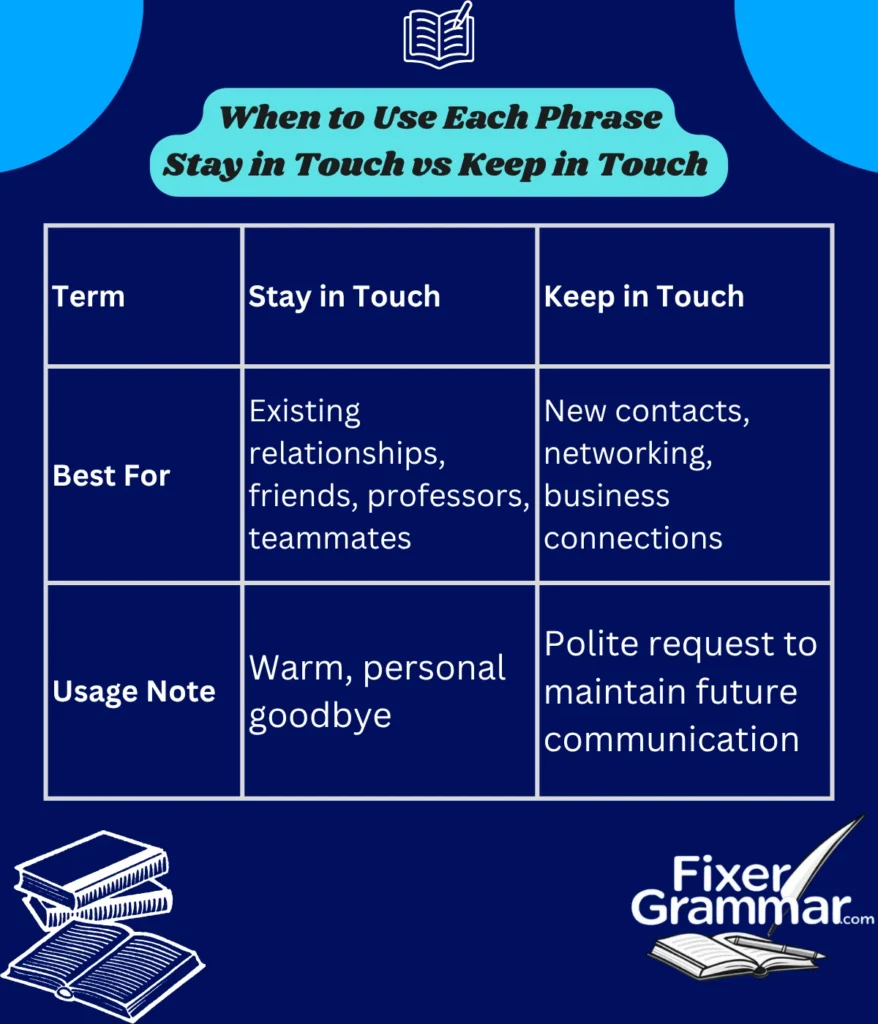
Context is everything.
Use “stay in touch” when:
- Saying goodbye to a close friend moving away
- Wrapping up a semester with a professor you admire
- Leaving a job you loved with teammates you’ll miss
Use “keep in touch” when:
- Closing a business meeting or networking conversation
- Following up after a job interview
- Exchanging contact info with someone new
| Situation | Recommended Phrase |
|---|---|
| Friend moving away | Stay in touch |
| Networking event | Keep in touch |
| Leaving a job | Stay in touch |
| After a client meeting | Keep in touch |
| Ending a mentorship | Stay in touch |
| LinkedIn message | Keep in touch |
What about digital communication?
- Platform matters too. A handwritten card or personal text feels natural with “stay in touch.”
- A professional email or LinkedIn message fits better with “keep in touch.”
More Posts:Calvary vs. Cavalry – What’s the Difference ? 2026
FAQ’s About Stay in Touch vs Keep in Touch
Is “Stay in Touch” more personal than “Keep in Touch”?
Yes. “Stay in touch” feels more heartfelt and emotional — it’s best for friends, family, or close connections you already have.
When should I say “Keep in Touch”?
Use “keep in touch” in professional or networking settings — after a business meeting, event, or new introduction. It keeps the door open politely.
Can I use both phrases interchangeably?
They’re sometimes used interchangeably, but context matters. “Stay in touch” focuses on continuing an existing bond; “keep in touch” suggests maintaining contact after parting.
Do cultural differences affect how these phrases are used?
Slightly. In British English, both phrases are used more interchangeably. In standard usage, “keep in touch” leans more professional and “stay in touch” leans more personal.
Which phrase is more suitable in a farewell email?
For a professional goodbye, use “keep in touch.” For a personal or heartfelt farewell, “stay in touch” sounds more genuine and natural.
Conclusion
The difference between stay in touch vs keep in touch is small — but it matters. One signals an existing connection. The other signals intentional effort.
Choose based on your relationship and intent. The right phrase leaves a lasting impression long after the conversation ends.

At FixerGrammar.com, Johnson Isaacs shares easy grammar tips, clear examples, and helpful guidance to make writing simple, smooth, and mistake-free.
Related Posts