Knowing the difference helps you communicate clearly, whether you’re writing a review, checking a credit score, or giving feedback at work.
What Do Fair and Good Actually Mean?
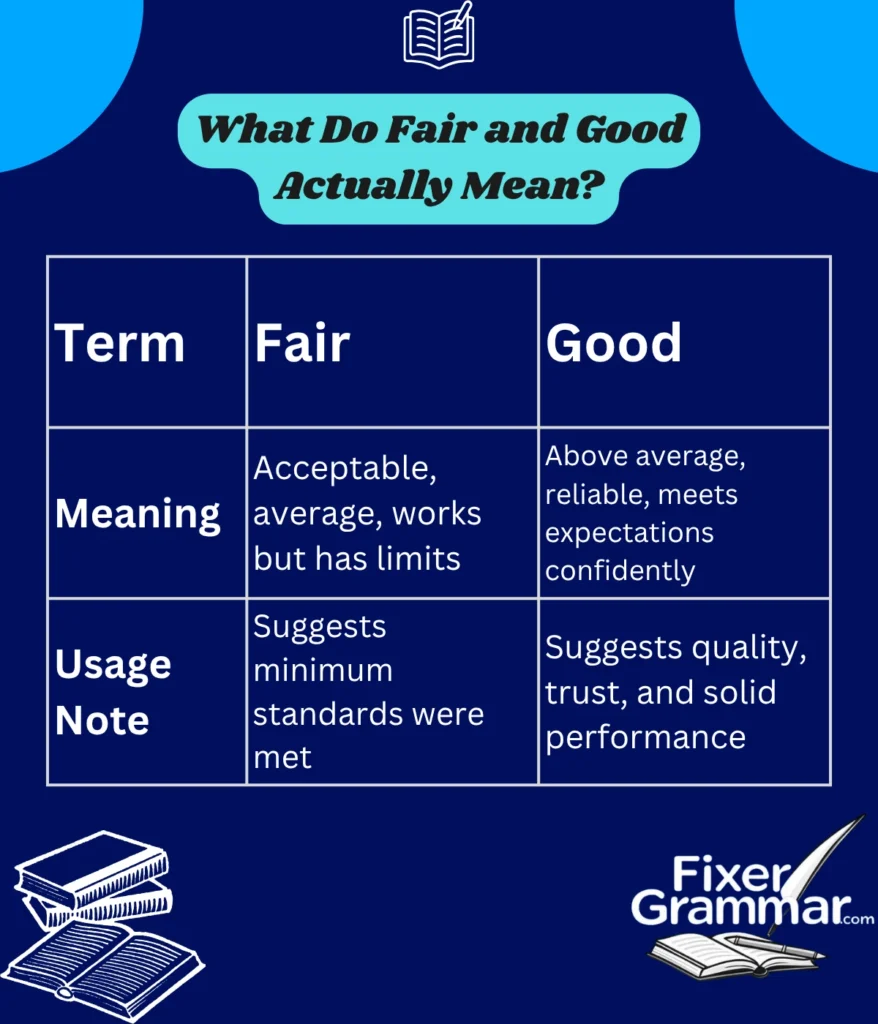
Fair comes from Old English fæger, meaning “pleasing” or “adequate.” Today it signals something that works but doesn’t impress. It meets the minimum. Nothing more.
Good traces back to Old English gōd, meaning “virtuous and desirable.” It tells people something is solid, dependable, and worth trusting.
Key meanings side by side:
- Fair = acceptable, average, functional with limits
- Good = above average, reliable, meets expectations confidently
Why does “fair” sometimes feel like a mild insult? Because most people associate it with “just okay.” It doesn’t celebrate anything. It simply tolerates it.
Fair vs Good: Side-by-Side Comparison
| Category | Fair | Good |
|---|---|---|
| Quality Level | Acceptable, limited | Above average |
| Emotional Signal | Mild caution | Confidence |
| Reliability | Inconsistent | Consistent |
| Value Perception | Basic | Solid |
| Typical Use | Honest disclosure | Building trust |
Is fair lower than good? Yes. In nearly every rating system — from star reviews to credit scores — good sits higher than fair on the scale.
More Posts:Separate vs. Seperate – What’s the Real Difference? 2026
How to Choose the Right Word Every Time
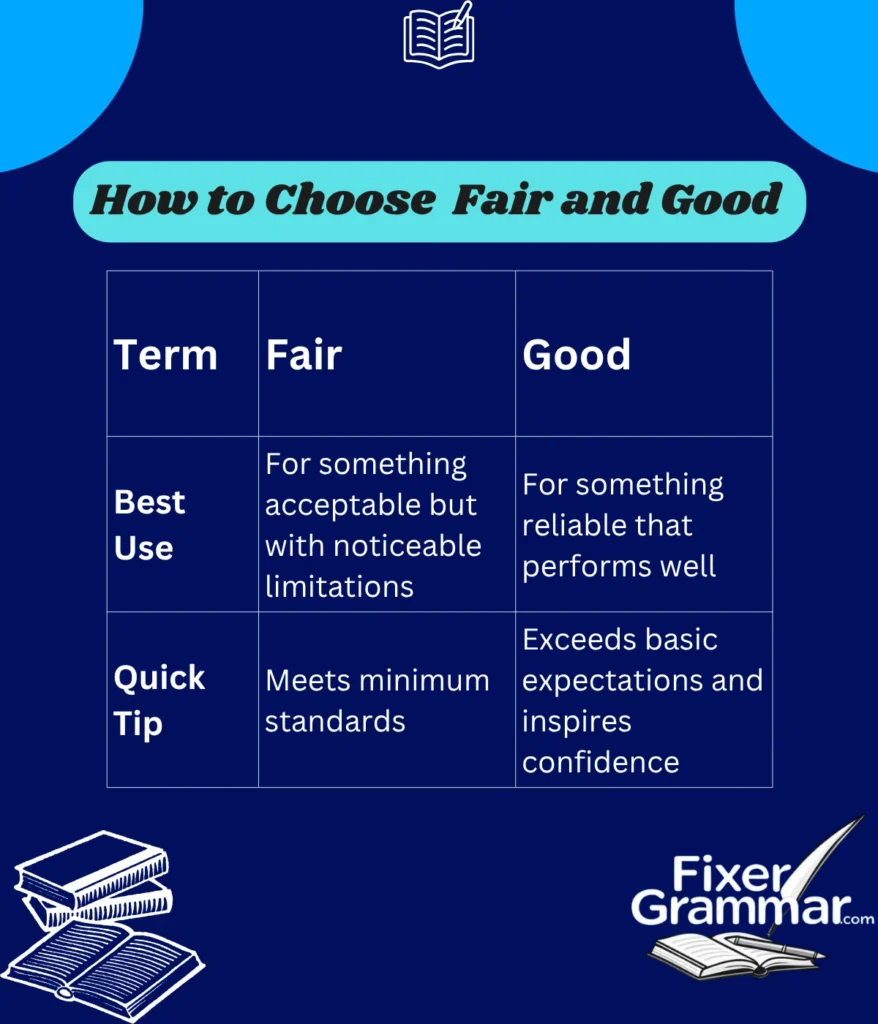
Use “fair” when:
- Something works but has visible flaws
- You want to be honest without being harsh
- Quality meets minimum standards only
- You’re disclosing limitations transparently
Use “good” when:
- Quality is reliable and consistent
- Performance exceeds basic expectations
- You want to build trust and confidence
- The item, person, or result genuinely delivers
Quick memory trick: Ask yourself one question — “Would I confidently recommend this?”
If yes, it’s good.
If you’d hesitate, it’s fair.
Common mistake to avoid: Using “good” when something is clearly just adequate. It misleads the reader and damages your credibility over time.
Fair vs Good Condition: Examples
Electronics:
- Fair condition = scratches, worn battery, visible wear
- Good condition = minor cosmetic marks, works reliably
Used cars:
- Fair condition = noticeable rust, high mileage, possible repairs needed
- Good condition = regular maintenance, moderate mileage, runs smoothly
What does “fair condition” mean for buyers? It means expect issues. Platforms like eBay and Facebook Marketplace use these labels consistently. Studies show fair-condition items sell for 30–40% less than the same item listed as good condition.
In real estate:
- Fair condition = outdated systems, repairs needed, livable but tired
- Good condition = well-maintained, functional, move-in ready
One word on a listing shifts buyer interest, negotiation power, and final sale price dramatically.
FAQ’s
Is fair the same as good?
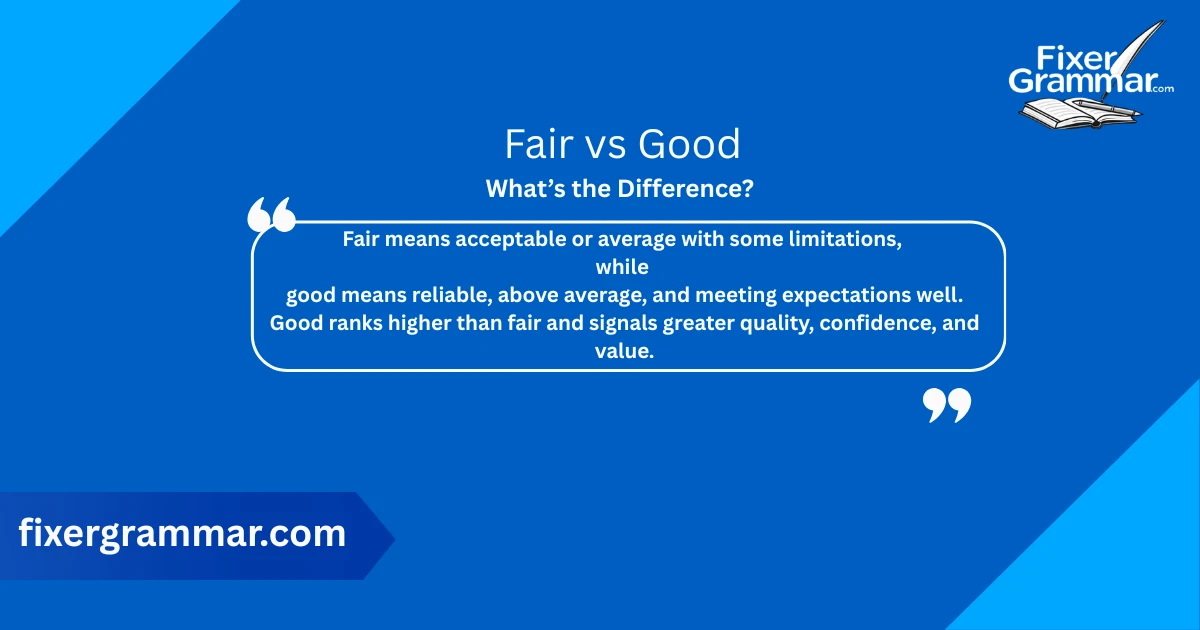
No. Fair means acceptable with limitations, while good means reliably above average. They both sit on the positive side, but good carries more confidence and trust than fair does.
Is good always better than fair?
In almost every context — yes. Good signals higher quality, stronger performance, and more trust. Fair signals adequacy with room for improvement.
Why does “fair” feel negative even though it’s not a bad word?
Because most rating scales place fair below good. People internalize that ladder. When they hear fair, they automatically think “not quite good enough.”
What does fair condition mean on a product listing?
Fair condition means the item works but shows noticeable wear or flaws. Expect scratches, reduced performance, or cosmetic damage. It’s usable — not ideal.
How much does fair vs good credit score affect interest rates?
Significantly. Moving from fair to good credit can lower your interest rate by 4–8 percentage points, saving thousands over a loan’s lifetime.
Conclusion
Fair vs good is never just a grammar question. It’s a perception question. Fair tells people to expect limits. Good tells them to expect reliability.
Whether you’re writing a review, giving feedback, or checking your credit score — choose your word with intention. That single step from fair to good can change how people feel, what they decide, and what they pay.

At FixerGrammar.com, Johnson Isaacs shares easy grammar tips, clear examples, and helpful guidance to make writing simple, smooth, and mistake-free.
Related Posts