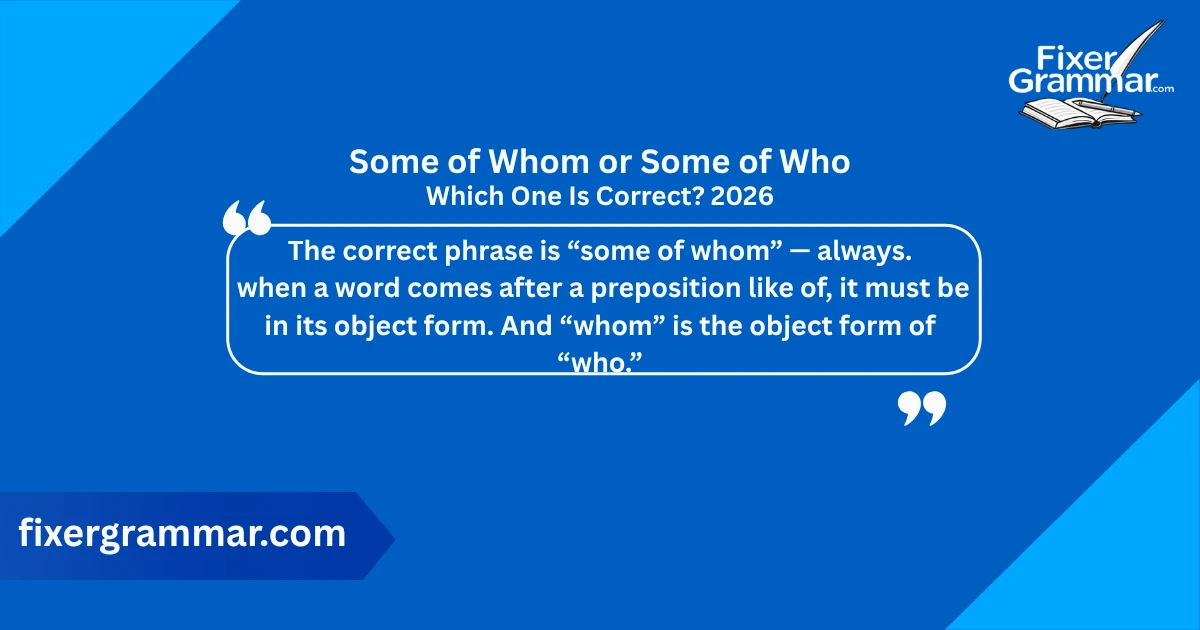
This one rule clears up the confusion completely.
Who vs. Whom — What’s the Real Difference?
Who is a subject pronoun. It does the action. Whom is an object pronoun. It receives the action.
The quickest test: swap the word with he or him. If he fits, use who. If him fits, use whom.
Who called? → He called. ✅ To whom did you speak? → I spoke to him. ✅
More Posts:Impatient vs Inpatient – Which Is Correct? 2026
“Some of Whom” — Meaning, Rule & Why It’s Always Correct
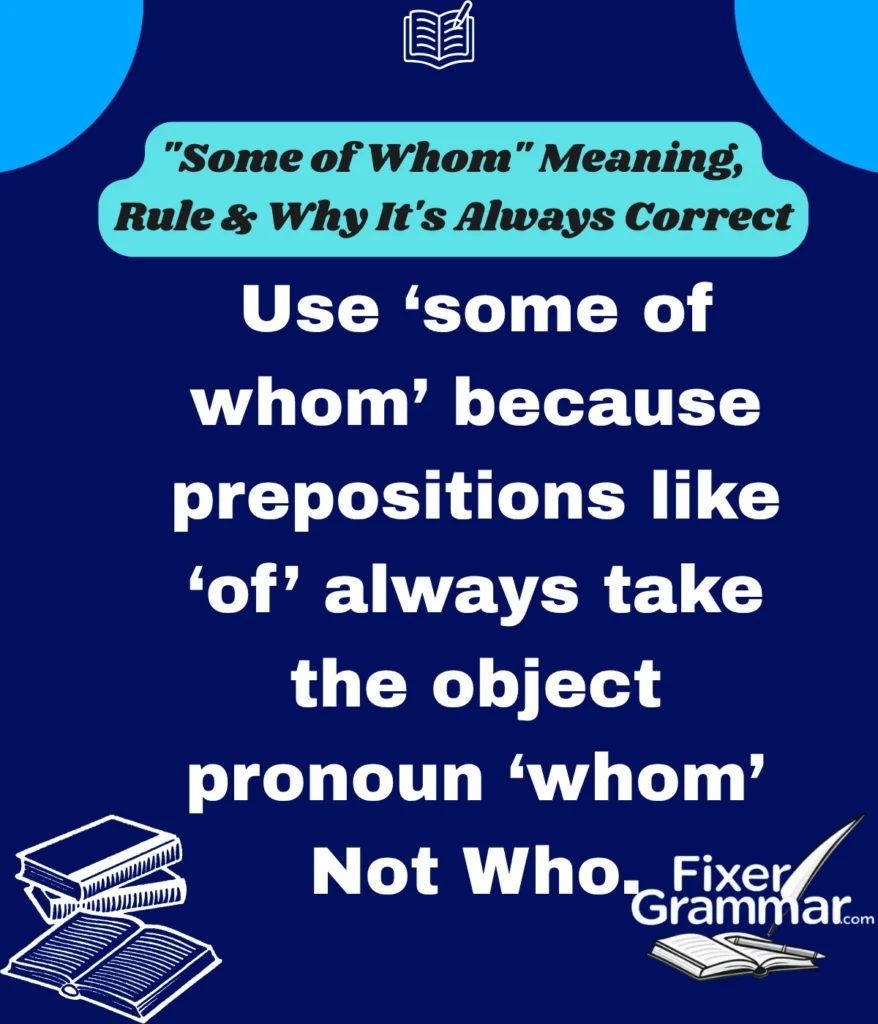
The word “of” is a preposition. In English, prepositions always take an object pronoun — never a subject pronoun.
Since whom is the objective case of who, it must follow of. That’s the whole rule.
Correct examples:
- I invited 15 colleagues, some of whom arrived late.
- The team included 10 experts, several of whom had PhDs.
- She interviewed 30 candidates, many of whom lacked experience.
“Some of Who” — Why It’s Always Wrong

“Who” is a subject pronoun. It cannot follow a preposition like of, to, with, or for.
Writing “some of who” breaks a fundamental grammar rule — the same way saying “some of he” would be wrong.
Incorrect:
- I met 10 writers, some of who were poets. ❌
- She called her friends, some of who didn’t answer. ❌
Corrected:
- I met 10 writers, some of whom were poets. ✅
- She called her friends, some of whom didn’t answer. ✅
Some of Whom vs. Some of Who — Side-by-Side Examples
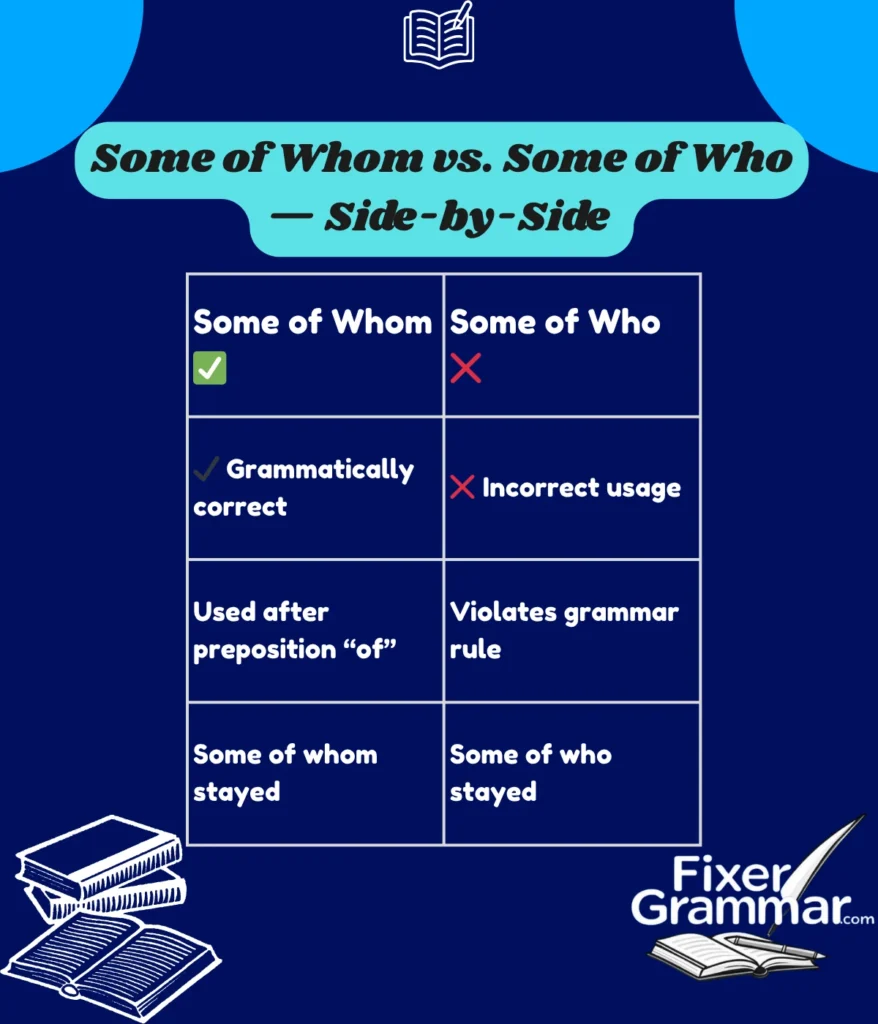
Some of Whom vs Some of Who – Context Usage
| Context | Correct ✅ | Incorrect ❌ |
| Academic | Some of whom completed the study | Some of who completed the study |
| Professional | Some of whom joined the project | Some of who joined the project |
| Everyday | Some of whom stayed for dinner | Some of who stayed for dinner |
| Formal writing | Many of whom lacked credentials | Many of who lacked credentials |
Related phrases that also follow this rule:
- Few of whom — Few of whom responded to the survey.
- Many of whom — Many of whom were first-time voters.
- Several of whom — Several of whom had prior experience.
- None of whom — None of whom qualified for the role.
More Posts:Emasculate vs Demasculate – What’s the Difference? 2026
Quick Tricks to Remember: Some of Whom or Some of Who
The him/her substitution test is the fastest way to get this right every time.
Replace the blank with him or he and see which one sounds correct:
“I spoke with some of ___.” → I spoke with him → some of whom ✅ “___ came to the party.” → He came → who came ✅
Three rules to lock in:
- After any preposition (of, to, with, for) → always use whom
- If the person is doing the action → use who
- When in doubt → try the him/her swap test
FAQs — Some of Whom or Some of Who
Why is “some of whom” correct but “some of who” wrong?
“Of” is a preposition, and prepositions require object pronouns. Whom is the object form — who is not.
Do native English speakers make mistakes with this phrase?
Yes. Even fluent speakers mix this up in casual speech, especially since whom has become less common in everyday conversation.
Is it necessary to follow this rule in informal writing?
In texts or casual emails, it may go unnoticed. But in academic papers, professional reports, or formal writing, “some of whom” is expected and required.
How can I remember the difference easily?
Use the him test — if him fits in the sentence, use whom. It works every single time.
Will practice really help me avoid confusion?
Absolutely. Reading formal writing and applying the him/her test regularly will make “some of whom” feel completely natural within weeks.
The Bottom Line
Bottom line: “Some of whom” is always correct. “Some of who” is always wrong. One preposition rule — of needs an object pronoun — settles the debate for good.

At FixerGrammar.com, Johnson Isaacs shares easy grammar tips, clear examples, and helpful guidance to make writing simple, smooth, and mistake-free.
Related Posts