Knowing which one to use makes your writing sharper and more accurate.
What Does Savor Mean?
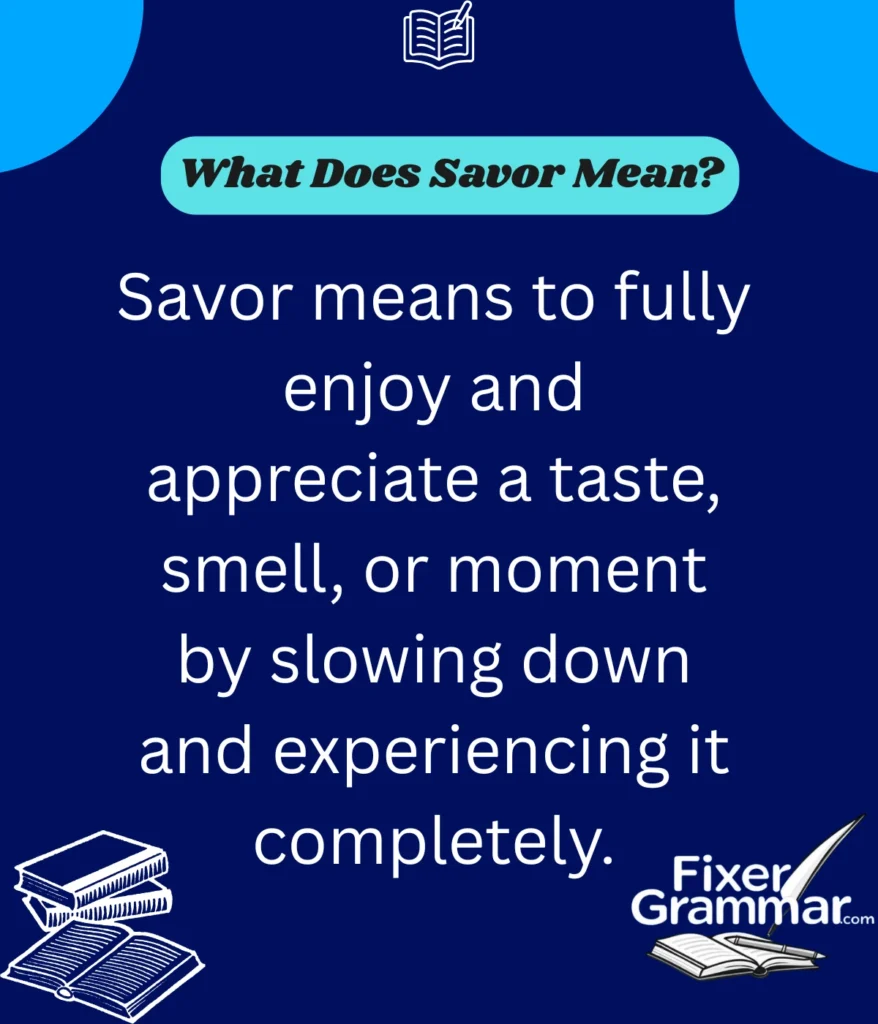
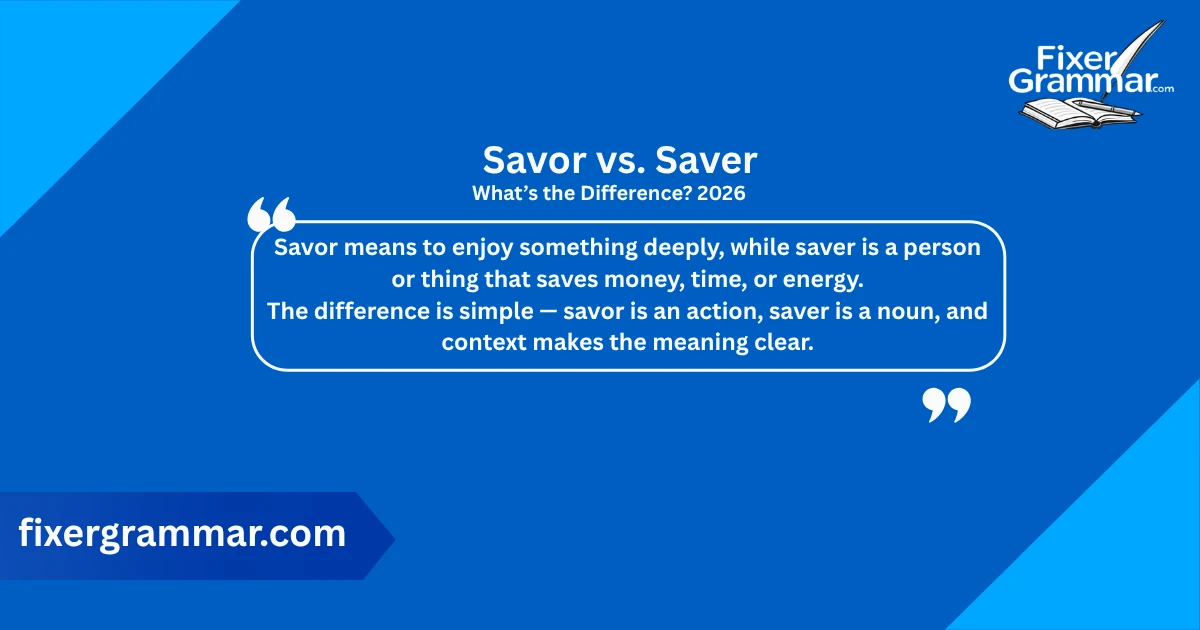
Savor means to fully enjoy something — a taste, a smell, or even a moment. It’s a verb. When you savor something, you slow down and appreciate it completely.
How is savor used in a sentence?
- She savored every bite of the warm apple pie.
- He paused to savor the silence after a long day.
- Travelers often savor new cultures and local flavors.
Savor comes from the Latin word sapere, meaning “to taste.” Over time, its meaning expanded beyond food to include experiences and emotions. Synonyms include relish, appreciate, cherish, and delight in.
Savor — Verb vs Noun
| Form | Example |
|---|---|
| Verb | “I want to savor this moment.” |
| Noun | “The savor of fresh bread filled the room.” |
What Does Saver Mean?
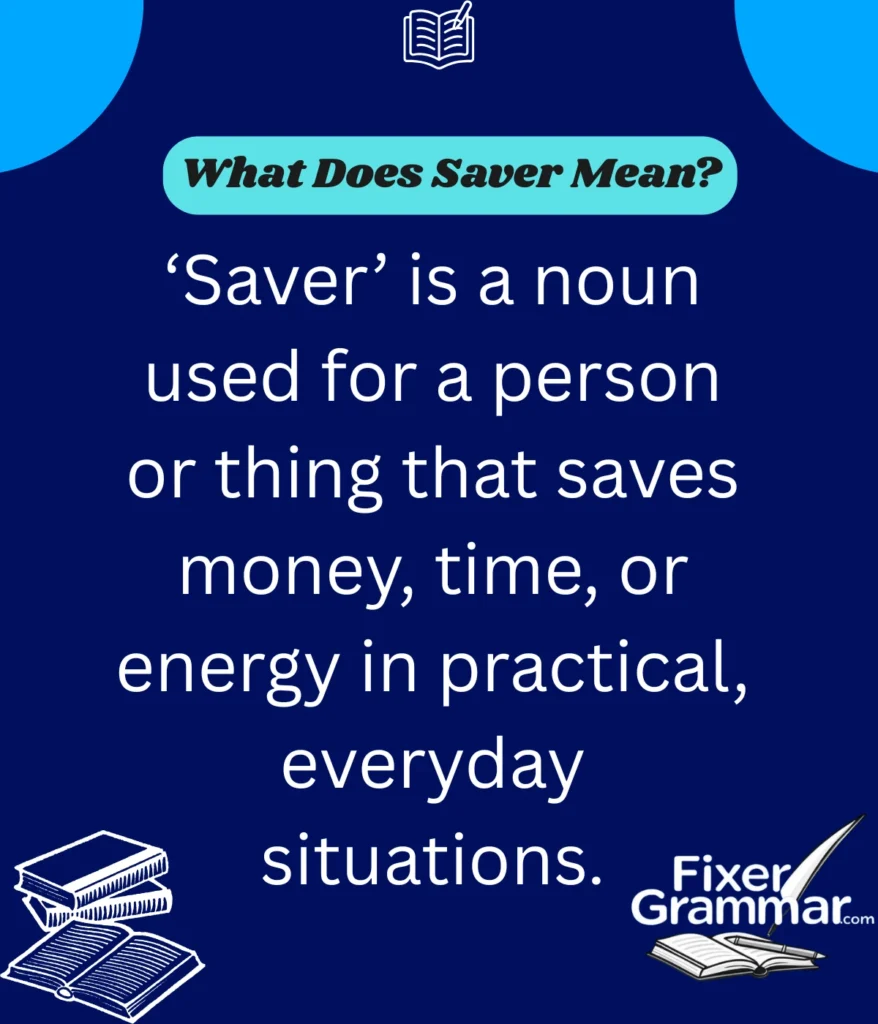
Saver is a noun. It describes a person or thing that saves — usually money, time, or energy. It carries a practical, real-world meaning.
What does saver mean in everyday life?
- She’s a smart money saver who budgets every paycheck.
- A programmable thermostat is a genuine energy saver.
- Using shortcuts at work makes you a real time saver.
Synonyms for saver include budgeter, economizer, frugal planner, and preserver.
More Posts:Tortuous vs. Torturous — What’s the Difference ? 2026
Savor vs. Saver — Key Differences Explained
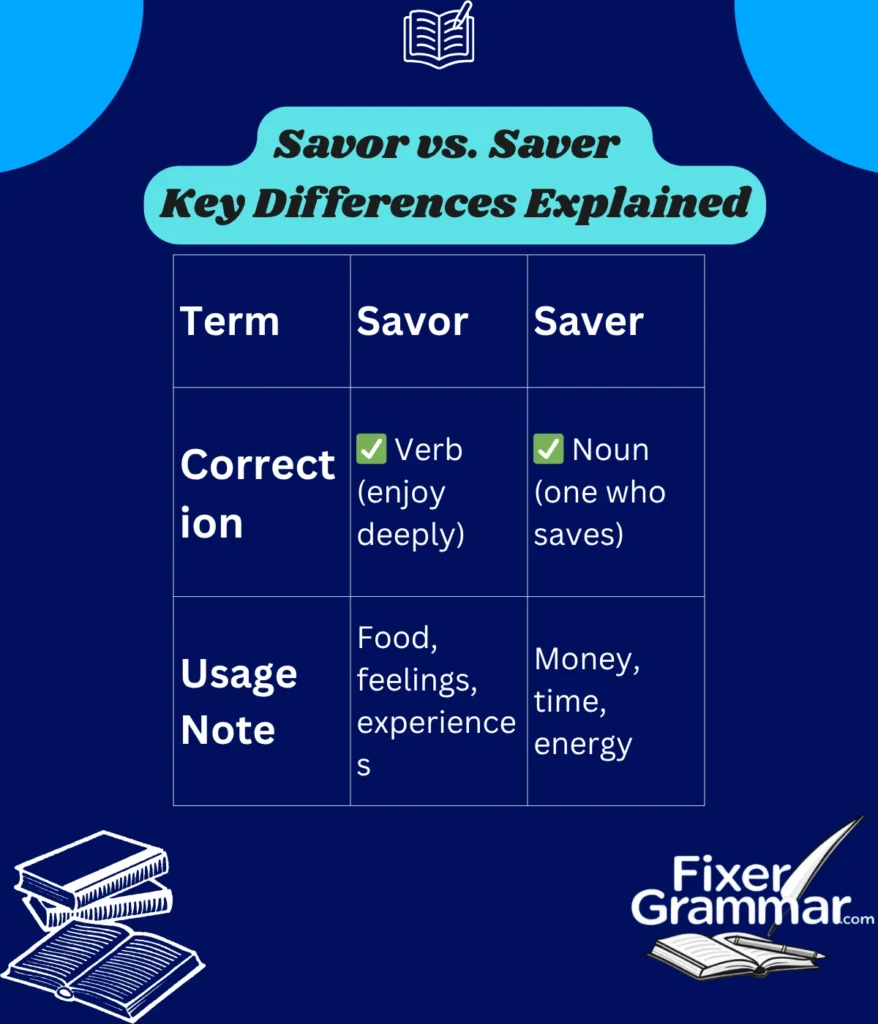
These two words share nearly identical pronunciation — both said as /ˈseɪvər/. That’s exactly why they get confused so often in writing.
Savor vs Saver — Quick Comparison
| Feature | Savor | Saver |
|---|---|---|
| Part of Speech | Verb (also noun) | Noun only |
| Meaning | To enjoy deeply | A person who saves |
| Context | Food, emotion, experience | Finance, time, energy |
| Synonyms | Relish, appreciate, cherish | Budgeter, economizer |
| Example | “Savor the flavor.” | “She’s a smart saver.” |
Common mistakes to avoid:
- ❌ “He is a wise savor with his money.”
- ✅ “He is a wise saver with his money.”
- ❌ “Let’s saver this beautiful evening.”
- ✅ “Let’s savor this beautiful evening.”
The simplest rule: if it’s an action, use savor. If it’s a person or thing, use saver.
How to Remember the Difference
Memory tricks make the difference stick fast. These two mnemonics work well:
“Savor the Flavor” — both words rhyme, and both relate to enjoyment. “Saver Saves” — the word saver literally contains save, pointing to its meaning.
Quick visual picture:
- Savor = someone slowly enjoying a warm cup of coffee ☕
- Saver = someone dropping coins into a piggy bank 🐷
Mini Quiz — Pick the right word:
- I want to ___ every second of this vacation. (Savor)
- My sister is a careful ___ who never overspends. (Saver)
- Always ___ the small joys in life. (Savor)
- Being a ___ now means more freedom later. (Saver)
More Posts:Hastle or Hassle — Which Is Correct? 2026
Real-Life Examples of Savor and Saver in Writing and Speech
Seeing both words in real contexts builds confidence fast.
Professional writing:
- “We encourage employees to savor team milestones and celebrate progress.”
- “As a consistent saver, she was able to retire five years early.”
Everyday conversation:
- “Let’s savor this pizza — it’s from our favorite place.”
- “My dad has always been a natural saver; he rarely buys things on impulse.”
In branding and marketing:
- “Savor the Moment” — used by luxury food and travel brands.
- “Super Saver Deals” — used by airlines, grocery stores, and retail promotions.
Both words carry emotional weight in advertising. Savor sells experience. Saver sells practicality.
FAQs — Savor vs. Saver
Are savor and saver pronounced the same?
Yes. Both are pronounced /ˈseɪvər/. They are homophones — same sound, different spelling and meaning.
Can savor be used as both a noun and a verb?
Yes. As a verb it means to enjoy something deeply. As a noun, it refers to the taste or quality of something — though the verb form is far more common.
What does saver mean in everyday use?
Saver refers to a person who regularly sets aside money, time, or resources. It can also describe a tool or habit that conserves something — like a time-saver or energy-saver.
How do I remember which word to use?
Use “Savor the Flavor” for enjoyment and “Saver Saves” for conservation. Ask yourself: is it an action or a person? Action = savor. Person/thing = saver.
Is there a spelling difference between countries?
Yes — once. In British English, savor is spelled savour. The meaning stays the same. Saver has no spelling difference across regions.
Conclusion
Savor and saver are homophones that trip up even careful writers.
The fix is simple — savor is what you do (enjoy), and saver is what someone is (a person who saves). Keep the mnemonics handy, check the context, and you’ll never mix them up again. Getting these small details right is what separates good writing from great writing.

At FixerGrammar.com, Johnson Isaacs shares easy grammar tips, clear examples, and helpful guidance to make writing simple, smooth, and mistake-free.
Related Posts