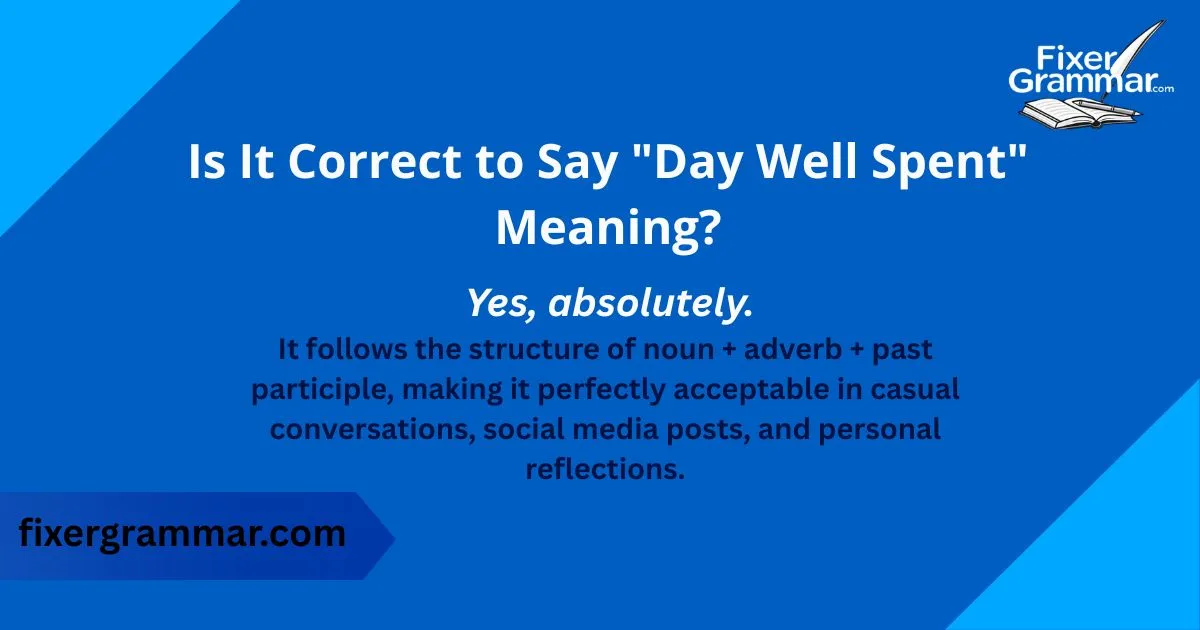
It follows the structure of noun + adverb + past participle, making it perfectly acceptable in casual conversations, social media posts, and personal reflections.
What Does “Day Well Spent” Actually Mean?

Day well spent meaning refers to time that felt worthwhile and satisfying. The phrase evaluates quality, not just productivity.
Maybe you helped family, learned something new, or simply enjoyed meaningful moments. The key is the emotional payoff.
It wraps up experiences without overexplaining. The feeling matters more than the activity list.
Common contexts include social media captions after adventures, journal entries reflecting on personal growth, and casual conversations with friends.
Is It Correct to Say “Day Well Spent”? (Grammar Explained)

Is day well spent grammatically correct? Yes, the grammar checks out completely.
The structure follows a proven English pattern. You take a noun (day), add an adverb (well), and finish with a past participle (spent). This creates a descriptive phrase that modifies the noun naturally.
Many people hesitate because the phrase often stands alone. It looks incomplete without a verb. But English allows fragments when context makes meaning obvious.
Think of similar expressions like “mission accomplished” or “job well done.” They work the same way. The past participle acts like an adjective describing the noun.
Day Well Spent vs A Day Well Spent
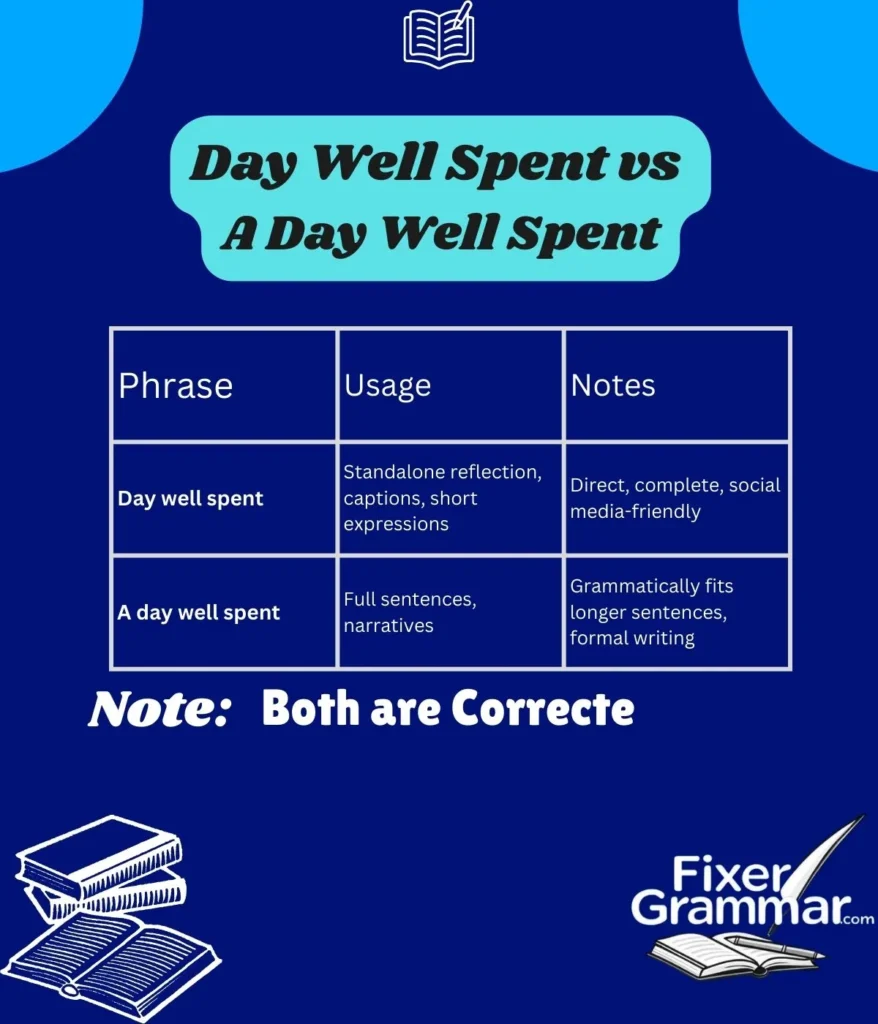
“Day well spent” works as a standalone reflection. You might post this as a caption or say it after finishing an experience. It feels direct and complete.
“A day well spent” fits better in full sentences. You’d write “Yesterday was a day well spent” or “That was a day well spent with family.” The article makes it fit grammatically into longer structures.
American usage patterns show both versions equally. Social media leans toward the shorter form. Written narratives prefer the article version.
Neither choice is wrong. Pick what sounds natural for your sentence. If it stands alone, drop the article. If it’s part of a larger thought, include it.
When and Where to Use “Day Well Spent” Correctly
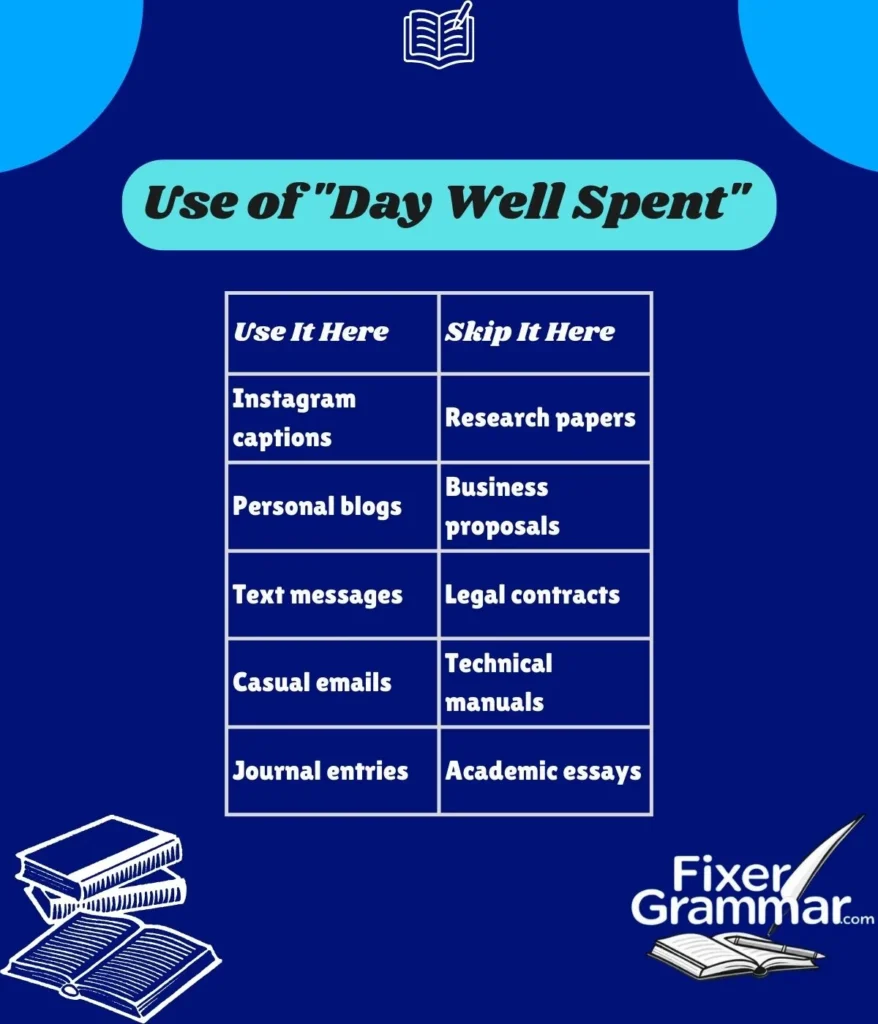
Social media captions love this phrase. It pairs perfectly with photos from trips, family gatherings, or personal achievements. The casual tone matches the platform vibe.
Personal journals and reflections benefit from authentic language. When you’re writing about experiences that mattered, “day well spent” captures the feeling without overthinking.
Casual conversations with friends or family work great too. Someone asks about your weekend, you smile and say “day well spent.” It says everything without a detailed report.
Text messages and informal writing embrace this expression naturally. It’s quick, clear, and emotionally honest—exactly what digital communication needs.
Situations to avoid include academic papers, business reports, legal documents, and formal presentations. These contexts demand complete sentences and explicit structure. Use alternatives like “The day was productive” or “Time was used effectively” instead.
Day Well Spent Sentence Examples (Real-Life Usage)
How to use day well spent becomes clearer with real examples. Here’s how Americans naturally incorporate this phrase:
- “Finished the project and learned three new skills. Day well spent.”
- “Spent the afternoon teaching my daughter to ride a bike. A day well spent for sure.”
- “No meetings, no stress, just quality time with old friends. Day well spent.”
- “Cleaned the garage, organized the shed, and still had energy for dinner. That was a day well spent.”
- “Sometimes doing nothing productive is the most productive thing. Day well spent just relaxing.”
- “Volunteered at the food bank this morning. Definitely a day well spent.”
- “Hiked ten miles, saw incredible views, and forgot about work entirely. Day well spent.”
Notice how these examples focus on positive evaluation of time rather than just listing activities. The emotional satisfaction shines through each statement.
Different contexts show the phrase’s flexibility. Work achievements, family moments, personal growth, and even rest all qualify. What matters is the feeling afterward.
Synonyms and Alternatives for “Day Well Spent”

Time well spent offers a broader scope. It works for any duration, not just a full day. Use this when talking about hours or weeks.
Productive day emphasizes output and accomplishment. Choose this in work contexts where results matter more than feelings.
Fulfilling day highlights emotional satisfaction. It works perfectly for experiences that touched your heart or soul.
Worthwhile day balances practical and emotional value. It suggests the day delivered what you hoped for without specifying how.
Meaningful time deepens the emotional angle. Use this when experiences carried personal significance beyond basic productivity.
- Time well invested → Suggests future returns
- Rewarding experience → Emphasizes payoff
- Quality time → Focuses on relationship value
- Valuable day → Highlights worth and importance
When to use each alternative depends on your audience and context. Professional settings prefer “productive” or “worthwhile.” Personal reflections embrace “fulfilling” or “meaningful.”
FAQ’s
Is “day well spent” grammatically correct?
Yes, it follows the noun + adverb + past participle structure used throughout English. The phrase is perfectly acceptable in informal contexts.
What does “day well spent” mean in English?
It means time that felt worthwhile and satisfying after reflection. The phrase captures emotional contentment with how a day unfolded.
What’s the difference between “day well spent” and “time well spent”?
“Day well spent” refers specifically to a full day. “Time well spent” works for any duration from minutes to years.
Final Thoughts
Understanding day well spent grammar gives you confidence to use the phrase naturally. The structure is solid, the meaning is clear, and Americans recognize it instantly.
Don’t overthink it. When a day leaves you satisfied, the phrase captures that feeling perfectly. Use it in casual contexts, skip it in formal ones, and always trust the past participle form.
Share your day well spent moments with friends and family. The phrase connects people through shared experiences and positive reflections. After all, recognizing time well used is its own reward.

At FixerGrammar.com, Johnson Isaacs shares easy grammar tips, clear examples, and helpful guidance to make writing simple, smooth, and mistake-free.
Related Posts