Both “He is risen” and “He has risen” are grammatically correct ways to proclaim Christ’s resurrection.
The choice between these phrases isn’t about right or wrong—it’s about emphasis, tradition, and what each reveals about the Resurrection power we celebrate.
The Grammar Behind “He Is Risen” vs. “He Has Risen”
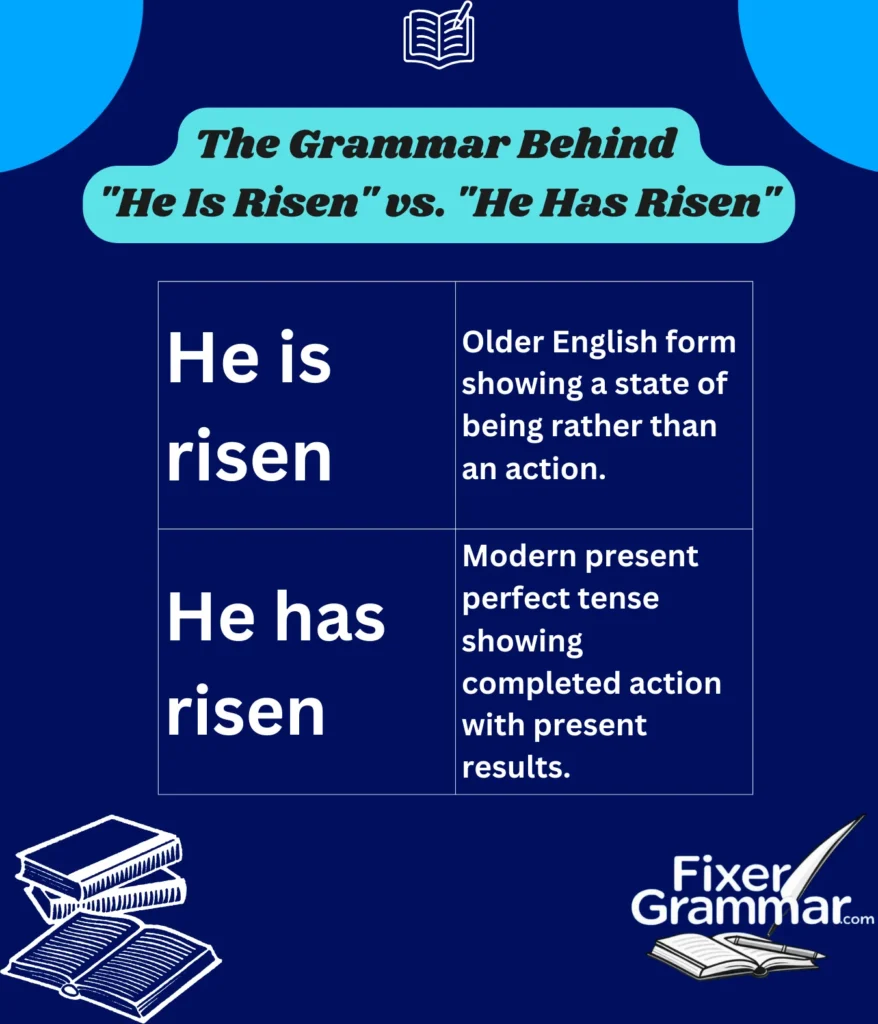
“He is risen” uses an older English construction called the unaccusative intransitive form. This sounds complicated, but it’s actually simple. Think of it like “the sun is set” or “autumn is come”—phrases that describe a state of being rather than an action.
Modern English prefers “He has risen” because it uses the present perfect tense. This form clearly shows a completed action with present results. Most people find it more natural and easier to understand.
The Greek aorist tense in the original New Testament texts allows both translations. This verb form doesn’t lock us into one specific time frame. It can express past action, present state, or even timeless truth—giving translators flexibility.
| Phrase | Grammar Type | What It Emphasizes |
|---|---|---|
| He is risen | Passive construction | Current state of being alive |
| He has risen | Present perfect | Completed action of rising |
More Posts: Time Slot vs Timeslot: Which is Correct, Usage and Common Mistakes
What Does “He Is Risen” Emphasize?

“He is risen” puts the spotlight on Jesus being alive right now. It’s not just about something that happened on Easter morning—it’s about His present reality. This phrase carries weight because it shows Jesus didn’t just rise temporarily; He remains risen forever.
The construction suggests God the Father raised Jesus from the dead. Notice the passive voice—Jesus is the receiver of the action. This aligns perfectly with verses like Acts 2:24, which says God raised Him from the dead.
Theologians call this the “gnomic aorist”—a timeless statement of truth. It’s like saying “the sky is blue” or “God is love.” These aren’t just past facts; they’re ongoing realities. Christ’s resurrection exists in an eternal present.
What Does “He Has Risen” Emphasize?
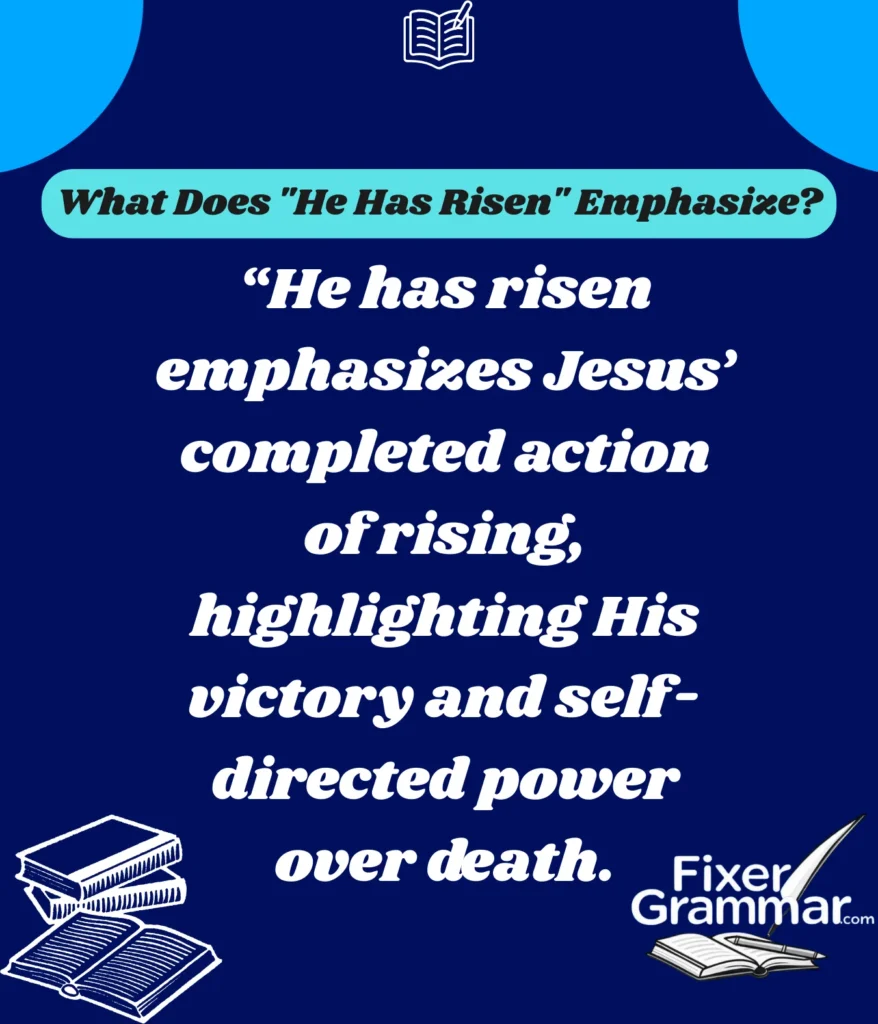
“He has risen” focuses on the triumphant action Jesus completed. It highlights the moment He burst from the tomb, defeating death forever. This phrasing makes Jesus the active agent—He rose by His own power.
Most modern Bible translations prefer this form because it communicates clearly to today’s readers. The language feels natural and immediate. When someone says “He has risen,” we instantly understand the victory accomplished.
This emphasis connects beautifully to verses about Jesus having authority over death. John 10:18 records Jesus saying, “I have authority to lay it down and authority to take it up again.” The phrase “has risen” captures that self-directed power.
More Posts: “At the House” vs “In the House” – Which Is Correct?
Biblical Origins Where Do We Find These Phrases?
The angel at the empty tomb first declared this truth in Matthew 28:6: “He is not here; he has risen, just as he said.” Different translations render this moment slightly differently, but the message stays rock-solid.
Mark 16:6 records similar words when women discovered the empty tomb. Luke 24:6 has angels reminding the women of Jesus’ prediction about rising on the third day. Luke 24:34 shows disciples exclaiming “The Lord has risen indeed!”
The apostle Paul used this language powerfully in his letters. Romans 8:34 declares, “Christ Jesus who died—more than that, who was raised to life—is at the right hand of God.” In 1 Corinthians 15:20, Paul writes, “But Christ has indeed been raised from the dead.”
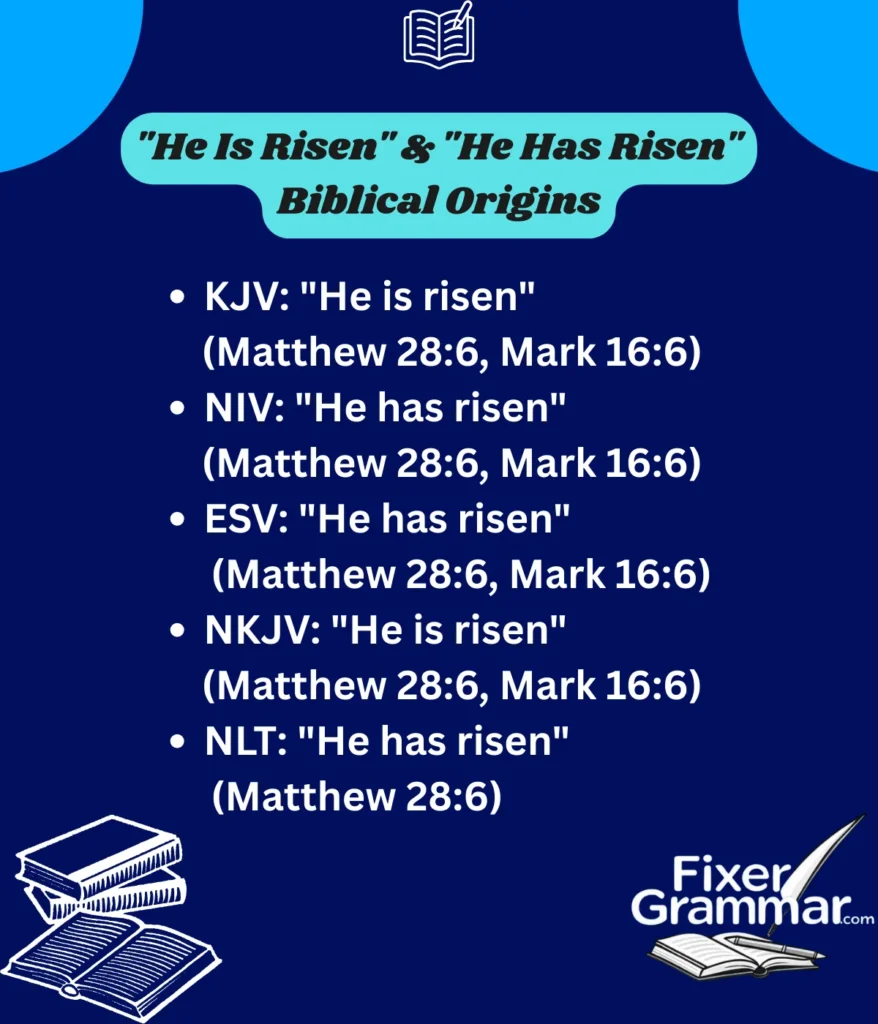
Bible Translation Comparison:
- KJV: “He is risen” (Matthew 28:6, Mark 16:6)
- NIV: “He has risen” (Matthew 28:6, Mark 16:6)
- ESV: “He has risen” (Matthew 28:6, Mark 16:6)
- NKJV: “He is risen” (Matthew 28:6, Mark 16:6)
- NLT: “He has risen” (Matthew 28:6)
The Theological Significance of “Is Risen” vs. “Has Risen”
The difference reveals beautiful Trinitarian truth. “He is risen” emphasizes the Father’s role in raising Jesus, showing divine cooperation. “He has risen” highlights Jesus’ own power and authority over death. Both are biblically true and theologically rich.
Resurrection as present reality matters for daily Christian living. When we say “is risen,” we’re reminded that Christ’s resurrection power operates in our lives right now. It’s not just ancient history—it’s present help.
This connects to Paul’s prayer in Ephesians 1:19-20 about “his incomparably great power for us who believe.” That same power that raised Christ from the dead works in believers today. We don’t just commemorate resurrection—we live in resurrection power.
Which Phrase Should Christians Use Today?
Both phrases are perfectly acceptable in worship, conversation, and celebration. Your choice depends on context, personal preference, and church tradition. Neither is more biblical or more accurate than the other.
Traditional liturgical churches often prefer “He is risen” during Easter services. The call-and-response “He is risen!” / “He is risen indeed!” has roots going back centuries in Christian worship. It connects modern believers to historical faith.
Contemporary churches might lean toward “He has risen” because it sounds natural to younger generations. The language flows easily in modern worship songs and casual conversation about faith.
For Easter greetings, both work beautifully:
- “He is risen!” invites the response “He is risen indeed!”
- “He has risen!” can be answered with “Hallelujah!” or “Praise the Lord!”
Respect denominational differences when visiting other churches. If they say “is risen,” join them. If they say “has risen,” celebrate with them. Unity in Christ matters more than phrase preference.
The key is focusing on the truth proclaimed, not getting stuck on word choices. Whether you say “is” or “has,” you’re declaring the most important event in human history—Jesus conquered death and offers eternal life.
FAQ’s
Is “He is risen” grammatically correct?
Yes, it’s an archaic but valid construction using the unaccusative intransitive verb form, common in older English.
Why do some Bibles say “He is risen” while others say “He has risen”?
Translation teams choose based on the Greek aorist tense, which allows both interpretations—one emphasizes state, the other action.
What is the traditional Easter greeting response to “He is risen”?
The classic response is “He is risen indeed!” or “He is risen indeed, Alleluia!” used in liturgical traditions.
Does it matter which phrase I use?
No, both are theologically accurate and biblically sound. Choose based on your church tradition, personal preference, or worship context.
Which is more biblically accurate: “is risen” or “has risen”?
Both accurately translate the original Greek text—they emphasize different aspects of the same resurrection truth.
What does the aorist tense mean in relation to the Resurrection?
The Greek aorist tense expresses action without specifying time, allowing translation as past event, present state, or timeless reality.
Why does the King James Version prefer “He is risen”?
The KJV reflects 17th-century English usage, when forming perfect tenses with “to be” verbs was standard grammar.
Final Verdict
Both “He is risen” and “He has risen” are grammatically correct and biblically accurate ways to proclaim Christ’s resurrection.
“He is risen” emphasizes Jesus’ ongoing life, while “He has risen” highlights His victorious rising from the dead. Modern readers often prefer “He has risen” for clarity, but “He is risen” remains cherished in tradition and Easter worship. Both phrases convey the timeless truth that Jesus conquered death and lives forever.

At FixerGrammar.com, Johnson Isaacs shares easy grammar tips, clear examples, and helpful guidance to make writing simple, smooth, and mistake-free.
Related Posts