Mixing them up can confuse your reader instantly — especially in professional or technical writing. This guide clears everything up in plain, simple language.
What Do Tear and Tare Actually Mean
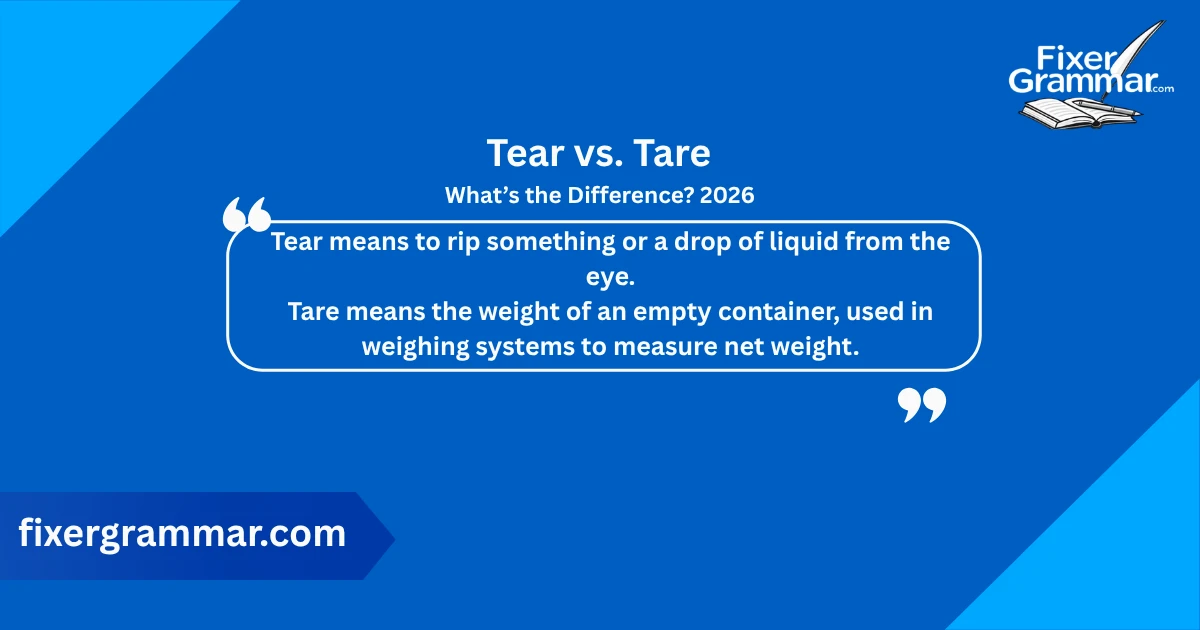
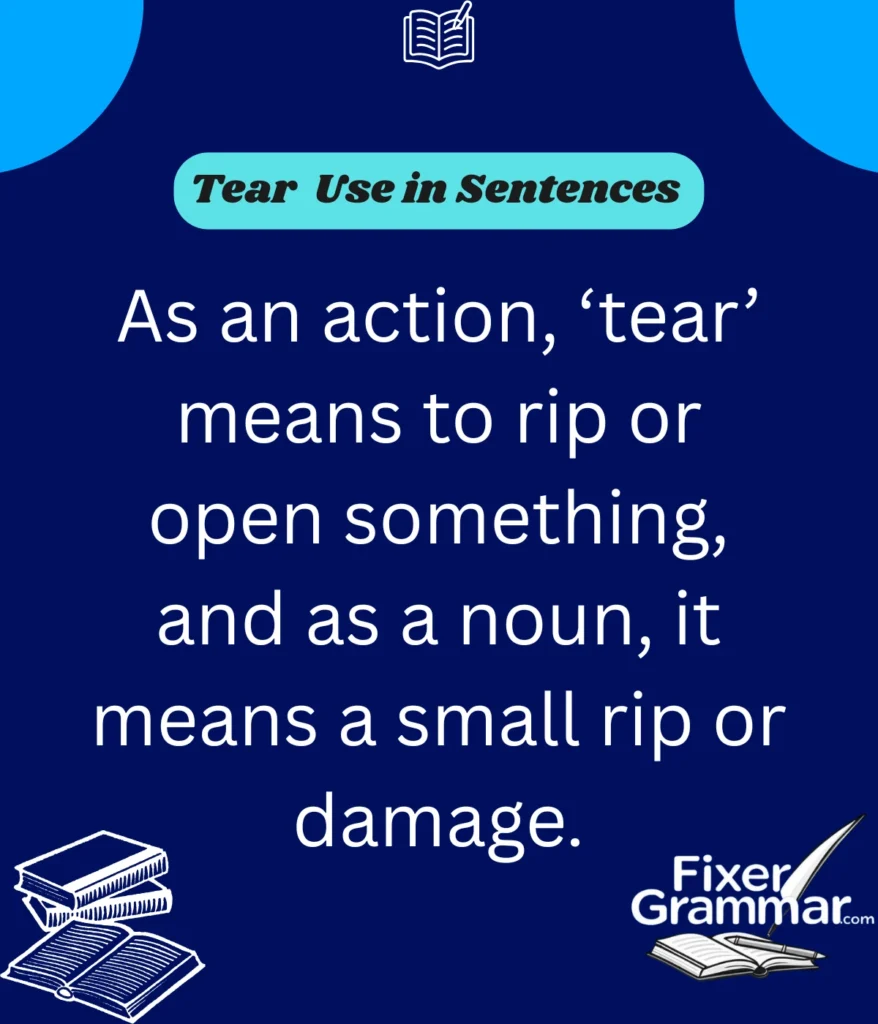
Tear comes from the Old English word teran, meaning to pull apart by force. It works as both a noun and a verb.
- As a verb, it means to rip something.
- As a noun, it means the hole left behind — or a drop of liquid from your eye.
Tare comes from Old French tare, meaning waste or deduction. It refers to the weight of an empty container. When you place a box on a scale and press the tare button, the scale resets to zero so you only weigh the contents inside.
Tear vs Tare – Quick Comparison
| Word | Part of Speech | Core Meaning | Used In |
| Tear | Noun / Verb | Rip or eye drop | Everyday language |
| Tare | Noun / Verb | Container weight | Shipping, cooking, science |
Tear vs. Tare — Key Differences Explained
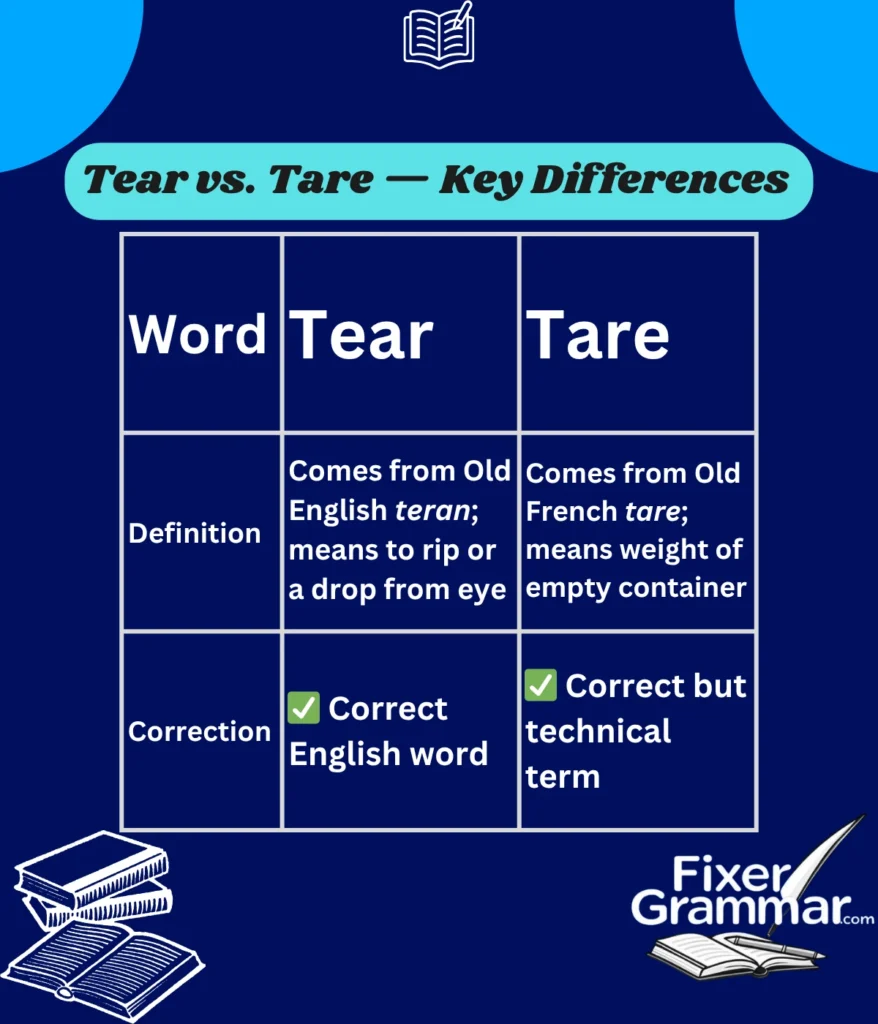
The biggest difference is context.
If the sentence involves emotion or physical damage, the word is tear.
If the sentence involves weight, scales, or packaging, the word is tare.
They are homophones — words that sound identical but have different spellings and meanings. Both rhyme with “air” and “bear.” However, tear (rhyming with “ear”) is a completely separate pronunciation used only for eye drops.
More Posts:Loot vs. Lute — What’s the Difference ? 2026
How to Use Tear Correctly in a Sentence
Tear is flexible. It covers two very different worlds — physical damage and human emotion.
As a ripping action:
- She had to tear open the envelope carefully.
- There was a small tear along the seam of his jacket.
As an emotional expression:
- A single tear rolled down her cheek.
- He fought back tears during the ceremony.
Key rule: If you can replace the word with rip or cry, then tear is your word.
How to Use Tare Correctly in a Sentence
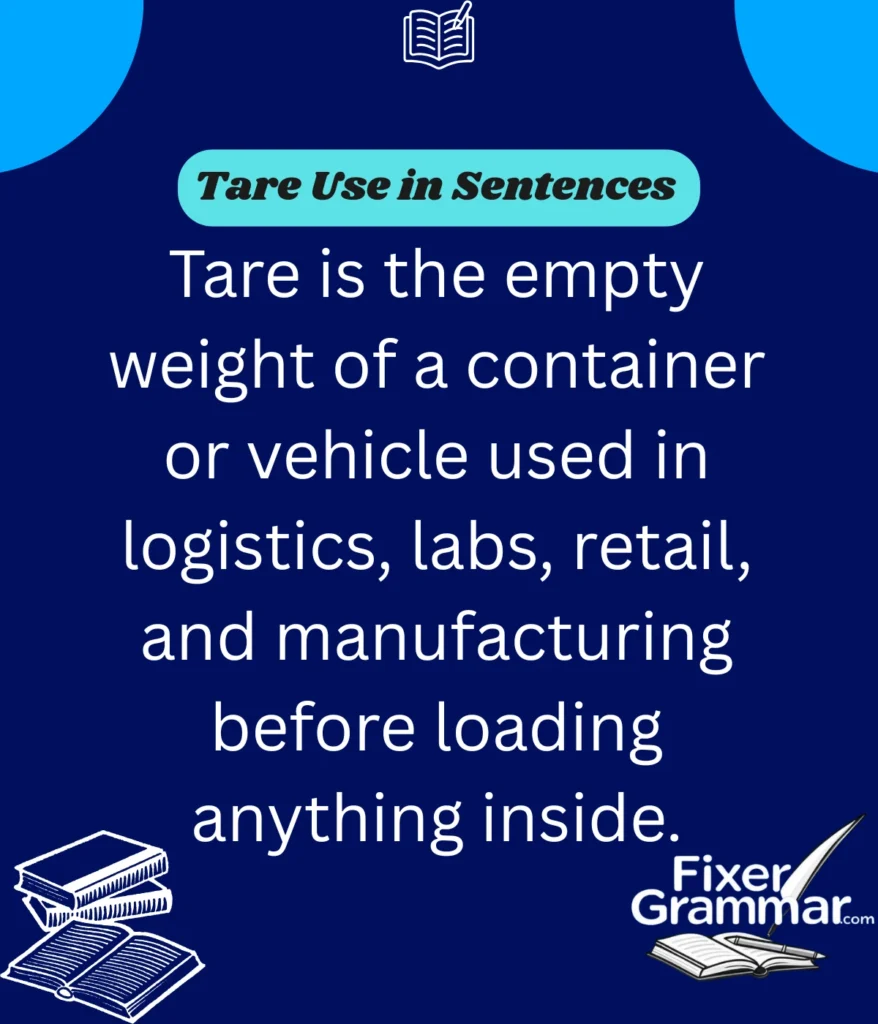
Tare lives almost entirely in technical and professional settings. It is critical in logistics, food manufacturing, laboratory science, and retail weighing.
- The driver recorded the tare weight of the empty truck before loading.
- Always tare the scale before measuring your ingredients.
- The shipping invoice listed the tare as 4.2 kg.
Quick fact: In commercial shipping, incorrect tare weight calculations can lead to billing errors, customs penalties, and compliance failures. Accuracy matters.
More Posts:Continuous vs Continous — What’s the Difference ? 2026
Memory Tricks to Remember Tear vs. Tare Forever
The easiest memory trick is the letter method:
- T-E-A-R — the E stands for Emotion or Edge (a ripped edge). Think feeling or tearing.
- T-A-R-E — the A stands for Accounting or Amount. Think math, weight, numbers.
Another powerful trick:
Picture a tear rolling down a face when you think of crying.
Picture a tare button on a kitchen scale when you think of weight.
If the sentence feels emotional or destructive — it is tear. If the sentence feels mathematical or mechanical — it is tare.
FAQs About Tear vs. Tare
Are tear and tare pronounced the same way?
Tear (ripping) and tare both rhyme with “air.” However, tear (eye drop) rhymes with “ear.” So two out of three pronunciations match.
What does tare mean on a scale?
Tare on a scale means the weight of the empty container is subtracted so only the contents are measured. Pressing the tare button resets the display to zero.
Can tear be used as both a noun and a verb?
Yes. Tear works as a verb (“tear the paper”) and as a noun (“there is a tear in the fabric” or “a tear fell from her eye”).
Is tare only used in shipping and logistics?
No. Tare is also used in cooking, chemistry labs, agriculture, and retail. Anywhere precise weight measurement matters, tare applies.
Is there a difference between American and British English for these words?
No. Both tear and tare are spelled and used identically in American and British English. There is no regional difference for this pair.
Why do people confuse tear and tare so often?
They are homophones — identical in sound. Combined with the fact that tear has two meanings and two pronunciations, the confusion is very natural and easy to make.
What is tare weight in trucking?
In trucking, tare weight is the weight of the empty vehicle or trailer. It is subtracted from the gross weight to calculate the actual net weight of the cargo being transported.
Conclusion
Tear and tare sound the same but serve completely different purposes. Use tear when something is being ripped apart or when emotions are involved.
Use tare when dealing with weight, scales, or containers. Remember the letter trick — E for emotion, A for amount — and you will never mix these two up again.

At FixerGrammar.com, Johnson Isaacs shares easy grammar tips, clear examples, and helpful guidance to make writing simple, smooth, and mistake-free.
Related Posts