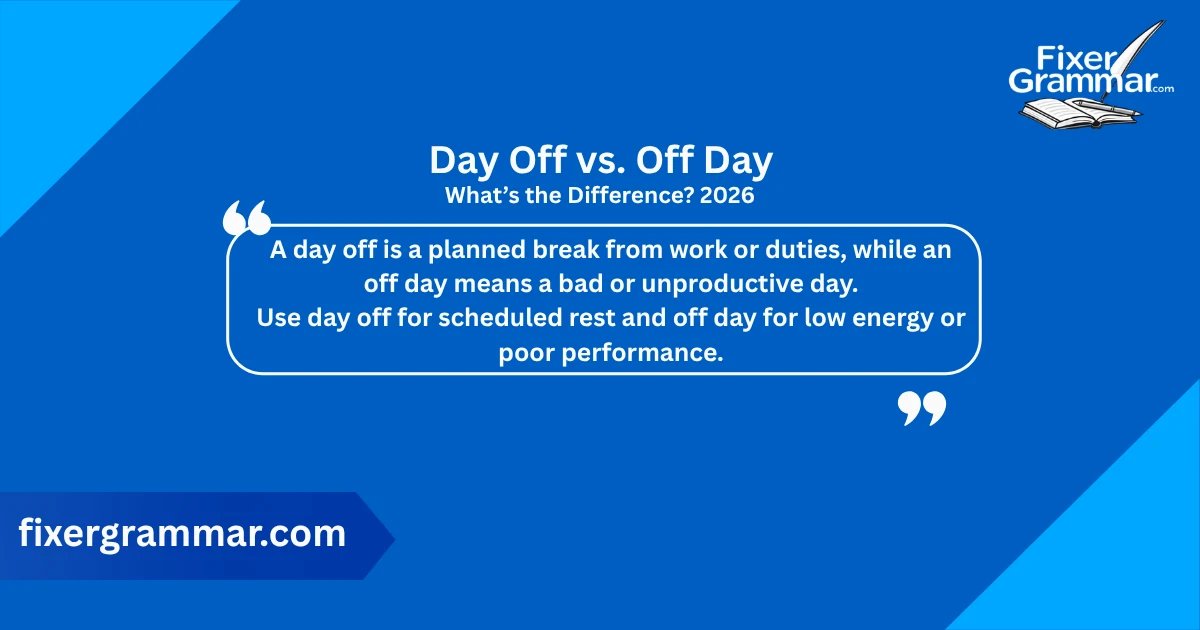
Let’s break down the real difference between these two commonly confused phrases so you never mix them up again.
What Does “Day Off” Mean?
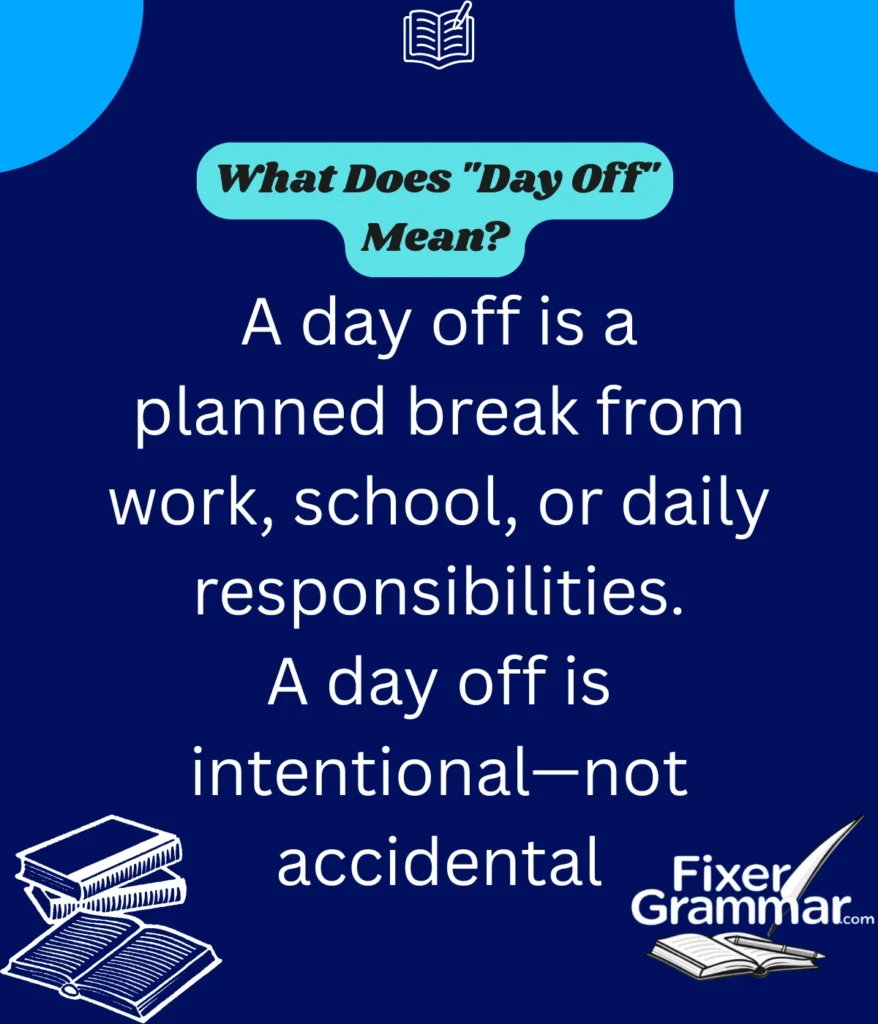
A day off is a scheduled break from your normal responsibilities — work, school, or daily duties. It’s intentional, approved, and usually something you look forward to.
What makes a day off different?
It’s planned, not accidental. You request it, schedule it, or it’s given to you through a holiday or paid time off (PTO) policy.
Real-life examples:
- “I’m taking a day off on Friday to rest.”
- “The office is closed Monday — everyone has a day off.”
- “She used one of her vacation days to attend the event.”
Use day off any time you’re talking about a break that is scheduled, approved, or planned in advance.
More Posts:Alright vs All Right – What’s the Difference? 2026
What Does “Off Day” Mean?
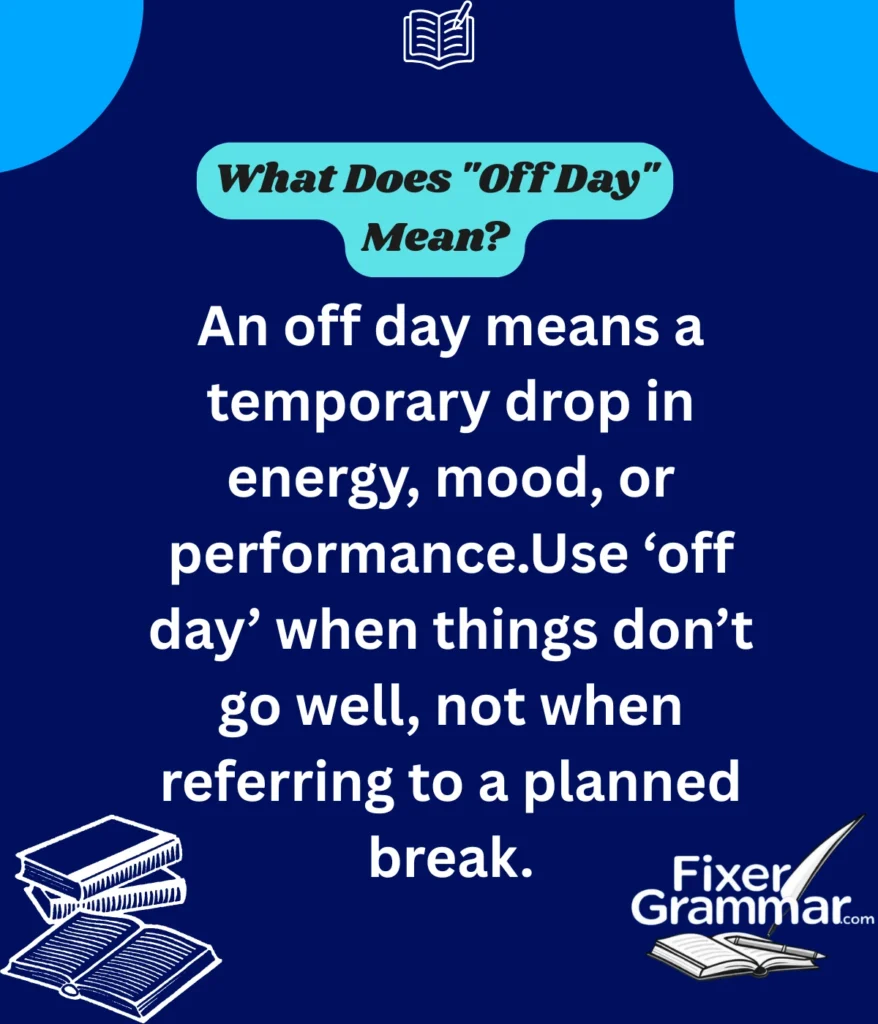
An off day is when things just aren’t clicking. Your performance dips. Your energy is low. Nothing goes the way it should. It’s not planned — it just happens.
Key point: An off day is about performance or mood, not about taking a break.
Real-life examples:
- “The pitcher gave up five runs — he had a real off day.”
- “Sorry for the late reply. I’m having an off day.”
- “Even the best athletes have off days now and then.”
It’s a common phrase in sports, workplaces, and everyday conversation. It signals a temporary dip — not a permanent problem.
Day Off vs. Off Day: Core Differences
Day Off vs Off Day – Difference Explained
| Feature | Day Off | Off Day |
| Meaning | Scheduled break from work or school | A day of poor performance or low mood |
| Tone | Positive, relaxing | Negative, frustrating |
| Planned? | Yes | No |
| Used in | HR, school schedules, PTO policies | Sports, casual conversations, work |
| Example | “I have a day off tomorrow.” | “I had an off day at the meeting.” |
Word order changes everything. Swap the two words and you completely change the meaning.
More Posts:Ingrained or Engrained – Which Is Correct? 2026
Synonyms & Alternatives for Both Phrases
Sometimes you want to switch things up. Here are natural alternatives:
Synonyms for Day Off:
- Vacation day
- Rest day
- Leave of absence
- Holiday
- PTO (Paid Time Off)
- Personal day
Synonyms for Off Day:
- Bad day
- Rough day
- Down day
- Slow day
- Tough day
These keep your writing fresh without repeating the same phrase.
Quick Tips to Remember the Difference
Day off = freedom. Think of a clear sky, no alarm, nowhere to be.
Off day = off balance. Think of missing a step, feeling foggy, not performing well.
Memory trick:
“Day off — you’re off duty.” “Off day — you’re off your game.”
A simple practice: write one sentence using each phrase right now. Say them out loud. That repetition locks the difference in your memory faster than any rule.
FAQs About Day Off vs. Off Day
Can I use “day off” and “off day” interchangeably?
No. Day off means a planned break from work. Off day means a day of low performance or bad luck. They are not the same.
Is “day off” more common in everyday English?
Yes. Day off appears more frequently in workplace communication, school schedules, and everyday conversation because it ties directly to scheduled rest and leave policies.
How can I remember the difference?
Think of day off as something you choose, and an off day as something that happens to you without warning.
Do both phrases work in professional writing and emails?
Day off works well in formal and professional settings. Off day is more casual — use it in conversation, not in HR requests or formal documents.
Can these phrases appear in exams or language guides?
Yes. Both phrases appear in English proficiency exams, grammar guides, and language courses. One note: in British English, “day off” is used identically, while “off day” carries the same informal meaning globally.

At FixerGrammar.com, Johnson Isaacs shares easy grammar tips, clear examples, and helpful guidance to make writing simple, smooth, and mistake-free.
Related Posts