What Does “Mom” Mean — and Where Did It Come From?
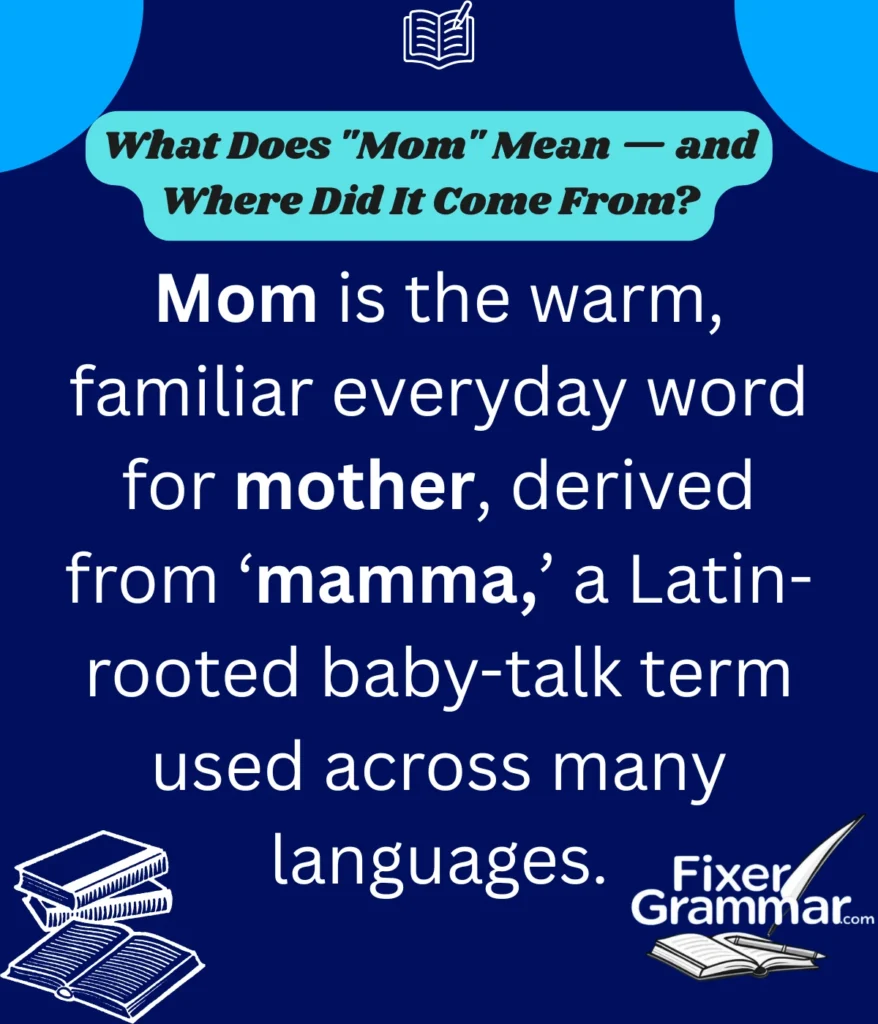
Mom is the everyday word for mother. It’s warm, direct, and familiar.
The word traces back to “mamma,” a Latin-rooted baby-talk term used across many languages.
Over time, “mommy” emerged in the 19th century, and by 1867 — according to the Online Etymology Dictionary — “mom” appeared in recorded use as a standalone word. The short, punchy sound of it stuck.
Mom rhymes with “calm.” The vowel is open and long — /mɑːm/. That natural, easy sound is part of why it became the go-to word in everyday speech.
What Does “Mum” Mean — and Who Uses It?
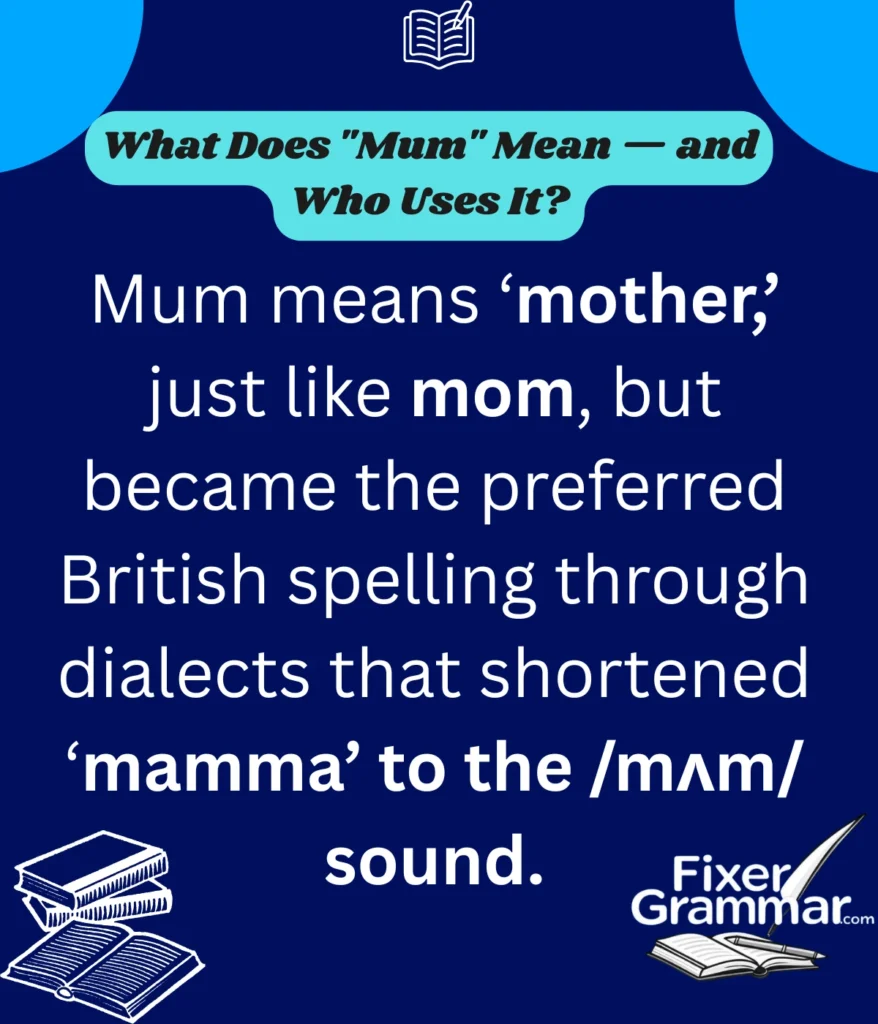
Mum means exactly the same thing as mom — a mother. The difference is purely regional.
“Mum” first appeared in print around 1823, according to the Oxford English Dictionary. It developed through British dialects where the vowel shifted from “mamma” to the shorter /mʌm/ sound.
Today it’s the standard spelling across the UK, Australia, New Zealand, and much of the Commonwealth.
One thing worth knowing: “mum” has a second meaning — it means “silent,” as in “keep mum about it.” Context always makes the meaning clear, but it’s a fun quirk of the language worth remembering.
| Term | Pronunciation | Example |
|---|---|---|
| Mom | /mɑːm/ — rhymes with “calm” | “I called my mom this morning.” |
| Mum | /mʌm/ — rhymes with “come” | “I called my mum this morning.” |
More Posts:Prescribe vs. Proscribe – What’s the Real Difference? 2026
Mom vs Mum: Spelling, Pronunciation, and Regional Use
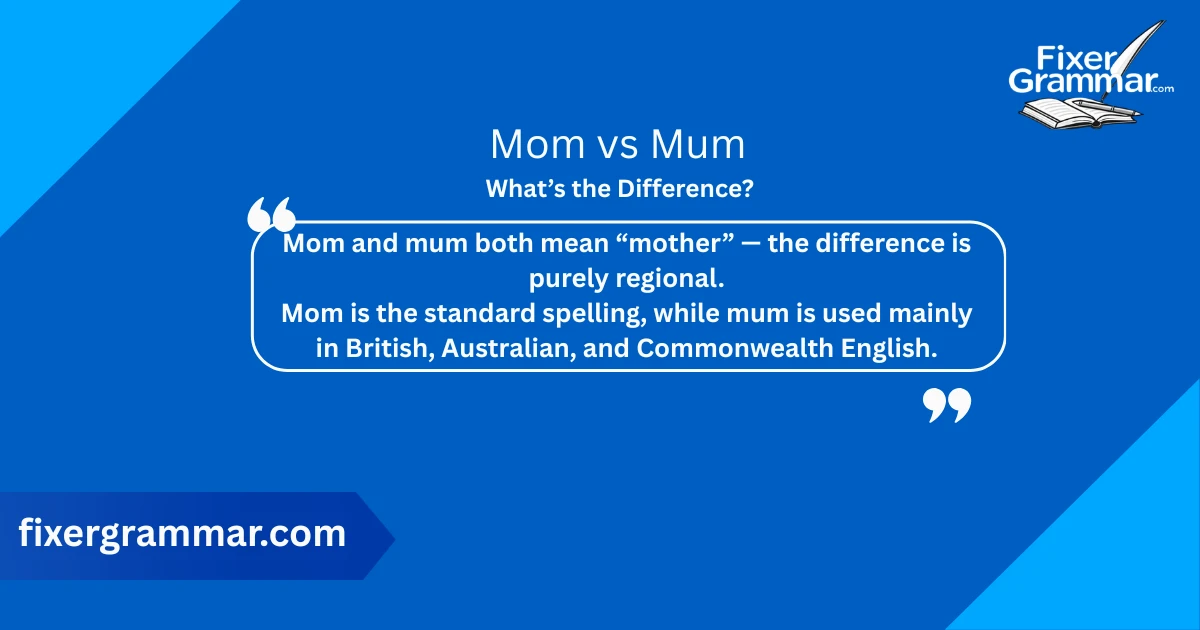
Both words are 100% correct. Neither one is a mistake. The choice simply depends on where you are and who you’re writing for.
| Region | Preferred Word | Variant |
|---|---|---|
| United States | Mom | Mommy, Mama |
| United Kingdom | Mum | Mummy, Mam |
| Australia | Mum | Mummy, Mumma |
| Canada | Mom (mostly) | Mixed |
| Ireland / Wales | Mam | Ma |
| West Midlands, UK | Mom | Mommy |
One surprising fact: Birmingham, England uses “mom” — not “mum.” Local schools there teach it that way, and regional newspapers print it. So “mom” isn’t exclusively an American word — it has British roots too.
Which One Should You Use — Mom or Mum?
Use “mom.” For everyday writing, cards, texts, social media, and anything targeting a general audience — mom is the right call.
Here are a few practical rules to keep in mind:
Capitalize “Mom” when it acts as a name. If you can swap it with a proper name, it gets a capital M.
- ✅ “Thanks, Mom!” (used as a name — capitalize)
- ✅ “My mom is a great cook.” (used as a common noun — lowercase)
Use “mother” in formal or academic writing. For essays, professional emails, or any formal document, “mother” is the clearest and most neutral choice.
Quick rule: Name = capitalize. Description = lowercase. Formal = “mother.”
Pick one and stay consistent — especially in longer content.
FAQ’s About Mom vs Mum
What is the main difference between mom and mum?
Mom is used in standard everyday English, while mum is the British and Commonwealth spelling. Both mean mother — the difference is regional, not grammatical. In American English vs British English, this is one of the clearest spelling distinctions, similar to “color” vs “colour.”
Does using mom or mum change the meaning of a sentence?
No — the meaning is identical. Only the spelling and pronunciation differ. “My mom called” and “My mum called” communicate the exact same thing. The word you use simply signals which variety of English you’re writing in.
Is it ever wrong to use “mum”?
It’s not grammatically wrong, but it can look out of place in certain contexts. For standard writing, stick to “mom” for consistency and clarity with your audience.
Can upbringing influence which word feels natural?
Absolutely. The word you grew up hearing — in books, at home, on TV — shapes which one feels instinctive. Children raised on British books often default to “mum” even years later.
Should “mom” be capitalized?
Only when it functions as a name — replacing a proper name in a sentence. “I love you, Mom” is capitalized. “My mom is here” is not.
Conclusion
Mom and mum are the same word wearing different spelling. Both are correct, both carry the same warmth, and both have deep historical roots going back centuries.
For everyday use — mom is clear, natural, and universally understood. Whether it’s a birthday card, a social post, or a quick text, it’s the word that feels right and reads right.
Know your audience, pick one spelling, and stay consistent. That’s all there is to it.

At FixerGrammar.com, Johnson Isaacs shares easy grammar tips, clear examples, and helpful guidance to make writing simple, smooth, and mistake-free.
Related Posts