We’ll break down everything you need to know about “thats” or “that’s”, including why the apostrophe matters, how to use it correctly, and simple tricks to remember the difference.
The Short Answer: “Thats” vs “That’s”
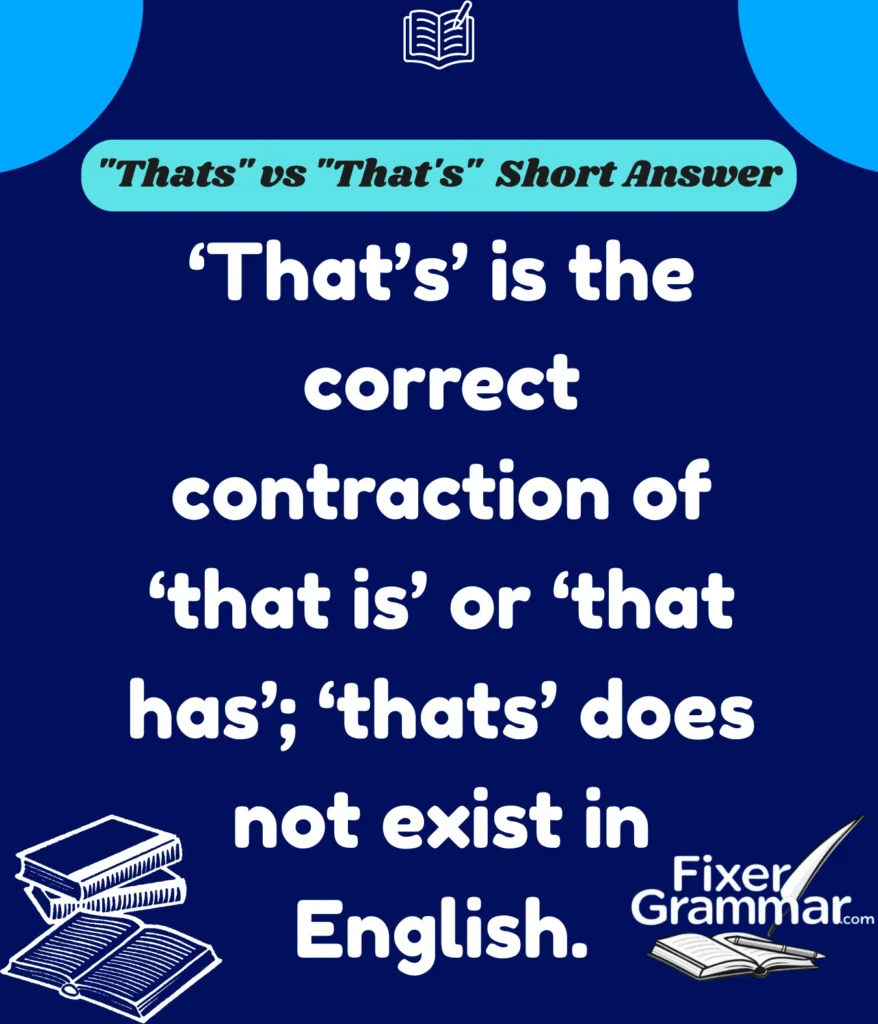
There is no such word as “thats” in English. It simply doesn’t exist in any dictionary.
“That’s” is a contraction, which means it combines two words into one using an apostrophe. The apostrophe shows where letters have been removed to make the word shorter.
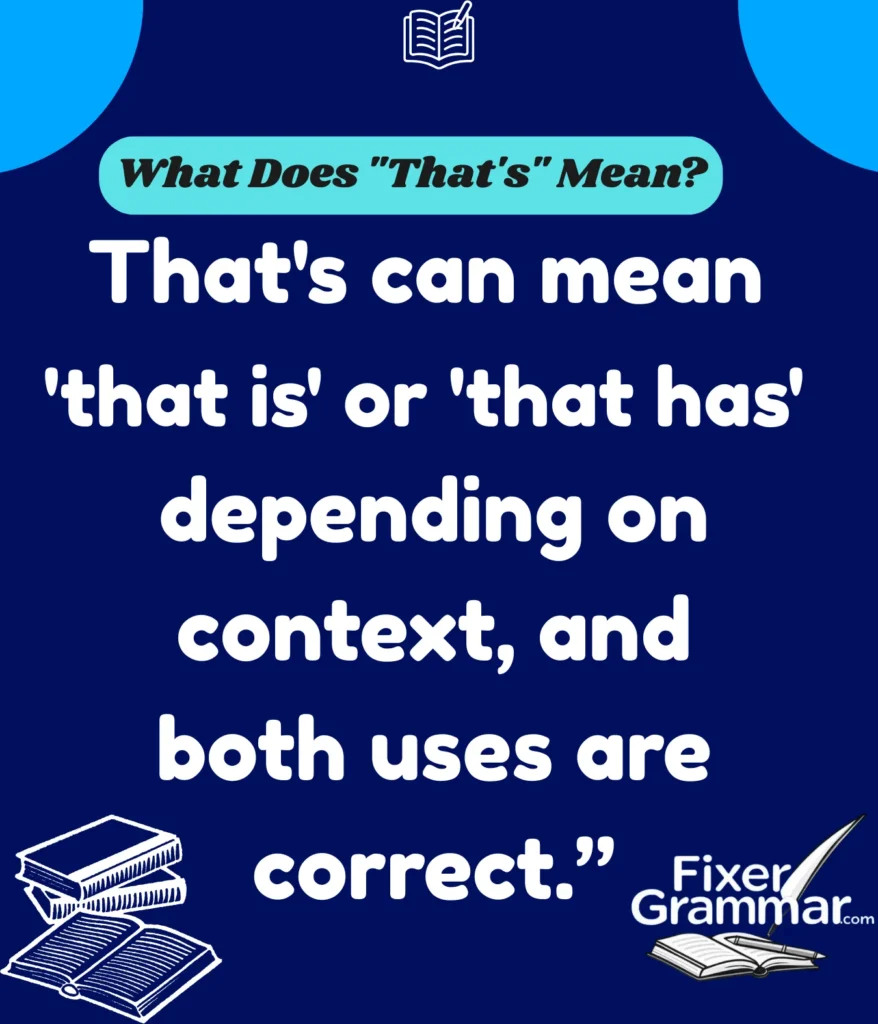
When you write “that’s,” you’re actually writing either “that is” or “that has”. The apostrophe replaces the missing letters and keeps the meaning clear.
| Incorrect | Correct | Full Form |
|---|---|---|
| Thats cool | That’s cool | That is cool |
| Thats mine | That’s mine | That is mine |
| Thats been done | That’s been done | That has been done |
More Posts:Heard vs Herd vs Hurd– Meaning, Usage & Examples
What Does “That’s” Mean?
“That’s” as “That Is”
The most common use of “that’s” replaces “that is”. You’ll use this form when pointing out something, making a statement, or describing a situation.
Examples:
- That’s my car in the driveway. (That is my car)
- That’s exactly what I needed. (That is exactly what I needed)
- That’s the best pizza I’ve ever tasted. (That is the best pizza)
“That’s” as “That Has”
“That’s” can also mean “that has” when you’re using the present perfect tense. This version appears less frequently but is equally correct.
Examples:
- That’s been sitting there for hours. (That has been sitting there)
- That’s already been discussed. (That has already been discussed)
- That’s happened before. (That has happened before)
The context of your sentence will always make it clear which meaning you’re using. Your readers will naturally understand whether you mean “that is” or “that has” based on the words that follow.
How to Remember the Difference Between “Thats” and “That’s”
The expansion test never fails. Whenever you write “that’s,” try expanding it to “that is” or “that has”. If the sentence still makes sense, you’ve used it correctly.
Try this with any sentence:
- “That’s (that is) a great idea!” ✓ Correct
- “Thats (?) a great idea!” ✗ Doesn’t work
Think of the apostrophe as a placeholder for the missing letters. In “that’s,” the apostrophe replaces either the “i” in “is” or the “ha” in “has.”
Say the sentence out loud. If you naturally pronounce it as “that is” or “that has,” then you need the apostrophe. No one says “thats” as a single word because it isn’t one.
More Posts:Envolved or Involved– Meaning, Usage & Examples
When to Use “That’s” in Your Writing
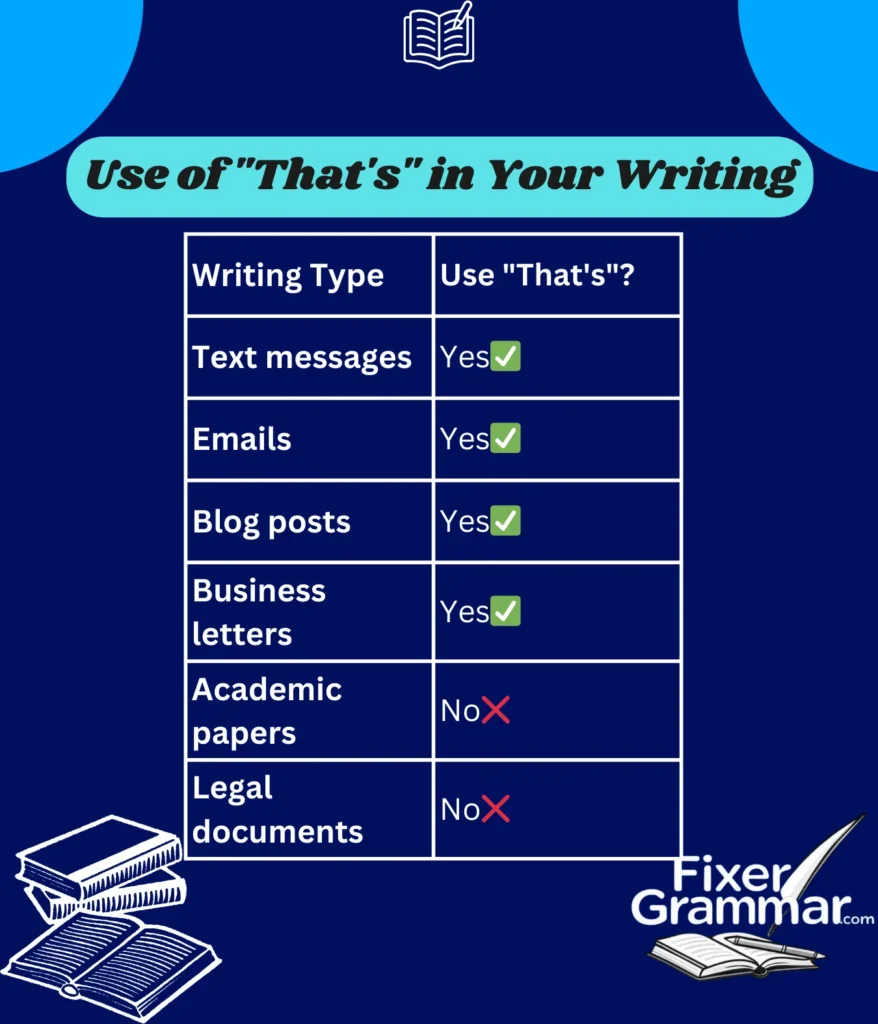
Casual and conversational writing welcomes “that’s” without any restrictions. Use it freely in emails, blog posts, text messages, social media, and informal documents.
Business communication accepts contractions like “that’s” in most cases. Modern professional writing has become more relaxed, and using “that’s” sounds natural and approachable.
Academic and formal writing prefers the full form. Research papers, dissertations, legal documents, and official reports typically spell out “that is” instead of using the contraction.
The key is matching your tone to your audience. If you’re writing something relaxed and reader-friendly, “that’s” works perfectly. For serious, formal documents, stick with “that is.”
FAQ’s
Is “thats” ever correct?
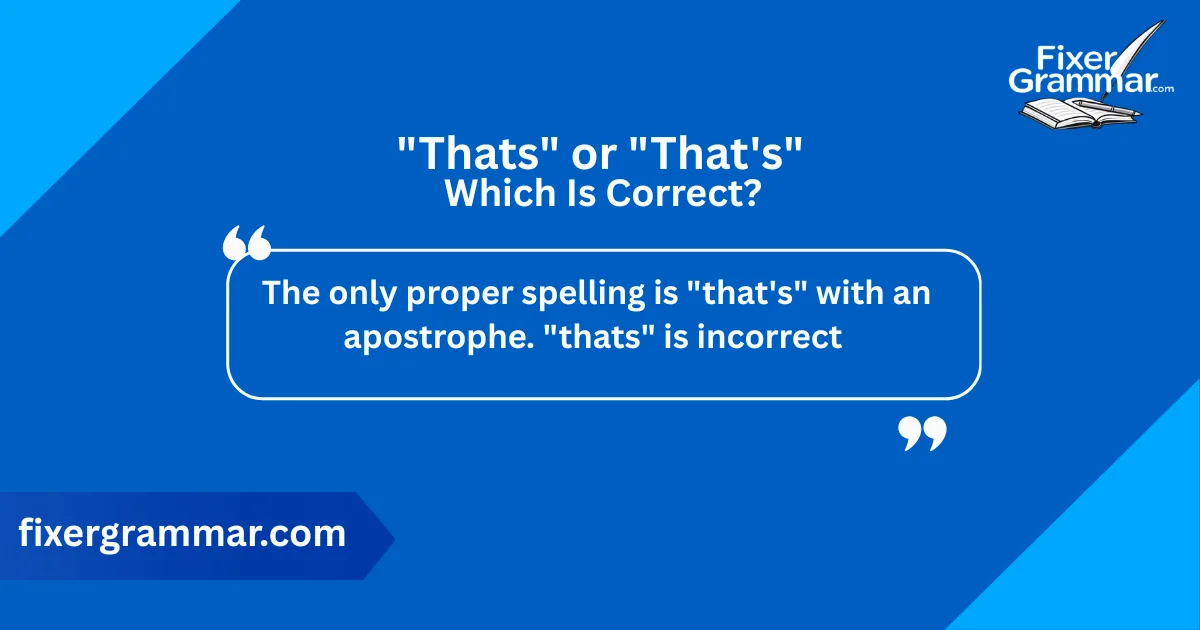
No, “thats” is never correct. The only acceptable spelling is “that’s” with an apostrophe when you mean “that is” or “that has.”
Can I use “that’s” in formal writing?
It depends on the context. Modern business writing accepts “that’s,” but academic papers and legal documents typically prefer “that is” spelled out completely.
What’s the difference between “that’s” and “that is”?
They mean exactly the same thing. “That’s” is simply the contracted, shorter version of “that is,” using an apostrophe to replace the missing letters.
How do you use “that’s” in a sentence?
Use “that’s” when you can substitute “that is” or “that has”. Example: “That’s (that is) the answer” or “That’s (that has) been helpful.”
Is it “that’s why” or “thats why”?
The correct phrase is “that’s why” with an apostrophe. It means “that is why” and explains the reason for something.
Final Thoughts
Remember this simple rule: “thats” doesn’t exist. Every time you need this word, use “that’s” with an apostrophe.
The apostrophe isn’t optional or decorative. It’s essential because it shows you’re combining two words into one contraction.
Good writing comes from paying attention to small details. Now that you know the difference between “thats” or “that’s”, you can write with confidence and avoid one of the most common mistakes in English.

At FixerGrammar.com, Johnson Isaacs shares easy grammar tips, clear examples, and helpful guidance to make writing simple, smooth, and mistake-free.
Related Posts