Choosing between reevaluation and re-evaluation confuses many writers in the United States.
This guide explains the rules, shows real examples, and clears up the confusion once and for all.
The Grammar Rules Explained

The “Re-” Prefix Rule in American English
The prefix “re-“ means “again” or “back.” American English typically writes re- words as one solid word without hyphens. Examples include rewrite, rethink, rebuild, and reevaluate.
You only add a hyphen when leaving it out creates confusion. Compare recover (get better) with re-cover (cover something again). The hyphen changes the meaning completely.
For reevaluation, no confusion arises. The meaning stays clear without a hyphen. American grammar rules say skip the hyphen when the meaning is obvious.
What Does Reevaluation Mean?

Reevaluation means examining something again or reviewing a previous assessment. You evaluate something a second time to see if changes occurred or if the original judgment needs updating.
The word appears everywhere in American life.
- Teachers schedule student reevaluations for learning plans.
- Doctors order medical reevaluations to track patient progress.
- Businesses conduct performance reevaluations yearly.
The confusion exists because English speakers see both reevaluation and re-evaluation in print. Some writers add a hyphen while others skip it. This creates uncertainty about which version follows correct American grammar rules.
In American English, reevaluation without the hyphen is the standard spelling. Major dictionaries and style guides prefer this closed form for clarity and consistency.
More Posts: Time Slot vs Timeslot: Which is Correct, Usage and Common Mistakes
When to Use Reevaluation (Without Hyphen)
Academic writing demands reevaluation for consistency. College essays, research papers, and dissertations should never hyphenate this word.
Example:The committee recommended a thorough reevaluation of the study results.
Professional documents like resumes, cover letters, and business proposals look more polished with reevaluation.
Example:A careful reevaluation of my skills helped me tailor my resume for the job application.
Medical records and healthcare documentation use reevaluation extensively. Patient charts mention reevaluation dates for treatment plans.
Example:The doctor scheduled a reevaluation of the patient’s treatment plan next week.
When Re-evaluation (With Hyphen) Might Appear

British English commonly uses re-evaluation with the hyphen. UK publications, websites, and documents prefer this style. If you write for international audiences, you might see both versions.
Older American publications from the 1980s and 1990s sometimes show re-evaluation. Grammar rules evolved over decades. Modern standards now favor the closed form.
Some writers add hyphens for visual clarity in complex sentences. They believe the hyphen makes reading easier. However, major style guides discourage this personal preference.
Legacy documents and government archives might contain re-evaluation in historical records. These reflect outdated grammar conventions. Current American standards have shifted away from unnecessary hyphens.
You might encounter re-evaluation in translated materials or international business correspondence.
Common Mistakes and How to Avoid Them
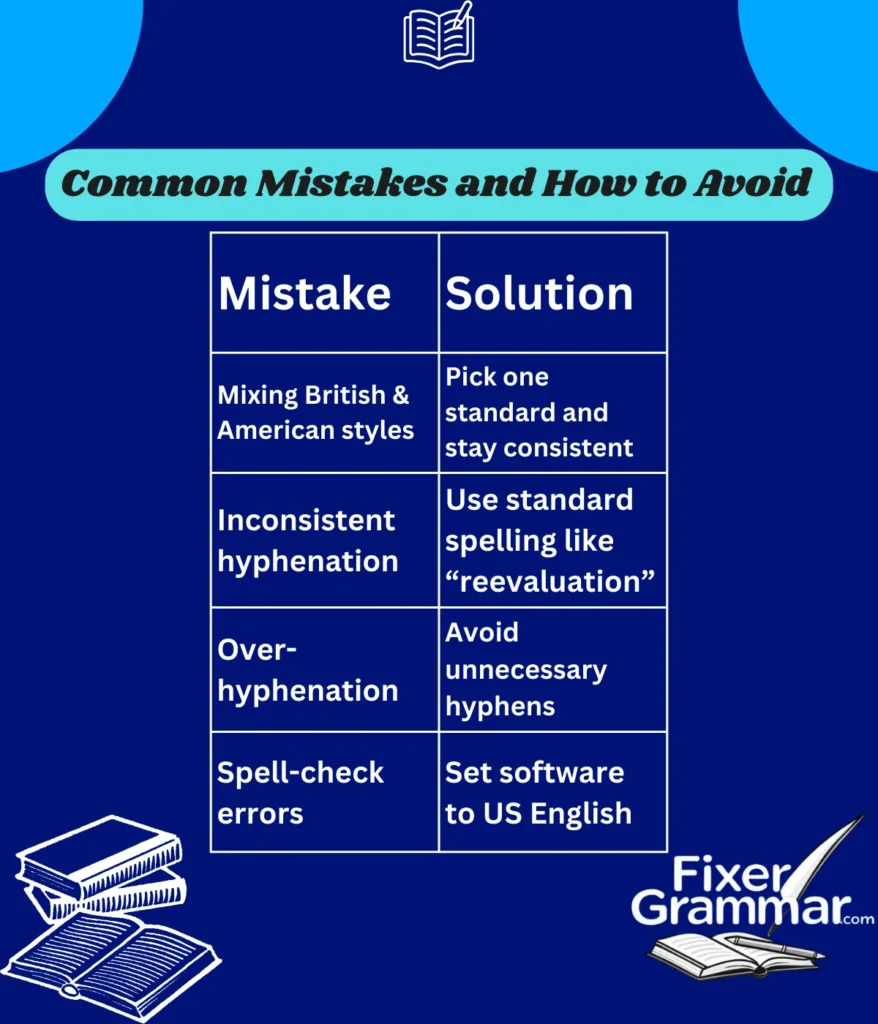
Many writers mix British and American styles within one document. They use realise alongside organize, creating inconsistency. Pick one standard and maintain it throughout your writing.
Inconsistent hyphenation appears when writers add hyphens randomly. One paragraph shows reevaluation while another uses re-evaluation. This looks unprofessional and confuses readers.
Some people overhyphenate thinking more hyphens equal better grammar. They write re-write, re-think, and re-build unnecessarily. American English prefers closed compounds for clarity.
Spell-check tools sometimes flag reevaluation incorrectly if set to British English. Change your software settings to US English to avoid false errors. Microsoft Word and Google Docs both offer this option.
Quick prevention tips:
- Set spell-checker to American English
- Choose one style guide and follow it consistently
- Read finished documents aloud to catch inconsistencies
- Keep a personal style sheet for reference
More Posts: By Which or In Which? Meaning, Usage Rules & Examples Explained
Reevaluation in Different Professional Contexts
Reevaluation plays a crucial role across various professional fields, ensuring accurate assessments, informed decisions, and improved outcomes.
1. Medical Reevaluation
Medical professionals use reevaluation to monitor patient health and adjust treatments:
- Physical Therapy: Patients undergo reevaluations every 30 days to track progress and modify treatment plans.
- Mental Health: Psychologists and counselors perform psychological reevaluations to tailor therapy approaches and ensure effective care.
2. Educational Reevaluation
Schools and educational institutions conduct reevaluations to support students requiring special services:
- Legal Requirement: The Individuals with Disabilities Education Act (IDEA) mandates periodic reevaluations.
- Frequency: Assessments must be completed at least every three years to ensure appropriate educational support.
3. Business and Workplace Reevaluation
In professional environments, reevaluation is used to measure performance and guide career development:
- Performance Reviews: Employees undergo reevaluations quarterly or annually.
- Goal Setting: Managers discuss progress, adjust responsibilities, and set new objectives.
- Compensation Adjustments: Reevaluation meetings often influence promotions and salary changes.
4. Legal Reevaluation
Legal professionals use reevaluation to respond to new information and maintain justice:
- Case Updates: Attorneys request reevaluation of damages in civil lawsuits.
- Probation Monitoring: Officers reassess offender status to determine compliance and future actions.
5. Financial Reevaluation
Financial institutions rely on reevaluation to manage risk and optimize investments:
Portfolio Management: Investment firms regularly reassess portfolios based on market conditions.
Credit Assessment: Banks reevaluate loan applications when a client’s financial situation changes.
FAQ‘s
Is reevaluation or re-evaluation correct in American English?
Reevaluation without the hyphen is correct and preferred in American English according to major dictionaries and style guides.
Do I need a hyphen when writing reevaluation?
No, American English does not require a hyphen for reevaluation since the meaning remains clear without one.
What’s the difference between reevaluation and re-evaluation?
Both mean the same thing, but reevaluation follows American standards while re-evaluation appears in British English.
Which spelling do universities and academic journals prefer?
Universities and academic journals in the United States require reevaluation following APA and Chicago style guidelines.
Can I use both spellings interchangeably?
No, pick one spelling and use it consistently throughout your document to maintain professional quality.
How do I write reevaluation in formal documents?
Always write reevaluation as one word without a hyphen in formal American business and academic writing.
Conclusion
Reevaluation stands as the clear choice for American writers. This spelling matches what dictionaries recommend, what style guides require, and what professional editors expect.
Whether you write academic papers, business reports, or medical documentation, skip the hyphen and write reevaluation confidently. Consistency matters more than personal preference. Following American English standards makes your writing look polished and credible. Choose reevaluation, stick with it, and your grammar stays sharp.

At FixerGrammar.com, Johnson Isaacs shares easy grammar tips, clear examples, and helpful guidance to make writing simple, smooth, and mistake-free.
Related Posts