These homophones sound identical but have completely different meanings, and mixing them up can confuse your readers.
What Does “Heard” Mean?
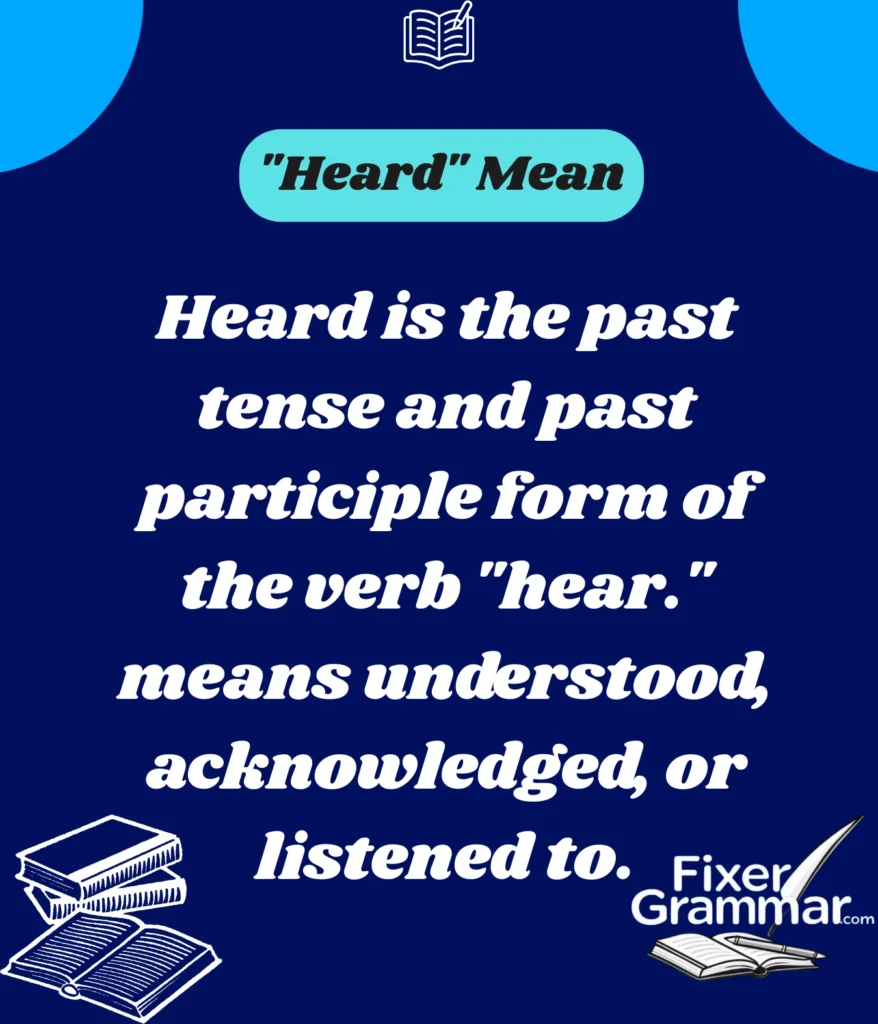
Heard is the past tense and past participle form of the verb “hear.” When you perceived sounds yesterday or in the past, you use this word. It connects directly to your sense of hearing and auditory experiences.
The word appears in everyday conversation constantly. You might say, “I heard the thunder last night” or “Have you heard the news?” The connection to your ears makes it easy to remember—if sound entered your ears in the past, you heard it.
Common examples:
- I heard a strange noise outside
- She heard the announcement clearly
- They hadn’t heard from him in weeks
- We heard rumors about the new policy
More Posts: Brite vs Bright – Correct Spelling and Usage Guide
What Does “Herd” Mean?
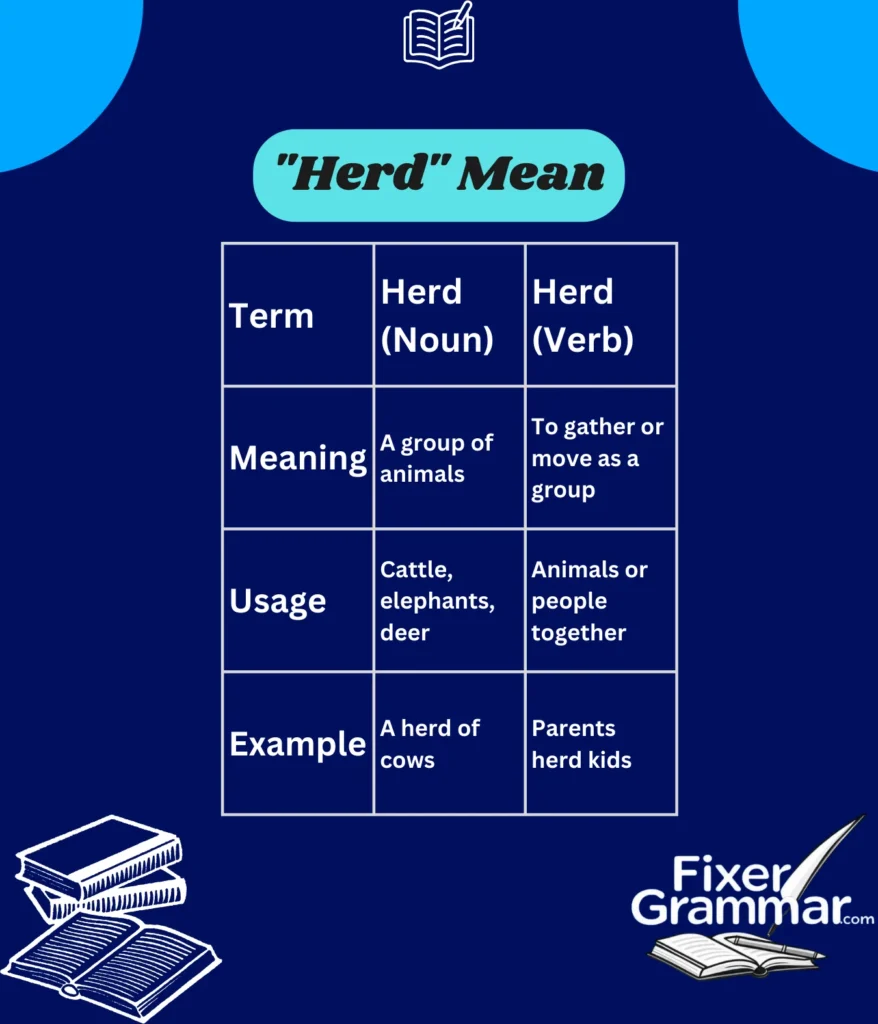
Herd works as both a noun and a verb, giving it more flexibility. As a noun, it describes a group of animals that stay together—like cattle, elephants, or deer. These animals typically move and graze as a collective unit.
As a verb, herd means to gather or move animals (or people) as a group. Ranchers herd cattle across fields. Parents sometimes joke about herding kids onto the school bus because it feels like managing animals.
Usage examples:
- The herd of buffalo crossed the plains (noun)
- Cowboys herd the cattle into pens (verb)
- A herd mentality affects crowd behavior (noun)
- Teachers herd students toward the exit (verb)
What About “Hurd”?
Hurd isn’t a standard dictionary word. It’s primarily a surname or family name you’ll see in phone books and social media profiles. People with the last name Hurd exist across the country.
The confusion happens because “heard” and “herd” sound exactly like “Hurd.” Many writers accidentally type “Hurd” when they mean one of the other two words. Spell-checkers might miss this error since Hurd exists as a proper noun. Always double-check your spelling.
Context clues help you choose correctly. If the sentence discusses listening, sound, or auditory perception, use “heard.” If it involves animals, groups, or gathering, pick “herd.”
Heard vs Herd
| Feature | Heard | Herd |
|---|---|---|
| Part of Speech | Verb (past tense) | Noun and verb |
| Meaning | Perceived sound | Group of animals / to gather |
| Root Word | Hear | N/A (standalone) |
| Example | I heard music | The herd stampeded |
| Memory Trick | Has “ear” inside | Rhymes with “bird” (flock) |
More Posts: Is It Correct to Say “Day Well Spent”? Meaning Alternatives & Examples
Heard vs Herd in Sentences (Examples)
Real-world examples show exactly how these homophones function differently in writing and speech.
Heard examples:
- Nobody heard the alarm go off this morning
- I’ve heard that restaurant serves incredible pasta
- The jury heard testimony from five witnesses
- Haven’t you heard? The concert got canceled
Herd examples:
- The herd grazed peacefully in the meadow
- Ranchers must herd the livestock before winter
- A massive herd of wildebeest migrated south
- Don’t just follow the herd—think independently
Wrong vs. Right:
- ❌ She herd a strange voice → ✅ She heard a strange voice
- ❌ The heard of deer → ✅ The herd of deer
- ❌ I hurd footsteps → ✅ I heard footsteps
Frequently Asked Questions
Is it “I heard” or “I herd”?
It’s always “I heard” when talking about perceiving sound. “I herd” only works when you’re actively gathering animals, like “I herd sheep for a living.”
Can “herd” be used for people?
Yes, though it’s usually informal or metaphorical. We say “herd mentality” or joke about “herding cats” when people act difficult to organize.
What’s the pronunciation difference?
There’s no pronunciation difference—heard, herd, and Hurd all sound identical, which creates the confusion. They’re perfect homophones.
Is “Hurd” ever correct in writing?
Only when referring to someone’s name, like “Mr. Hurd” or “Hurd Avenue.” Never use it as a substitute for “heard” or “herd.”
How do I remember which one to use?
Link “heard” to your ear (it’s in the spelling). Link “herd” to groups of animals. If neither fits, you probably want “heard” for past-tense listening.
Do British and American English differ here?
No, both use “heard” and “herd” identically. The spellings and meanings remain consistent across all English-speaking regions.
Conclusion: Mastering Heard vs Herd vs Hurd
Heard connects to your sense of hearing in the past, while herd describes groups of animals or the act of gathering them. Hurd only appears as a surname. Remember the “ear” in “heard” and you’ll never confuse these sound-alike words again. Practice using them in sentences, and soon choosing the right word becomes automatic.

At FixerGrammar.com, Johnson Isaacs shares easy grammar tips, clear examples, and helpful guidance to make writing simple, smooth, and mistake-free.
Related Posts